Methods
Craft methods for better AI-assisted fiction.
-
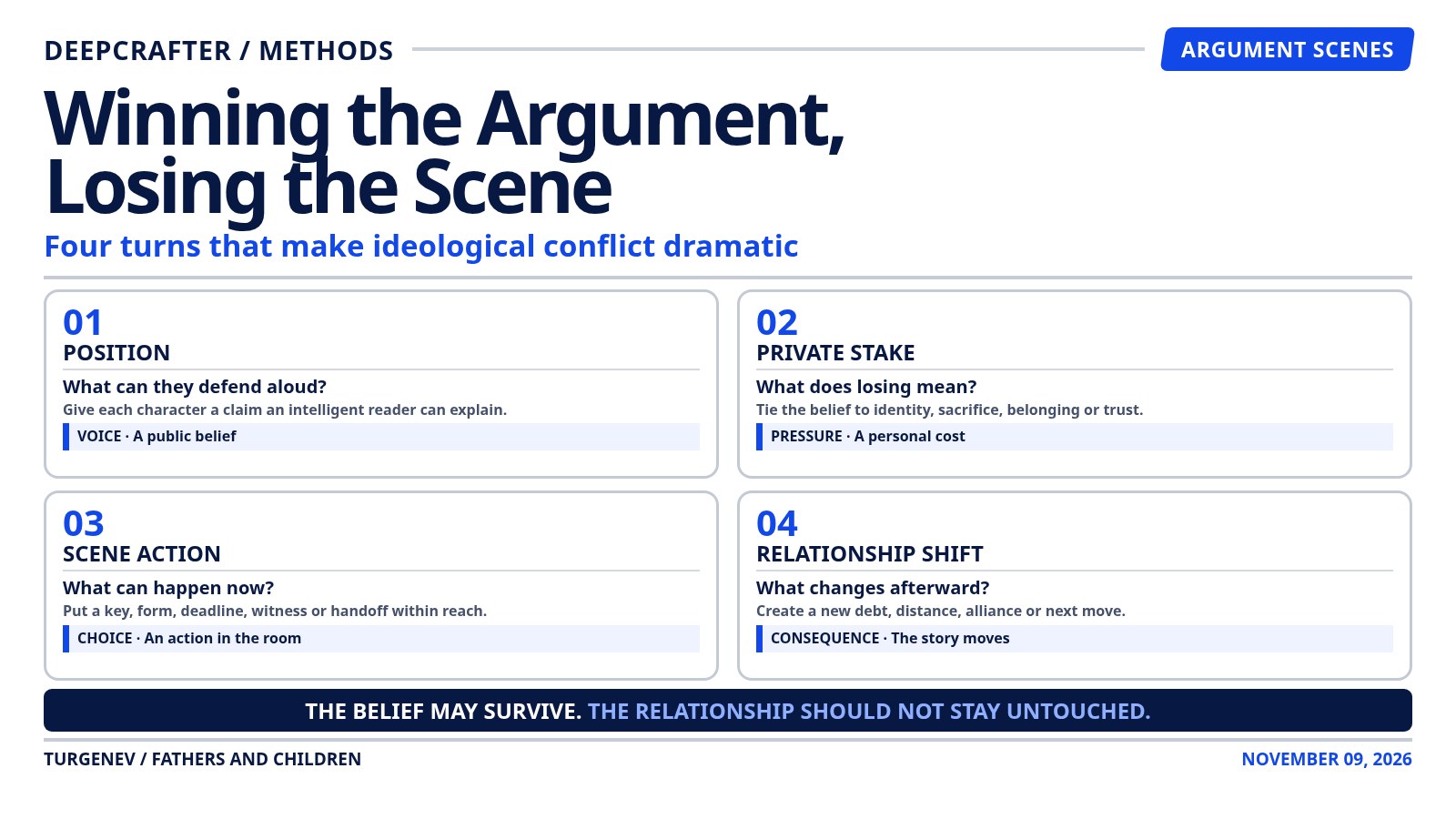
Winning the Argument, Losing the Scene
A four-part method for writing ideological conflict as drama: give each character a position, a private stake, an action in the room and a relationship consequence.
-
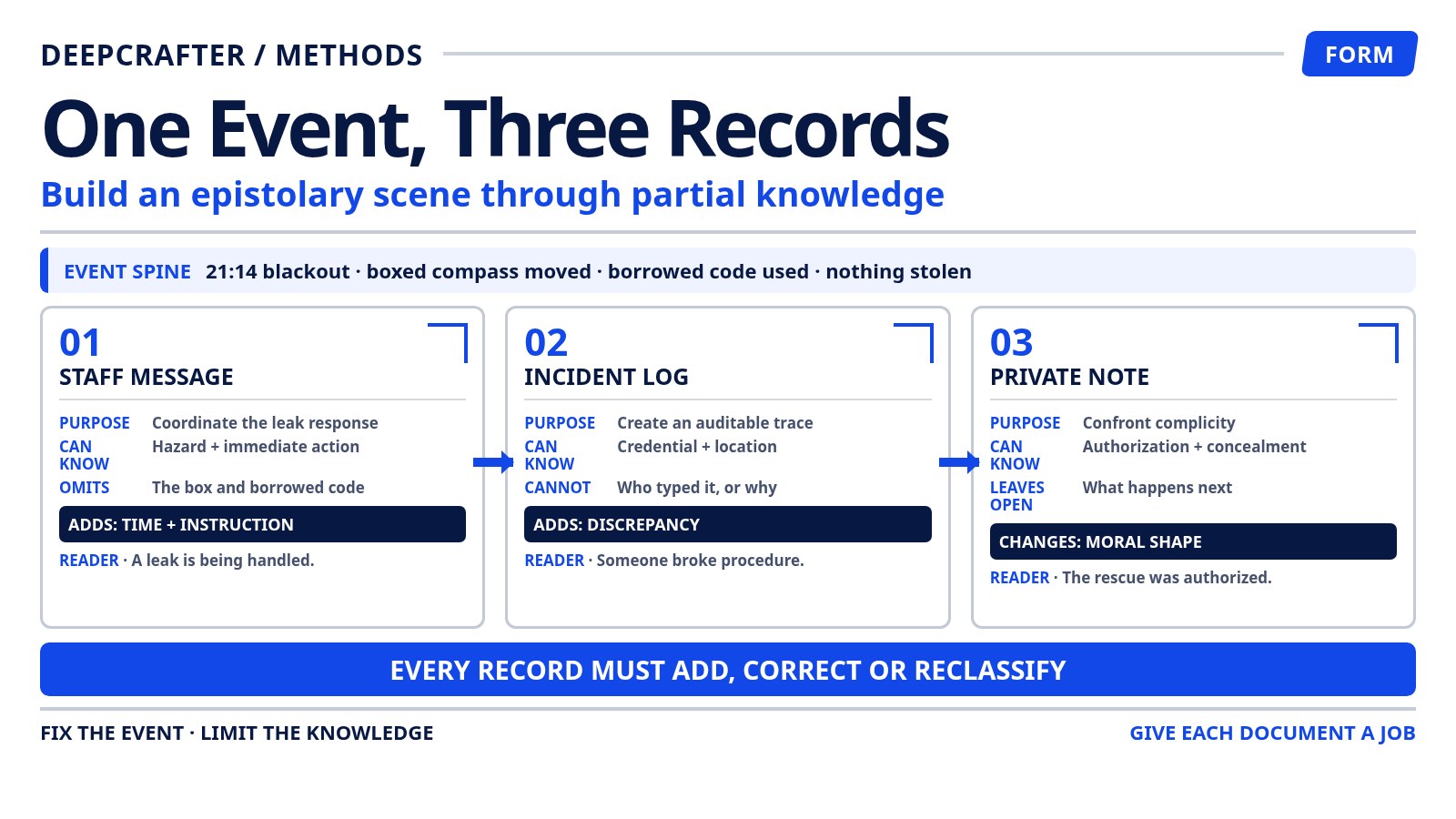
One Event, Three Records: Writing an Epistolary Scene
Build an epistolary scene by fixing one event, limiting each record’s knowledge, giving every document a motive and ordering a change in the reader’s interpretation.
-
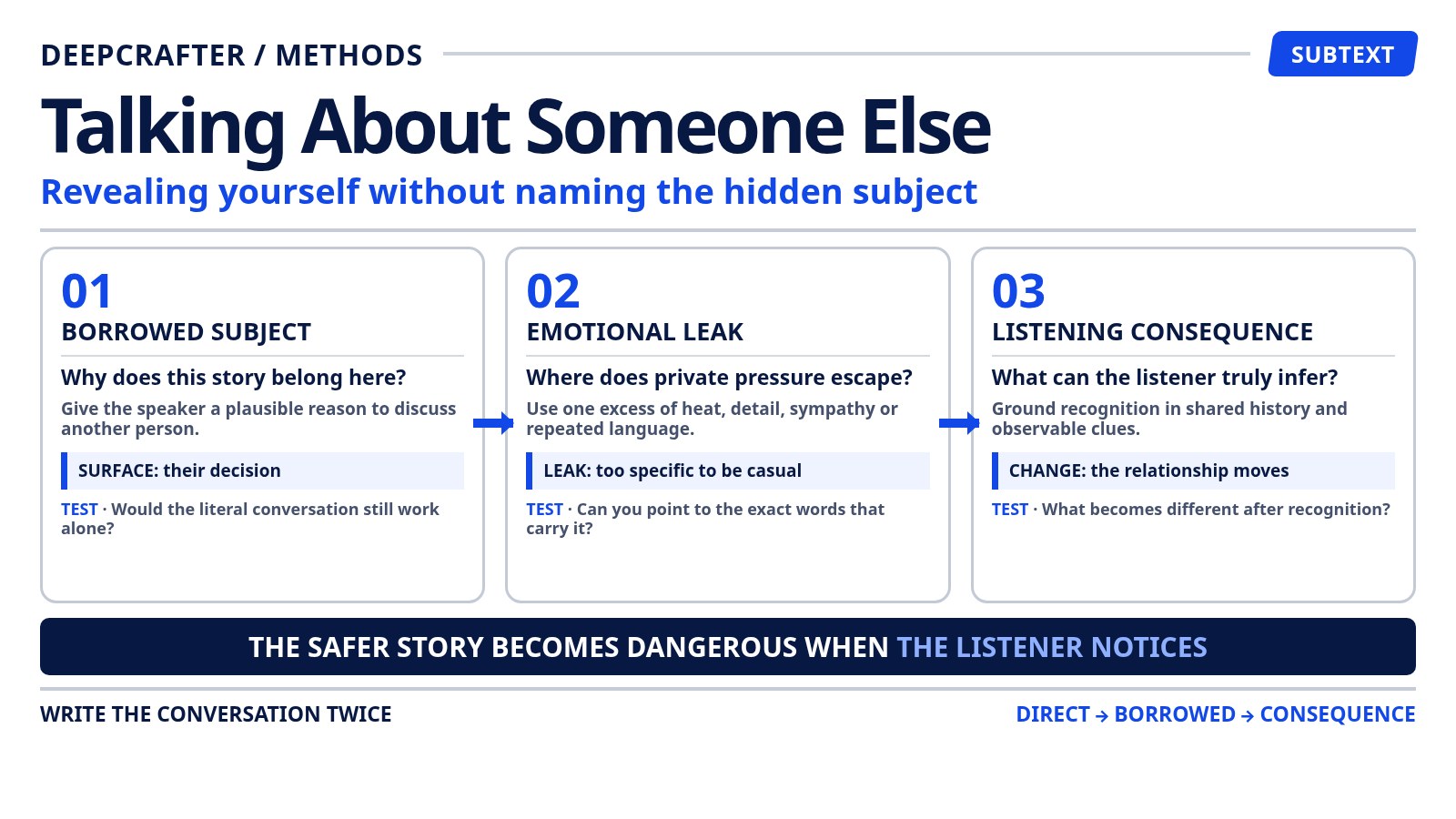
Talking About Someone Else, Revealing Yourself
A three-question method for writing indirect confession: choose a plausible borrowed subject, let one emotional pressure point leak, and limit the listener to what they can reasonably know.
-
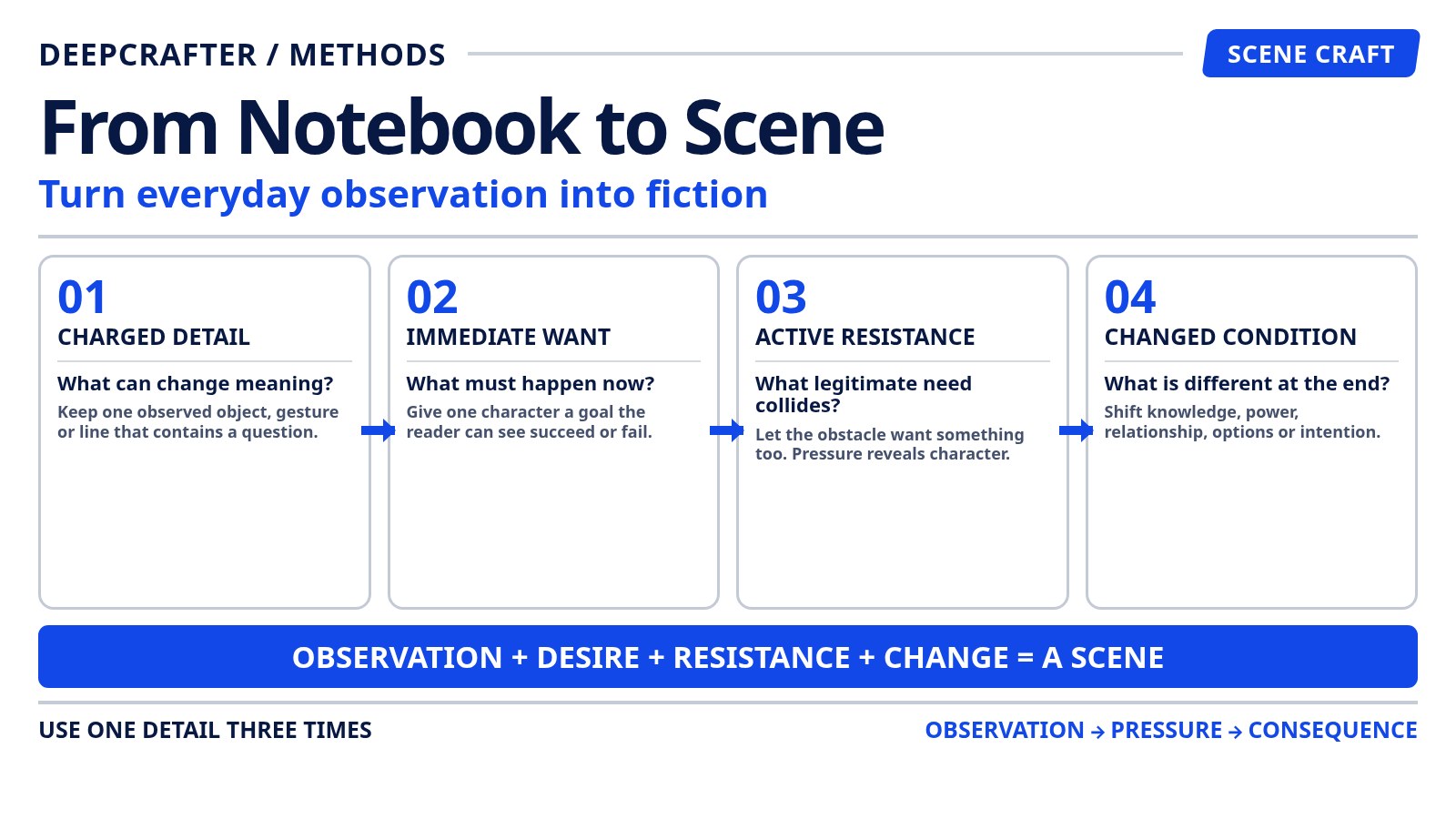
From Notebook to Scene: Turn Everyday Observation into Fiction
A four-step method for turning an observed detail into a scene with desire, resistance and meaningful change—plus an original before-and-after example.
-
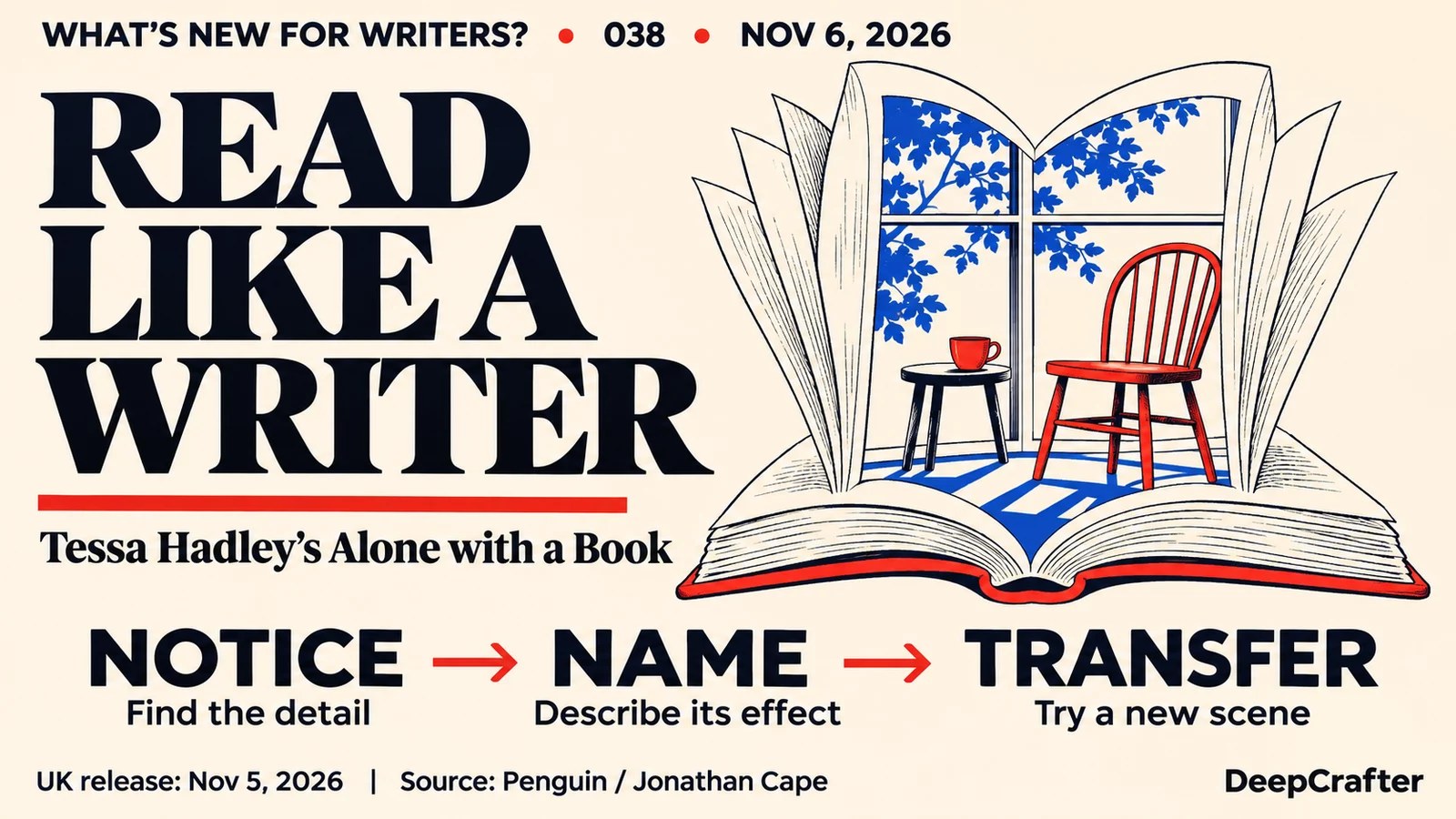
Reading Is a Way of Learning to See
Tessa Hadley’s new essay collection prompts a practical reading-to-writing exercise: notice a detail, name its effect, and transfer the craft choice to a new scene.
-
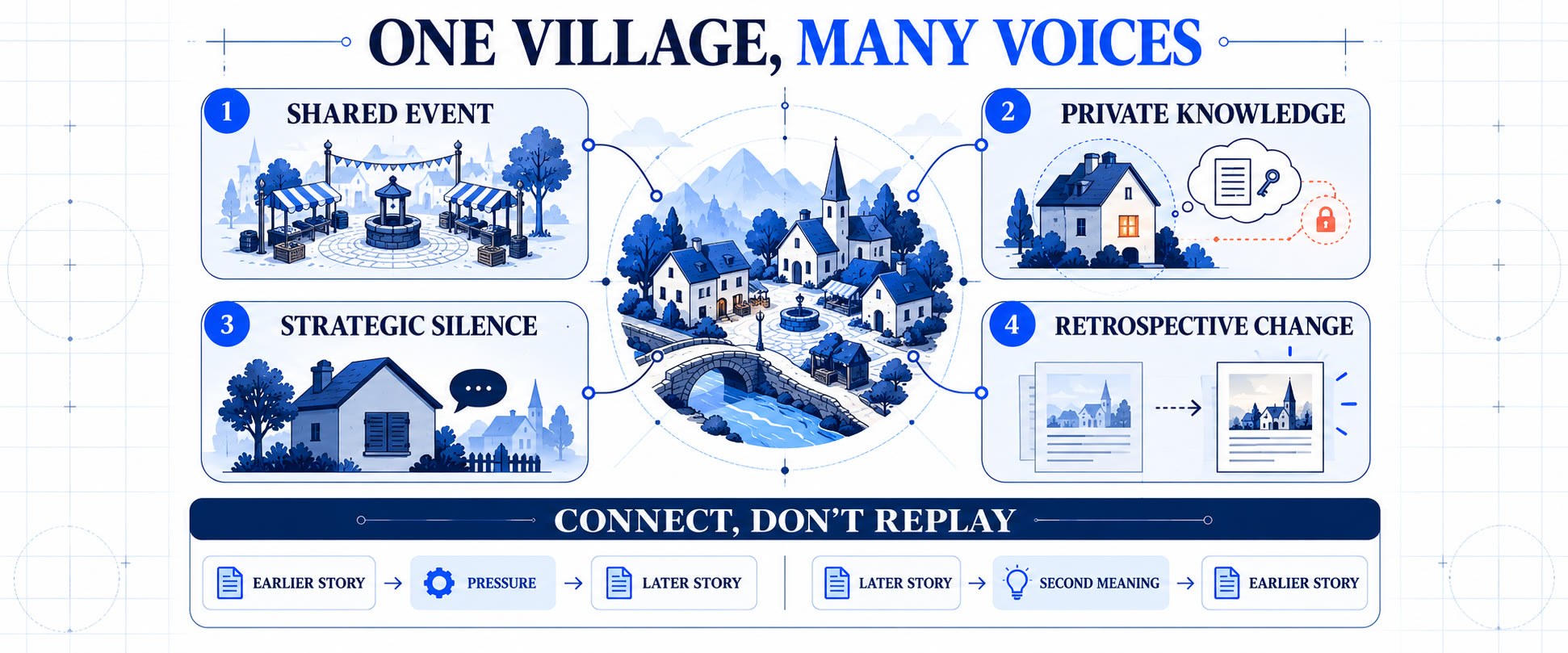
One Village, Many Voices: How to Connect Stories Without Repeating Them
A four-part planning method for making linked stories accumulate knowledge, silence and consequence instead of replaying the same event.
-
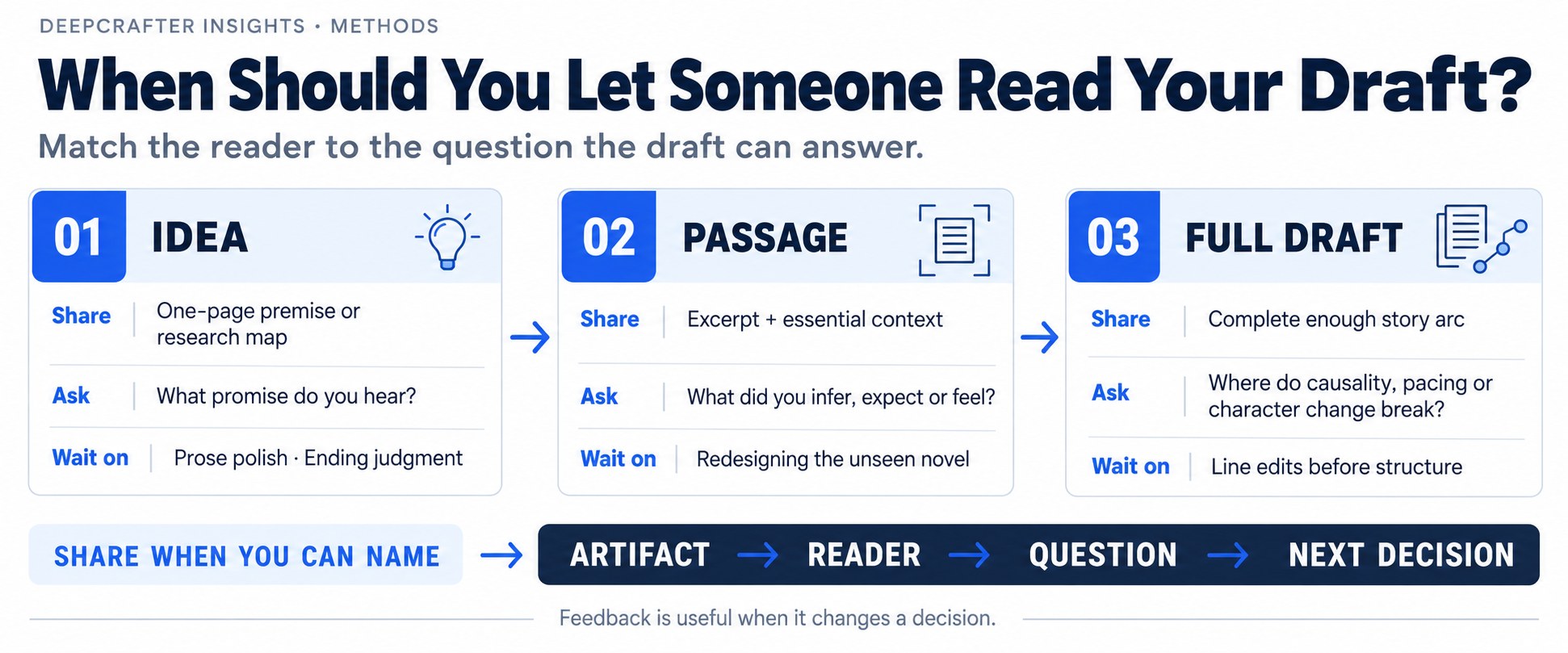
When Should You Let Someone Read Your Draft?
A three-stage method for matching the draft, reader, question and next decision—without turning feedback into a vote on an unfinished novel.
-
Your Fantasy World Is Detailed. Why Does the Story Still Feel Flat?
Turn fantasy lore into scene pressure with a practical Rule → Cost → Dilemma → Consequence method.
-
How to Make a Memory Change the Present Scene
A four-step method for making flashbacks alter the live scene, with public-domain literary examples, an original before-and-after, and a revision exercise.
-
Protect Narrative Voice Before You Polish
A practical revision method for preserving deliberate rhythm and voice: a minimal-edit example, a reusable diagnostic prompt, and a 15-minute exercise.