When the Wind Rises: Paul Valéry and the Courage to Begin Again
On Paul Valéry’s birthday, follow the wind from The Graveyard by the Sea through twenty years of poetic silence, the Cahiers and three essential reading paths.
When the Wind Rises: Paul Valéry and the Courage to Begin Again
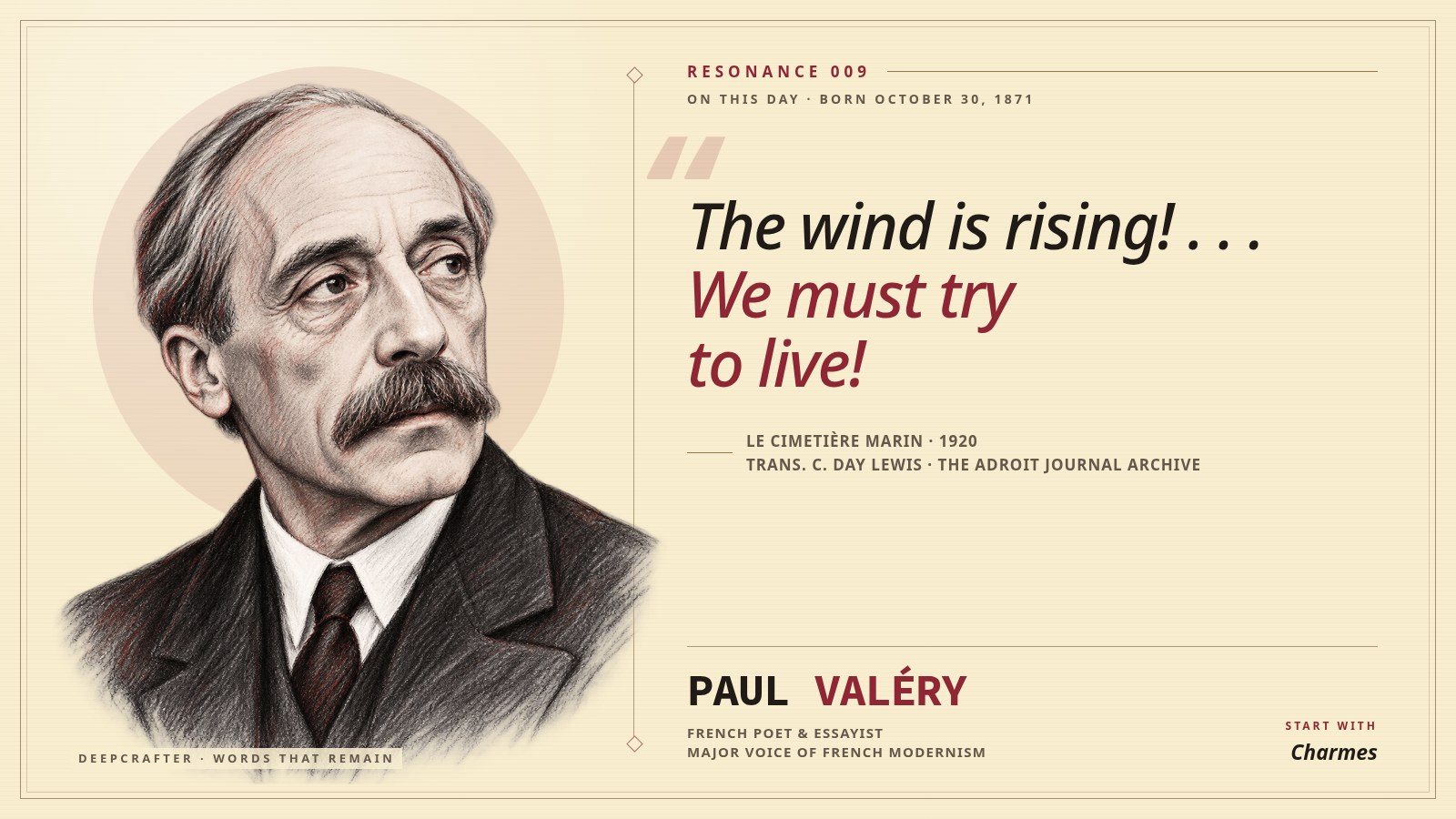
“The wind is rising! . . . We must try to live!”
Why we chose Paul Valéry today
Paul Valéry was born on October 30, 1871, in Sète, the Mediterranean port that would become inseparable from his best-known poem, “Le Cimetière marin” (“The Graveyard by the Sea”). We chose its closing summons because it does something rare: after twenty-three stanzas of stillness, sun, sea and mortality, the poem does not offer consolation. It lets the wind rise.
The line is often detached from its setting and made to sound like effortless optimism. In the poem, it is harder and more useful than that. The speaker has spent the afternoon looking from the cemetery toward the sea, testing the desire for pure thought against the body’s knowledge that it must move, change and die. The final verb is not to triumph but to try. Life returns as an action whose outcome is not guaranteed.
That tension belongs to Valéry’s whole career. He was a poet who stopped writing poetry for roughly twenty years, a public intellectual whose deepest work was conducted alone before dawn, and a formalist who distrusted inspiration while producing some of the most musical verse in French. His work asks what happens when thought becomes so exacting that it risks freezing life—and how rhythm, the body and the world set it moving again.
The Mediterranean beginning
Valéry grew up in Sète and studied law in Montpellier. His father was Corsican, his mother came from a Genoese family, and the Mediterranean remained both geography and mental element: dazzling, measured, changeable and never entirely still.
As a young man he entered the orbit of French Symbolism. He befriended Pierre Louÿs and André Gide and came to know Stéphane Mallarmé, whose exacting approach to poetic language marked him deeply. Valéry’s early poems already show the qualities that would define his mature work: classical form, difficult music, mythic figures and a fascination with the mind observing itself.
But precocity did not lead to a smooth literary ascent. In 1892, during a stormy night in Genoa, Valéry underwent the crisis he later treated as a decisive break. He turned away from poetry as a public vocation and redirected his attention toward the mechanisms of thought itself.
The withdrawal was not silence. It was a change of laboratory.
Twenty years away from poetry
From the mid-1890s, Valéry began the notebooks that would occupy him for the rest of his life. He rose at about five in the morning and wrote before entering the practical day. By his death, the Cahiers filled more than 250 notebooks and tens of thousands of pages.
These pages were not a conventional diary. Valéry studied attention, memory, dreams, mathematics, language, emotion, drawing and the body. He treated his own mind as both instrument and problem. The aim was not to preserve a stable identity but to observe processes: how an idea forms, how a phrase changes pressure, how a sensation becomes a concept, how consciousness deceives itself.
This period also produced The Evening with Monsieur Teste in 1896. Teste—his name evokes an old form of the French word for “head”—is a man of extreme intellectual discipline, almost pure consciousness. He tries to remove habit, vanity and inherited opinion from thought. Yet the character is not simply Valéry’s hero. He is also a warning. A mind that refuses every illusion may become incapable of ordinary human life.
For writers, Valéry’s long withdrawal complicates the familiar story of creative blockage. He did not wait passively for inspiration to return. He built another practice, one that was private, repetitive and investigative. The notebooks became a place where unfinished thinking had value without needing to become a product.
The return: La Jeune Parque and Charmes
Valéry returned to poetry under pressure from friends, especially Gide. What began as a revision of an earlier poem expanded into La Jeune Parque (The Young Fate), published in 1917. Its success transformed a nearly forgotten Symbolist into one of France’s most celebrated writers.
The return did not cancel the years of analysis. It brought their discipline into verse. La Jeune Parque turns a young woman’s divided consciousness into a long formal drama. Thought does not merely appear as subject; the poem makes readers experience its hesitations, repetitions and reversals through sound and syntax.
“Le Cimetière marin” followed in 1920 and entered the collection Charmes in 1922. The French title of the collection can suggest charms, spells or songs. That doubleness matters. Valéry regarded poetry as a constructed action upon the mind and body. Meter, rhyme and recurrence are not decoration placed around an idea; they are the means by which the poem thinks.
In “The Graveyard by the Sea,” noon appears almost outside time. White tombs rest above the glittering water. The speaker is tempted by a purity that would escape change, but the sea keeps moving and the wind finally breaks the spell. The body re-enters the poem through breath, rhythm and command: we must try to live.
A poetics of making, not inspiration
Valéry distrusted the romantic image of the poet as a passive receiver of revelation. He cared less about where the first line came from than about what the writer did next. A poem, for him, was a deliberately sustained system of relations: sound answering sound, syntax controlling delay, image altering the force of an abstraction.
This did not make his work cold. It made feeling inseparable from form. The resistance of a fixed pattern could produce discoveries that free expression would miss. Constraint forced language to push back.
Five features make his method especially useful to writers:
1. Thought becomes an event
Valéry rarely presents an idea as a finished statement. The sentence changes direction while we read it. Doubt, attraction and resistance become part of the form.
2. The body corrects the mind
His speakers may desire purity, stillness or absolute knowledge, but breath, fatigue, desire, rhythm and mortality keep returning. The body is not thought’s enemy; it is the condition that prevents thought from becoming unreal.
3. Revision is discovery
The long making of La Jeune Parque shows revision expanding a work rather than merely polishing it. A draft can reveal the real problem only after the writer has spent time inside its constraints.
4. Form creates productive resistance
Regular verse gives language something to work against. Fiction writers can create comparable resistance through a restricted point of view, a recurring object, a fixed time span or a scene that must avoid direct explanation.
5. Private practice can feed public work indirectly
The Cahiers were not a warehouse of publishable paragraphs. They trained attention. Not every useful page needs to appear in the finished work.
Mornings in the laboratory of the mind
Valéry’s daily routine matters because it separated practice from performance. The early hour protected a space before correspondence, employment and public obligation. He did not need each session to produce a poem. He needed it to sharpen the instrument that might later make one.
His professional life continued alongside this private discipline. He worked at the Ministry of War and later as secretary to Édouard Lebey of the Havas agency. After his literary return, he became a major public figure: elected to the Académie française in 1925 and appointed in 1937 to the chair of Poetics at the Collège de France.
Even there, he treated poetics not as a list of rules but as the study of making. The relevant question was not only “What does this work mean?” but “What operations made it possible, and what operations does it perform on a reader?” That shift remains valuable in an age that often reduces writing either to self-expression or to content delivery.
A Valéry exercise for writers
Write a 600-word scene in which a character has decided to remain perfectly still while the world insists on movement.
- Give the character one abstract conviction they believe will protect them.
- Choose three physical details that contradict it: breath, weather, sound, hunger, pain or light.
- Repeat one image three times, changing its meaning each time.
- Do not let the character explain their emotional state.
- End with a small action—not a solution—that makes continued life possible.
On revision, underline every sentence that states an idea directly. Keep only the statements whose rhythm or position gives them pressure. Convert the rest into changes the reader can hear, see or feel.
Where to start reading
For the poem behind today’s line: Poems
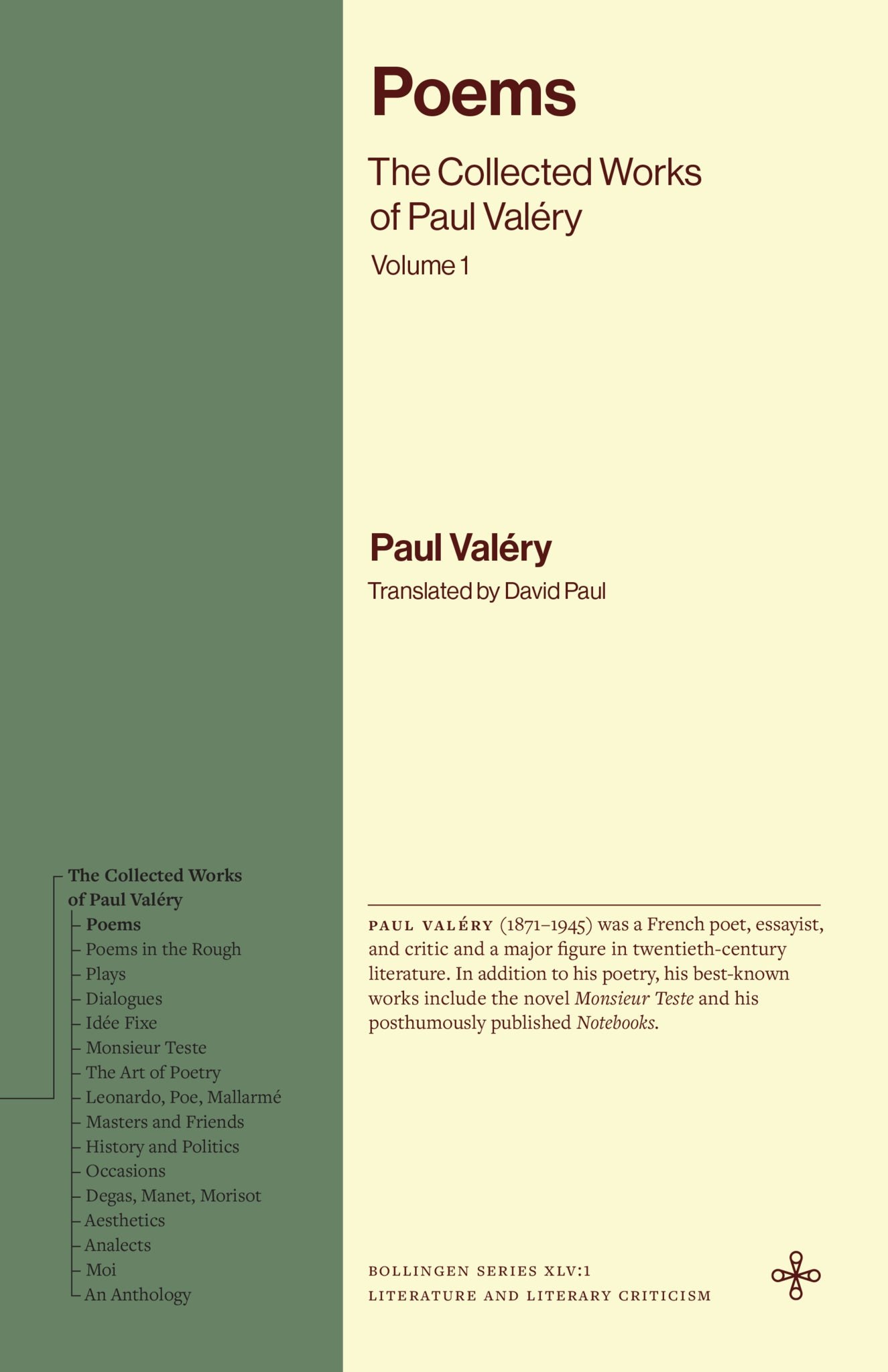
Edition: Princeton University Press paperback, 2026 · translated by David Paul, with notebook selections translated by James R. Lawler · bilingual French–English text · ISBN 9780691292427.
This newly issued paperback gathers the central poems, including La Jeune Parque and “Le Cimetière marin,” with French and English facing each other. It is the best route into Valéry’s formal intelligence because readers can see the length of the lines, recurring words and sound patterns even without fluent French. David Paul’s rendering is not the C. Day Lewis translation quoted in today’s Resonance card, so the difference between versions also becomes part of the reading.
For the dangerous purity of mind: Monsieur Teste
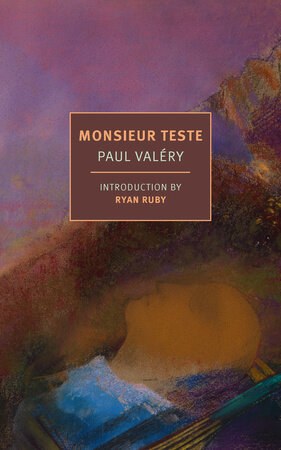
Edition: NYRB Classics paperback, 2024 · translated by Charlotte Mandell · introduction by Ryan Ruby · ISBN 9781681378923.
Read this short, strange book as both experiment and self-critique. Teste attempts to live without intellectual habit or borrowed opinion, but his purity makes ordinary relation difficult. The 2024 translation brings together the writings around the character in a compact entry point. Fiction writers should notice how a philosophical problem becomes a person observed through rooms, gestures, marriage and conversation.
For poetry beside the notebooks: The Idea of Perfection
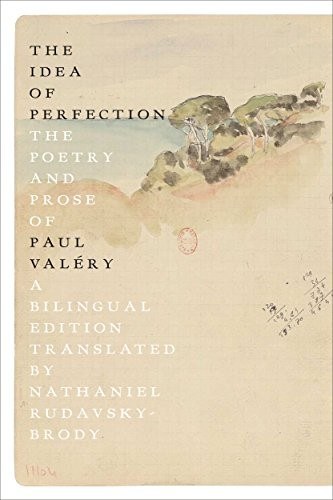
Edition: Farrar, Straus and Giroux paperback, 2021 · selected and translated by Nathaniel Rudavsky-Brody · bilingual French–English text · ISBN 9780374539368.
This volume places the major poems beside selections from the Cahiers. The arrangement reveals that Valéry’s published verse and private investigations are not rival bodies of work. The poems concentrate problems that the notebooks keep reopening: mortality, embodiment, attention, language and the impossible desire for perfection.
Why read Valéry now?
Writers today are surrounded by systems that reward immediate production. A thought becomes a post before it has met resistance; a draft is judged before it has discovered its real question; fluency is easily mistaken for completion.
Valéry offers another rhythm. Keep a private practice that does not need to perform. Treat form as a way of thinking. Let revision change the question, not only the wording. Be suspicious of any sentence that arrives too ready to be admired.
But his final lesson is not withdrawal. Pure thought can become another cemetery: brilliant, ordered and still. The work must eventually meet weather, voice, time and other people. The wind rises. The sentence has to move.
“We must try to live” endures because it keeps both halves of the demand. We must return to life, and the return remains a trial. Courage lies not in certainty but in beginning again under changing conditions.
Sources and edition notes
- Collège de France: Paul Valéry biography and appointments
- Académie française: Paul Valéry biography and bibliography
- Collège de France: Valéry’s questions across the human and social sciences
- Poetry Foundation: Paul Valéry biography and critical overview
- The Adroit Journal: C. Day Lewis translation context for “Le Cimetière marin”
- Ingram Academic: Poems, Princeton University Press 2026 edition
- Penguin Random House: Monsieur Teste, NYRB Classics edition
- Macmillan: The Idea of Perfection, Farrar, Straus and Giroux edition
The opening is a brief excerpt from C. Day Lewis’s translation of “Le Cimetière marin,” used with attribution for literary commentary. The website cover is DeepCrafter’s original illustrated Resonance card, not an archival photograph. Book-cover images identify the specific editions discussed.