Bury Something Precious: Evelyn Waugh and the Architecture of Memory
On Evelyn Waugh’s birthday, explore the satire, faith, memory and exact social language behind three essential books.
Bury Something Precious: Evelyn Waugh and the Architecture of Memory
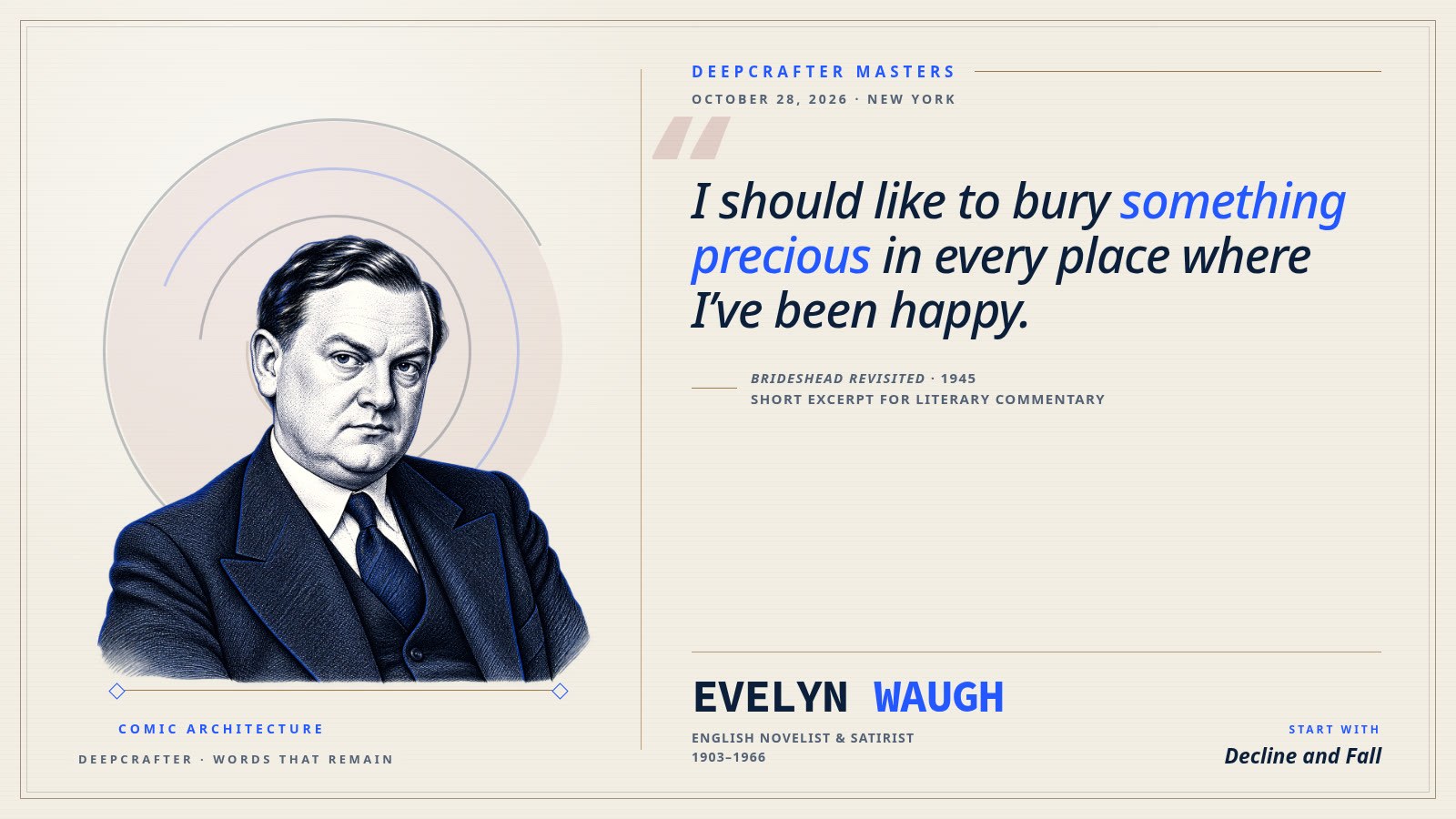
“I should like to bury something precious in every place where I’ve been happy.”
Why we chose Evelyn Waugh today
Evelyn Waugh was born on October 28, 1903. The line above is spoken by Sebastian Flyte in Brideshead Revisited, during a summer scene of strawberries, wine and suspended happiness. We chose it because it catches a side of Waugh that the label “satirist” can hide: his fiction is preoccupied not only with exposing absurdity, but with what people build, collect and remember against loss.
The full scene already contains the future. Sebastian imagines returning when he is older and miserable to dig up the precious object. Happiness is experienced as something destined to become memory. That double vision—pleasure sharpened by anticipated ruin—helps connect Waugh’s early comedies, Brideshead Revisited and the wartime Sword of Honour.
From drawing to sentences
Arthur Evelyn St John Waugh was born in Hampstead into a literary household. His father, Arthur Waugh, was a publisher; his older brother Alec became a novelist. Evelyn first imagined himself as an artist. He drew, printed and designed with care, interests that would remain visible in his attention to typography, architecture, clothes and surfaces.
After Lancing College, Waugh studied history at Hertford College, Oxford, without taking a degree. He trained briefly at the Heatherley School of Fine Art, then taught at a succession of schools. The humiliations and institutional absurdities of that period fed his first novel, Decline and Fall (1928).
The book established a comic method: an apparently passive protagonist moves through systems whose official language bears almost no relation to their conduct. Education, wealth, journalism, government and empire become machines powered by euphemism. Waugh rarely pauses to explain the joke. A crisp sentence places brutality beside manners and lets the collision indict the institution.
The velocity of the early satires
Decline and Fall, Vile Bodies, Black Mischief, A Handful of Dust and Scoop arrived in a remarkable decade. Their plots move quickly, often through telephone calls, misunderstandings, abrupt reversals and deaths treated with shocking brevity.
The comedy is architectural. Waugh builds rooms, clubs, schools, newsrooms and colonial offices whose rules are precise and morally vacant. Characters survive by mastering tone rather than truth. An outrageous statement delivered in the right register can pass as ordinary; a sincere feeling arrives as a social embarrassment.
For writers, the lesson is not merely “be funny.” Waugh understood that institutions reveal themselves through vocabulary. A school that calls itself a community of service can negotiate a teacher’s salary downward because of his disgrace. A newspaper can manufacture certainty faster than it acquires facts. Satire becomes strongest when the official phrase remains intact long enough to condemn itself.
Conversion and a larger moral frame
Waugh entered the Roman Catholic Church in 1930. The conversion did not remove his comic cruelty, but it gave his later fiction a more explicit account of time, judgment, grace and human failure.
His 1935 biography Edmund Campion announced the seriousness of this commitment. Yet the novels do not become sermons. Waugh’s Catholic characters can be weak, snobbish, self-deceiving or ridiculous. Belief supplies a structure larger than their conduct; it does not make their conduct exemplary.
That distinction matters in Brideshead Revisited (1945). The novel looks back from wartime dislocation to Charles Ryder’s friendship with Sebastian and involvement with the Flyte family. Country-house beauty, class privilege, alcoholism, desire and faith are entangled. The prose is more luxuriant than in the early satires because memory itself has become the medium: Charles is not simply reporting a vanished world; he is arranging and judging what its beauty meant.
War without heroic simplification
Waugh was commissioned in the Royal Marines during the Second World War and later served with the Royal Horse Guards. His military experience eventually became the Sword of Honour trilogy, published between 1952 and 1961.
Guy Crouchback enters the war hoping that public history will restore private purpose. Instead he encounters bureaucracy, failed operations and moral confusion. The books retain high comedy, but their scale is broader and their judgment sadder. Institutions remain absurd; individuals still have to decide how to act inside them.
Waugh’s achievement is to deny the reader an easy division between cynicism and idealism. Guy’s ideals can make him foolish, yet the world’s cleverness does not make it right. Comedy clears away self-flattery; it does not eliminate the need for belief.
His style: hard edges, controlled distance
1. The exact social noun
Waugh names ranks, rooms, fabrics, schools and rituals precisely. Such detail is not ornament. It tells us what a character notices and which hierarchy has trained the noticing.
2. Euphemism as evidence
Official language often performs the satire. Instead of paraphrasing hypocrisy, Waugh reproduces its polished phrasing and places the result beside what actually happens.
3. Abrupt tonal cuts
Farce can become cruelty in one sentence. A death may be followed by a logistical inconvenience. The shock exposes how efficiently a social world absorbs suffering.
4. Beauty under suspicion
Waugh could describe beauty with genuine feeling while asking who paid for it, what belief it embodied and whether memory had improved the view. Brideshead is powerful because enchantment and criticism remain simultaneous.
5. A narrator with a date
Retrospective narrators do not simply remember; they remember from somewhere. Charles Ryder’s wartime present changes the value of his youth. The distance between then and now creates the novel’s architecture.
The working discipline behind the persona
Waugh cultivated a public character—reactionary, combative, theatrically unfriendly—but the manuscripts and diaries preserved at the Harry Ransom Center show sustained craft across novels, journalism, travel writing, biography and correspondence.
He planned prose visually, revised for exactness and treated style as a moral instrument. His early training in drawing and printing encouraged an eye for proportion: a paragraph, like a page, needed balance. Travel supplied locations and social observation, but experience was transformed rather than simply transcribed.
His practice suggests several useful habits:
- collect the exact vocabulary of the institution you want to portray;
- cut explanatory commentary after the scene has made the contradiction visible;
- revise dialogue for status as well as information;
- ask what the retrospective narrator now knows—and still refuses to know;
- keep beauty and judgment in the same frame.
A Waugh exercise for fiction writers
Write a 500-word scene in an institution: a school, gallery, startup, ministry or family foundation.
- Give the institution a noble public motto.
- Let one character use its official vocabulary perfectly.
- Make the actual decision contradict the motto.
- Do not explain the hypocrisy.
- End with one beautiful object that the viewpoint character genuinely loves.
The object prevents satire from becoming weightless. The institution may deserve ridicule; the character still lives among things worth mourning.
Where to start reading
For comic speed: Decline and Fall
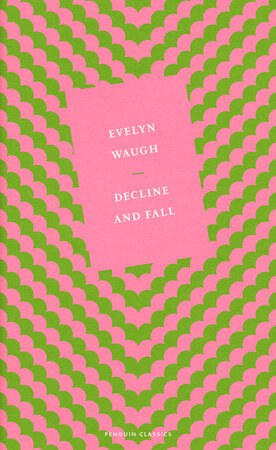
Edition: Penguin Classics hardback, 2022 · introduction by Barbara Cooke · ISBN 9780241585290.
Begin here for Waugh’s early method: an innocent pushed through education, high society and the penal system while every institution preserves its tone. Watch how little explanation the jokes require.
For memory, beauty and faith: Brideshead Revisited
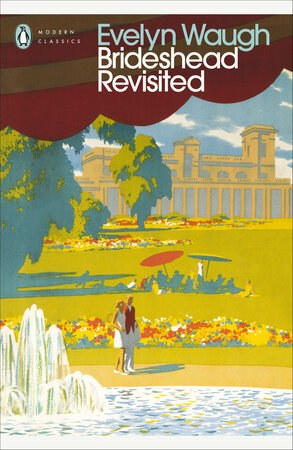
Edition: Penguin Modern Classics paperback · ISBN 9780141182483.
Read slowly enough to notice the novel’s two dates: the remembered 1920s and the wartime present. The tension between them is more important than nostalgia alone.
For war, vocation and disillusion: Sword of Honour
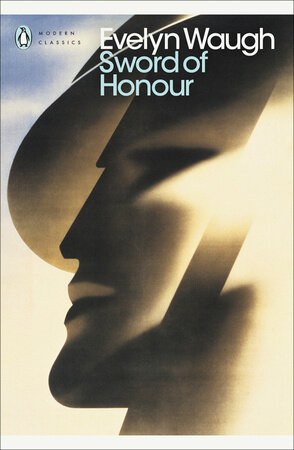
Edition: Penguin Modern Classics paperback, 2024 · introductions by Angus Calder and Martin Stannard · ISBN 9780141184975.
The trilogy gives Waugh’s comedy its largest moral field. Read it after the early satire to see what happens when institutional absurdity meets a protagonist still searching for honorable action.
Why read Waugh now?
Modern institutions remain fluent in language that protects them from what they do. Waugh teaches writers to listen for that gap. He also warns against believing that exposure is sufficient. Once hypocrisy has been named, people still need loyalties, rituals and objects through which to live.
“I should like to bury something precious in every place where I’ve been happy.” The sentence is tender because it already knows the burial will happen. Waugh’s best work places comedy and elegy in the same ground, then asks what the reader will return to uncover.
Sources and edition notes
- Harry Ransom Center: Evelyn Waugh collection and biographical sketch
- University of Leicester: Evelyn Waugh biography
- The Evelyn Waugh Society: About Evelyn Waugh
- Penguin: Evelyn Waugh author page
- Penguin: Sword of Honour edition
The opening sentence is a short excerpt from Brideshead Revisited, used with attribution for literary commentary. The cover is a DeepCrafter-created illustrated quotation card, not an archival photograph. Book-cover images identify the specific publisher editions discussed.