Between the Temple and the Workshop: Ivan Turgenev and the Art of Living Ideas
On Ivan Turgenev's birthday, a portrait of the novelist as a secret psychologist who gave ideas enough force to matter and people enough life to exceed them.
Between the Temple and the Workshop
Ivan Turgenev and the Art of Living Ideas
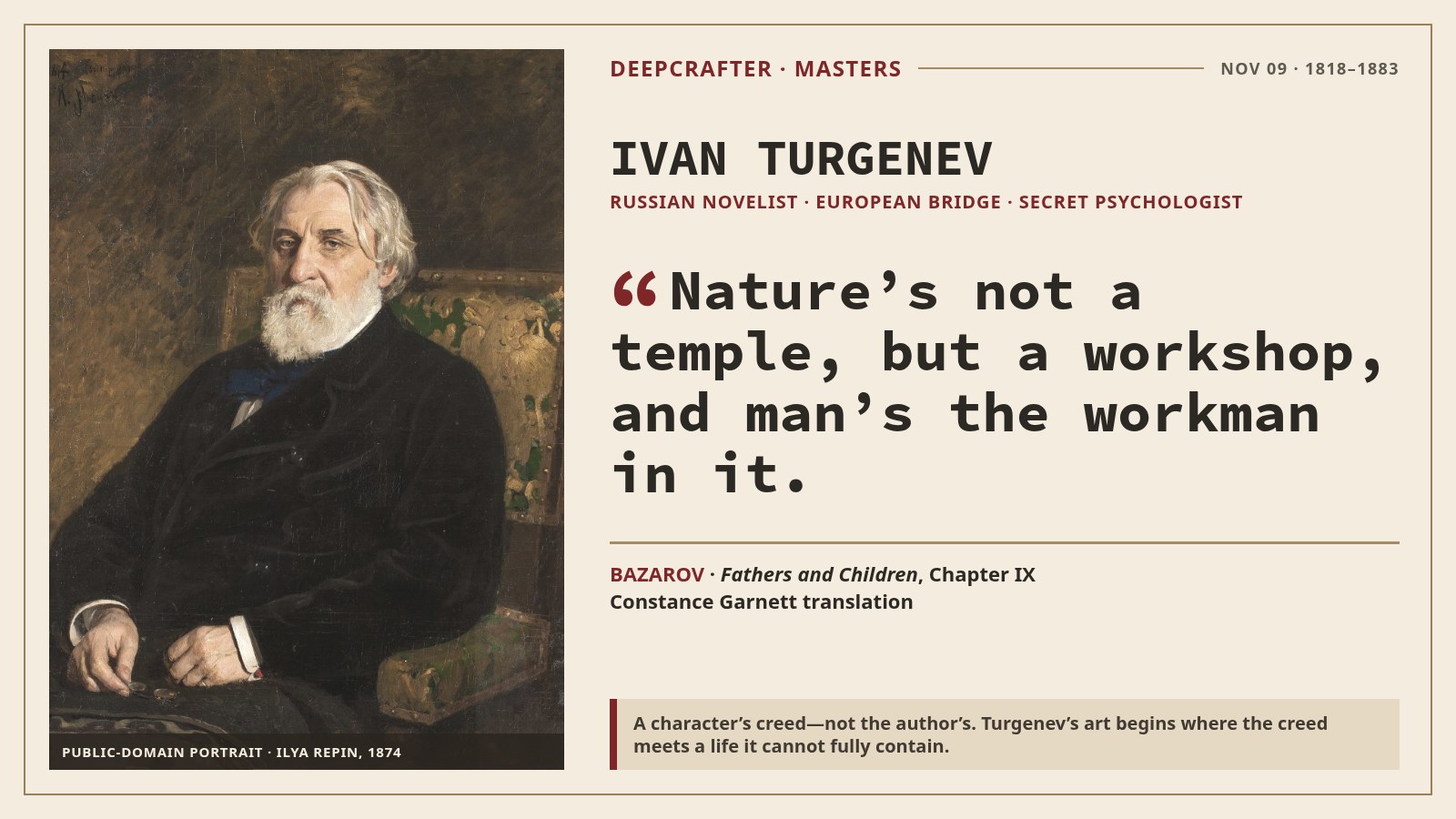
“Nature’s not a temple, but a workshop, and man’s the workman in it.”
The line belongs to Bazarov in Chapter IX of Fathers and Children, not to Ivan Turgenev speaking in his own voice. That distinction is why it is worth choosing on Turgenev’s birthday.
Born in Oryol on November 9, 1818, Turgenev became one of the nineteenth century’s great makers of characters whose ideas cannot be separated from their pride, longing, class, age and need for love. He could give Bazarov a sentence sharp enough to feel like a manifesto, then place that sentence inside a life that the manifesto cannot fully contain.
Turgenev’s art lives between the temple and the workshop: between reverence for beauty and impatience with inherited forms; between psychological knowledge and visible behavior; between a Russia he criticized and the European world through which he helped Russian literature travel.
A childhood inside power
Visuotinė lietuvių enciklopedija records Turgenev’s birth in Oryol and his education at St. Petersburg and Berlin. Penguin Random House describes a childhood shaped by a tyrannical mother and notes his later place as the first Russian writer to gain a wide reputation in Europe.
He was born into the landed nobility. That position gave him education, languages, travel and access to European intellectual life. It also placed him inside the system of serfdom he would later expose with unusual attention to the people it reduced to property.
The contradiction matters. Turgenev did not write about class from outside it. He knew the manners, evasions and refinements of the estate world, and he knew the violence that could be concealed beneath them. His fiction repeatedly notices the distance between a person’s idea of their own dignity and the cost paid by someone with less power.
From philosophy to the lives in front of him
Turgenev studied philosophy in Berlin from 1838 to 1841. He returned to Russia with the habits of a Westernizer and briefly entered government service, but literature became his real work.
His first major prose achievement, Sketches from a Hunter’s Album, grew from encounters across the countryside: peasants, landowners, doctors, foresters, servants and families. The collection’s political force does not come from turning every character into an example. It comes from granting people observation, speech, contradiction and emotional presence.
The book appeared in 1852. That year Turgenev was arrested after publishing an unauthorized obituary of Nikolai Gogol and was then confined to his estate. The Penguin Classics edition page describes the sketches as his first major prose work and emphasizes their attention to the lives of peasants and landowners. The historical claim that the book alone caused emancipation should be treated cautiously; what is secure is that it became part of the antiserfdom literary climate and established his reputation.
The writer who lived between countries
In 1843 Turgenev met the celebrated singer Pauline Viardot. His attachment to her and his long relationship with the Viardot family shaped the geography of the rest of his life. After 1856 he lived mostly abroad, especially in France, while continuing to write about Russia.
That distance made him suspect to people who wanted a writer to belong cleanly to one camp. Yet it also made him a cultural bridge. In Parisian literary circles he knew writers including Gustave Flaubert and the Goncourt brothers. He helped make Russian literature legible to Western European readers while remaining preoccupied with the changes and unfinished arguments of Russian life.
His position was not comfortable. He could see the moral failures of the gentry without trusting revolutionary certainty. He could value European thought without turning Europe into a simple answer. He could sympathize with a radical young man and still expose the damage done by contempt.
The controversy of Fathers and Children
Published in 1862, Fathers and Children arrived in a period of rapid political and generational change. Its central figure, Bazarov, rejects authority, inherited principles, romanticism and art. He is brilliant, abrasive, useful, funny and alive.
The novel’s refusal to make him either saint or villain created fury. A 2022 New Yorker account summarizes the conflicting reactions: young radicals felt attacked, liberals thought the radicals had been granted too much force and reactionaries believed Turgenev had discredited the revolutionary generation. The National Endowment for the Humanities likewise describes the distrust he faced from both left and right.
The controversy reveals the strength of the characterization. Readers could not agree on what Turgenev “meant” because Bazarov exceeded the role of spokesman. The novel gives him intellectual energy and practical competence. It also gives him love, humiliation, loneliness, tenderness toward his parents and a body vulnerable to death.
Turgenev does not refute Bazarov with a better speech. He lets life reach the places where the speech is insufficient.
The secret psychologist
Turgenev once described the poet as a psychologist—but a secret one: the writer should know the roots of phenomena while presenting their blooming or withering. The formulation survives in his letter to Konstantin Leontiev and is discussed in scholarship on his fiction.
That is an accurate description of his restraint. He often resists the temptation to explain a character at the moment of maximum feeling. Instead, he gives us a gesture, a change of subject, a landscape, a social mistake or a line whose pressure exceeds its literal meaning.
In Fathers and Children, Nikolai’s pain is not delivered as a thesis on generational alienation. He overhears his son accepting the judgment that his day is over. He returns home. He takes out a German book. He wonders whether he has failed to keep pace.
The psychology is not absent. It is embodied.
For writers, this is one of Turgenev’s most durable lessons: know more about the wound than you explain. Let the visible behavior carry the invisible structure.
Landscape as more than background
Turgenev’s landscapes are often praised for lyric beauty, but their function is not merely decorative. Weather, fields, gardens, roads and houses create a measure larger than the characters’ immediate claims.
In Sketches from a Hunter’s Album, movement through the countryside allows encounters across class. In Fathers and Children, the estate is not simply a place where ideas are discussed; its failing management, changing labor relations and natural rhythms make the debate material. In First Love, remembered spaces hold the shock of belated understanding.
Nature can contradict the characters, absorb them or continue after them. This is one reason Bazarov’s workshop sentence is so memorable. The novel gives his claim power, then surrounds it with a world that cannot be reduced to the claim.
How he built people out of contradiction
Turgenev’s characters often contain two truths that cannot be reconciled by a single label.
- Nikolai is old-fashioned and sincerely trying to change.
- Pavel’s dignity is performative and still not empty.
- Bazarov’s contempt is cruel and his intelligence is real.
- Arkady’s radicalism is borrowed, but his development is not merely cowardice.
This balance does not mean neutrality. Turgenev had moral and political commitments. It means he understood that fiction loses force when the author’s categories become larger than the people.
The same principle appears in his love stories. Desire is rarely pure self-knowledge. People misunderstand what they want, perform confidence, submit to timing and recognize themselves too late.
A working life of reading, letters and observation
Turgenev was a multilingual reader whose surviving library contains books in several languages and across literature and political history. Vassar College’s Special Collections preserves several hundred volumes from his library, many bearing his bookplate or inscriptions.
He was also an abundant correspondent. His letters carried literary judgment, friendship, travel, doubt and the unfinished thinking around his work. Scholarship on his correspondence notes that he could write several letters a day and used letters as an intellectual and creative practice.
The important lesson is not to imitate a nineteenth-century routine. It is to notice the circulation between reading, conversation, observation and fiction. Turgenev’s ideas did not remain abstract systems; they returned to living voices.
A three-book reading path
1. Begin with Sketches from a Hunter’s Album
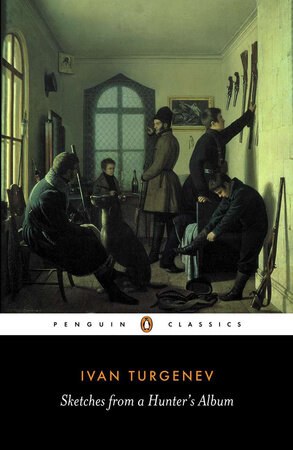
Selected edition: Penguin Classics, translated with introduction and notes by Richard Freeborn, ISBN 9780140445220.
Start here to see Turgenev’s social vision before the great novels. The collection trains attention on people whose lives the dominant order treats as background. Read for the way description becomes moral knowledge without becoming a speech.
Notice: who is allowed complexity, who is watched, and how landscape creates the conditions for an encounter.
2. Continue with Fathers and Children
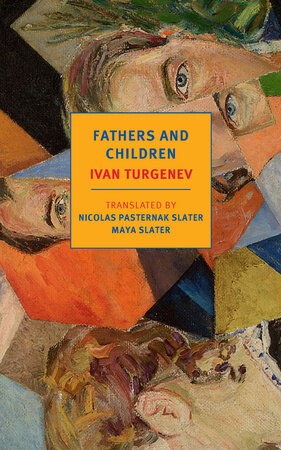
Selected edition: NYRB Classics, translated by Nicolas Pasternak Slater and Maya Slater, ISBN 9781681376356.
This is the central book for Turgenev’s art of living ideas. Read past the label nihilist. Track who admires Bazarov, who fears him, who needs him and which parts of his life refuse to obey his language.
Notice: what changes in the household before anyone changes an opinion.
3. End with First Love and Other Stories
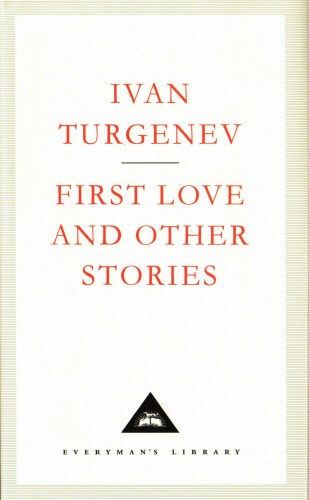
Selected edition: Everyman’s Library, First Love and Other Stories, with “First Love” and “A Fire at Sea” translated by Isaiah Berlin and “Spring Torrents” translated by Leonard Schapiro, ISBN 9781857151916.
End with memory, desire and delayed knowledge. These stories reveal the same secret psychology in a more intimate register. The older narrator understands what the younger self could not, but understanding does not undo the event.
Notice: how Turgenev lets one image or gesture revise everything that came before it.
What to carry into your own writing
Turgenev’s example is not a formula for political balance or melancholy realism. It is a discipline of scale.
Give ideas enough force to matter. Give people enough life to exceed their ideas. Know the roots of their behavior, but do not expose every root. Let class, place, work and family enter the scene as material conditions rather than explanatory labels.
Most of all, resist the easy victory of reducing a character to what they represent.
The temple and the workshop both remain in Turgenev because human beings need meaning and action, reverence and change. His fiction does not settle that contradiction. It makes the contradiction live.
Sources
- Project Gutenberg: Fathers and Children, translated by Constance Garnett
- Visuotinė lietuvių enciklopedija: Ivan Turgenev
- Penguin Random House: Ivan Turgenev
- Vassar College: Ivan Sergeevich Turgenev Library
- National Endowment for the Humanities: Ivan Turgenev Was Distrusted by the Left and the Right
- The New Yorker: Liberals, Radicals, and the Making of a Literary Masterpiece
- Donna Tussing Orwin, Consequences of Consciousness: Turgenev, Dostoevsky, and Tolstoy, Stanford University Press, 2007, especially p. 44 on the 1860 letter to Konstantin Leontiev.
Image and edition notes
- Cover portrait: Ilya Repin, Portrait of Ivan Turgenev (1874), Wikimedia Commons, public domain.
- Sketches from a Hunter’s Album cover: Penguin Random House / Penguin Classics.
- Fathers and Children cover: Penguin Random House / NYRB Classics.
- First Love and Other Stories cover: Penguin UK / Everyman’s Library.
Sources
- Project Gutenberg: Fathers and Children, translated by Constance Garnett
- Visuotinė lietuvių enciklopedija: Ivan Turgenev
- Penguin Random House: Ivan Turgenev
- Vassar College: Ivan Sergeevich Turgenev Library
- National Endowment for the Humanities: Ivan Turgenev Was Distrusted by the Left and the Right
- The New Yorker: Liberals, Radicals, and the Making of a Literary Masterpiece
- Donna Tussing Orwin: Consequences of Consciousness