The Room of Fiction Opens Again
Salman Rushdie’s lifetime medal is an invitation back to the novelist: a life across borders, the working desk, and three books that open different doors.
The Room of Fiction Opens Again
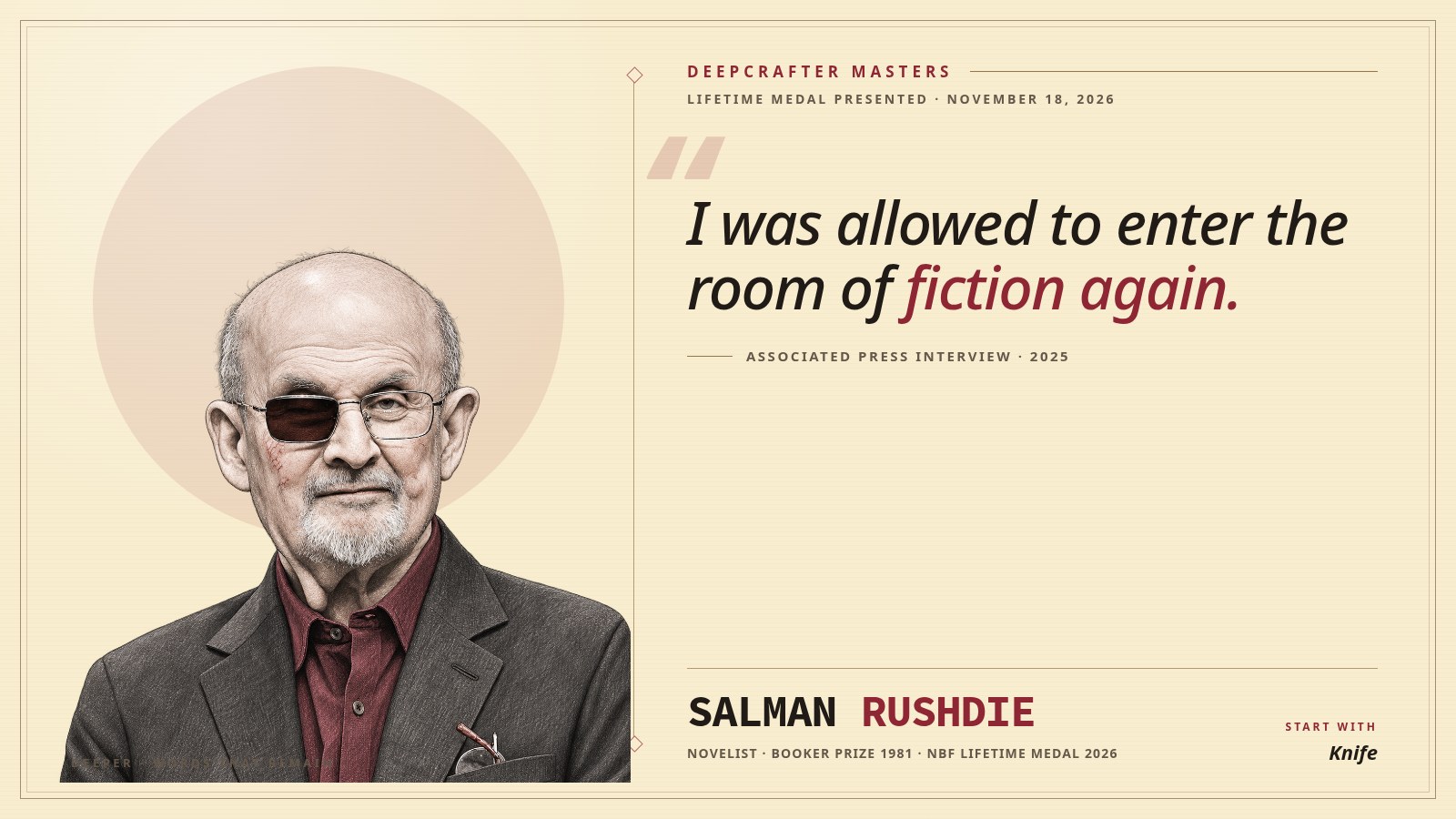
“I was allowed to enter the room of fiction again.” — Salman Rushdie, in a 2025 Associated Press interview
On November 18, 2026, Salman Rushdie received the National Book Foundation’s Medal for Distinguished Contribution to American Letters in New York. Kiran Desai presented the honour. The Foundation had announced its choice on September 10; this week’s event is the completed presentation, not a newly announced decision. Publishers Weekly’s November 19 ceremony report confirms the occasion.
The line above comes from a different moment: Rushdie’s November 2025 AP interview, not his award-night speech. It gives us a way back from the public figure to the working novelist. After writing Knife, he described recovering the mental space for fiction. The Eleventh Hour includes pieces written before the 2022 attack as well as work completed afterward.
A lifetime medal invites a backward glance. This reading asks a forward-looking question instead: how does a writer keep making room for another kind of story?
A life larger than its most famous episode
Born in Bombay in 1947, educated in India and England, and later based in New York, Rushdie has made a literary life across borders. Midnight’s Children won the 1981 Booker Prize. His subsequent books range from Shame and The Satanic Verses to Haroun and the Sea of Stories, Quichotte and Victory City. His nonfiction includes essays, reportage and memoir. The Foundation’s announcement places the medal in the context of this sustained body of work.
The fatwa against him in 1989 and the attack in 2022 are unavoidable parts of his history. They are not an adequate description of his art. Reading only through those events risks approaching every page already certain of its emotional register: solemn, embattled, testimonial.
In his 2017 conversation with Porochista Khakpour for Poets & Writers, Rushdie discussed exactly that mismatch. Readers’ expectations, he said, had been coloured by the darkness of the threats against him, obscuring the humour in his fiction. The correction is wonderfully ordinary: open a book and listen to what its narrator actually does.
Worlds meet inside a voice
In his 2005 Paris Review interview with Jack Livings, Rushdie described an interest in bringing different parts of the world into the same story. He also defended clarity: complexity does not remove a storyteller’s obligation to engage the reader.
That pairing is a useful entrance to his style. A story can cross places, eras and registers while giving us a voice to follow. The practical question is not simply how much material a novel can hold. It is what gives that material movement and connection.
For a writer reading Rushdie, try tracking transitions rather than collecting impressive sentences. When a narrator moves from a family memory to a public event, what carries you across? An image, a joke, an argument, a recurring name? When time changes, what remains emotionally continuous?
These are reading prompts, not a formula attributed to him. They turn admiration into attention. An expansive novel becomes less intimidating when you can notice the small decisions that let one passage lead to another.
Returning to the desk, not performing a legend
The 2017 Poets & Writers interview offers a concrete account of work. When writing a novel, Rushdie said, he worked daily and gave it priority over other obligations. He described beginning with a couple of hours at the desk before the rest of the day. He also preferred not to show unfinished work, seeking readers when his own revisions were no longer making it better.
These are dated descriptions of his practice, not a claim about his exact routine in 2026. Their value is in the choices they reveal: reserve usable attention for the book; protect a fragile draft; recognise when another reader can help.
The lesson need not be to imitate the clock. Someone writing around a job or caring responsibilities may have a very different day. The transferable decision is to make the manuscript’s next encounter with your attention concrete. A small protected session is more useful than an ideal routine that never occurs.
Three doors into the work
Our suggested sequence moves from memoir to shorter fiction to the large early novel. It is an editorial route, not Rushdie’s prescribed reading order. All three are English-language editions of works originally written in English.
1. Knife: Meditations After an Attempted Murder
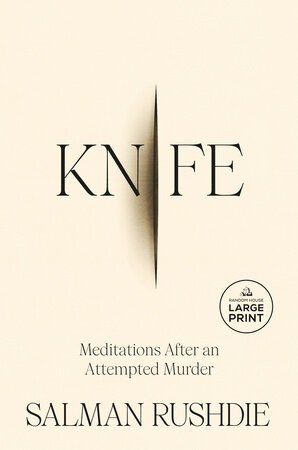
Edition shown: Random House Large Print, April 16, 2024; 272 pages; ISBN 9780593913659. Publisher and edition.
Begin with the memoir’s account of the attack and its aftermath. Then ask a formal question: what does a first-person account owe to the actual people and events it describes? Notice where narration makes room for another person rather than leaving the narrator alone at the centre.
2. The Eleventh Hour
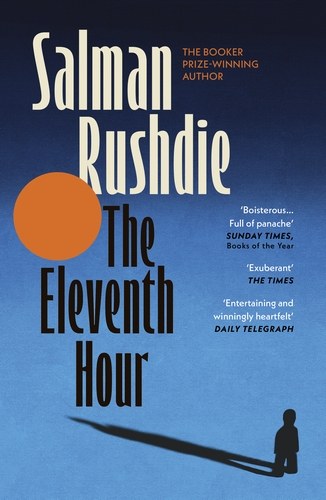
Edition shown: Vintage UK paperback, August 6, 2026; 272 pages; ISBN 9781529968842. The collection first appeared in 2025; this is not its first edition. Publisher and edition.
Continue into five pieces of fiction. The publisher’s description moves among India, England and America, with old age and the fantastic sharing the page. Try asking what a story can invent that a memoir cannot. Compare narrative distance, not just subject matter: how close are we to a character’s thoughts, and who controls what we learn?
3. Midnight’s Children
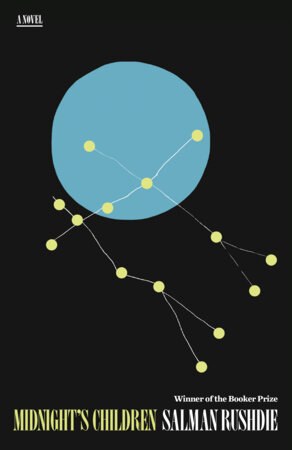
Edition shown: Random House ebook, August 26, 2010; publisher lists 560 pages; ISBN 9780307744111. The novel was first published in 1981. Publisher and edition.
Finally, enter the novel whose central character, Saleem Sinai, is born at the moment of Indian independence. Read for the relationship between personal memory and national history. Mark passages where the scale changes: a private detail acquires public significance, or an enormous event becomes legible through a particular life.
Leave space for the next story
A useful notebook exercise after this sequence is to divide a page in two. On one side, list the facts you would need to honour in a personal account. On the other, list the questions you would want a fictional character to explore. Do not hurry to turn one column into the other.
The point is possibility. A life can generate testimony, comedy, fantasy, argument and stories that have not yet found their form. A public event may bring us to an author; attentive reading lets the work become larger than the reason we arrived.
For Rushdie’s medal, that is a fitting celebration: not merely another account of what happened to him, but another reader entering the room of fiction.
Sources
- National Book Foundation: lifetime medal announcement
- Publishers Weekly: completed ceremony, November 19, 2026
- AP: Rushdie on returning to fiction, November 2025
- Paris Review: Art of Fiction 186, Summer 2005
- Poets & Writers: Epic interview, 2017
- knife: publisher edition and cover
- eleventh-hour: publisher edition and cover
- midnights-children: publisher edition and cover