Where Words Gather Their Power: Margaret Atwood and the Stories That Refuse to Stay Silent
On Margaret Atwood’s birthday, follow the power of language through speculative worlds, contested histories and three novels that make the reader judge the record.
Where Words Gather Their Power
Margaret Atwood and the Stories That Refuse to Stay Silent
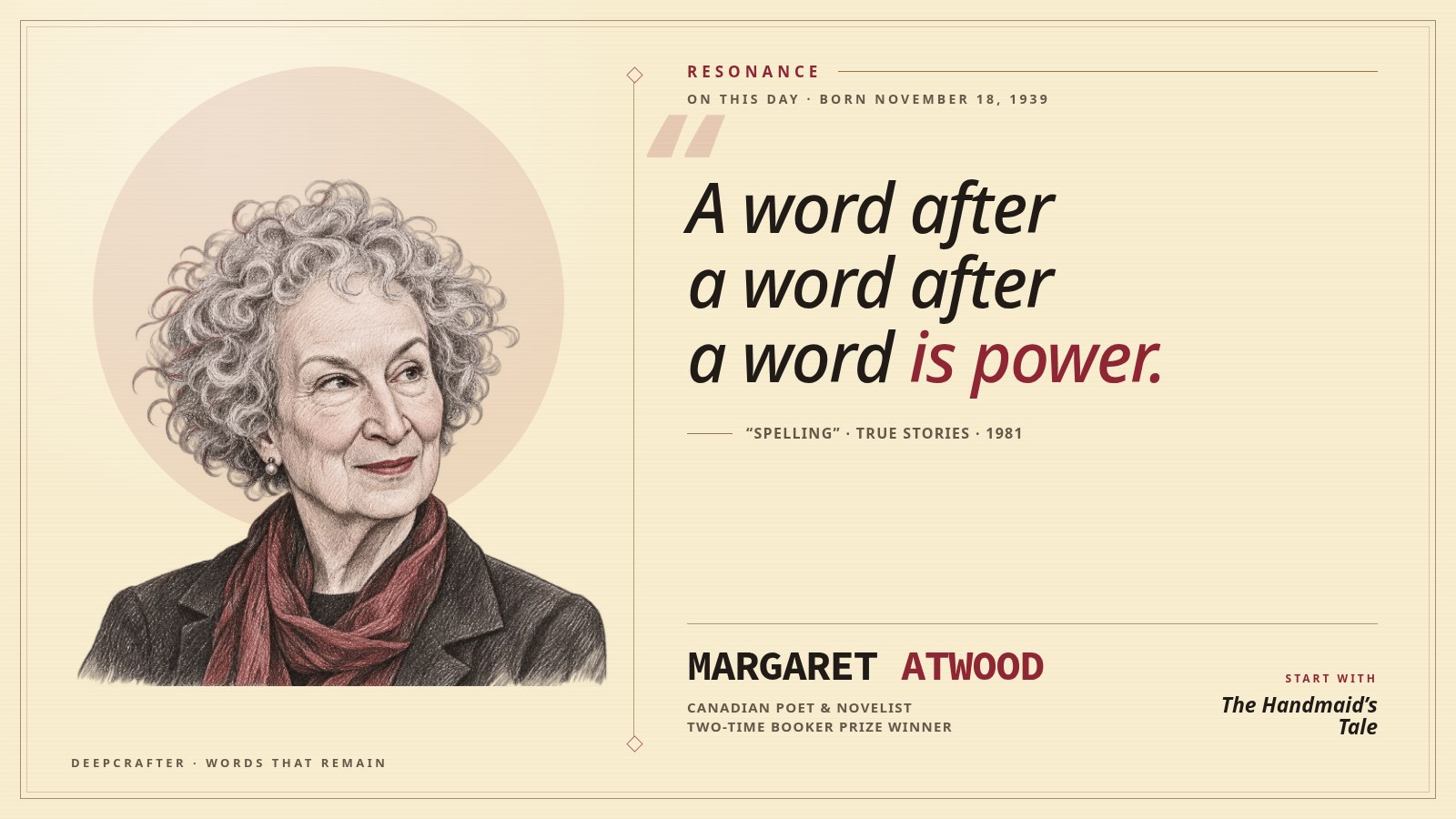
“A word after a word after a word is power.”
Margaret Atwood wrote the line in “Spelling,” a poem collected in True Stories in 1981. Its simplicity is deceptive. Power does not arrive here as a grand speech or a finished doctrine. It accumulates: one word placed after another, each small act of naming making the next one possible.
November 18 is Atwood’s birthday. We return to this sentence today because it reaches across the extraordinary range of her work—from poetry and speculative fiction to historical novels, criticism and essays. Again and again, her characters live inside systems that try to control what may be said, remembered or believed. Their resistance often begins before escape is possible. It begins by preserving a word, a version of events, a private record or a story within a story.
The line is not a claim that every use of language is liberating. Atwood’s work is too alert to propaganda, euphemism and official histories for that. Words can enforce a regime as readily as they can expose one. The question running through her writing is therefore sharper: who gets to arrange the words, and what becomes possible when the arrangement changes hands?
A childhood divided between woods and city
Atwood was born in Ottawa in 1939 and grew up between northern Ontario and Quebec and the city of Toronto. Her father was an entomologist, and the family’s seasonal life in the woods placed the natural world close to daily experience: weather, insects, water, isolation and the practical knowledge needed to move through unfamiliar ground.
That early geography matters without becoming a key that explains every book. It gave Atwood a durable sense that human arrangements are neither the whole world nor necessarily permanent. Cities, institutions and social rules can look absolute from inside them; a forest makes their scale less certain.
She began writing poetry in high school and decided at sixteen to become a writer. She studied at Victoria College at the University of Toronto and then at Radcliffe College, continuing graduate work at Harvard. Her first poetry pamphlet, Double Persephone, appeared in 1961. The Circle Game later received Canada’s Governor General’s Award and established her as a major poet before the novels made her internationally famous.
This order is worth remembering. Atwood did not become a poet after learning to construct novels. The poet came first. Even in her longest fiction, images carry argument, repetitions gather force, and a dry turn of phrase can alter the moral temperature of a scene.
The witness who cannot control the record
Atwood’s best-known narrators rarely speak from secure ground. Offred in The Handmaid’s Tale has been stripped of her original name and placed inside a vocabulary designed by the state. Grace Marks in Alias Grace is surrounded by doctors, lawyers, reformers, journalists and readers who all want her life to confirm a theory. Iris in The Blind Assassin writes late in life, after public narratives have hardened around her family.
These speakers do not simply deliver hidden facts. They hesitate, arrange, withhold and revise. Their power lies partly in controlling the pace at which another person may know them.
That is why Atwood’s ambiguity is not vagueness. On her official FAQ, she declines to provide definitive interpretations of her own endings because an authorial ruling would inhibit readers from discovering meanings in the work. The books preserve uncertainty as an active relation between evidence and judgment.
For writers, this creates a demanding model of point of view. A narrator need not tell everything in order to be vivid, and a gap need not be a failure of construction. The important question is whether the silence has pressure. Who benefits from the missing information? Who is trying to fill it? What does the reader reveal by deciding too quickly?
Speculation built from evidence
The Handmaid’s Tale is often described as prophetic, but Atwood has long emphasized the historical materials beneath its imagined future. Gilead’s practices are not inventions detached from human precedent. The novel rearranges known forms of coercion, religious authority, surveillance and control over reproduction into a system that feels frightening because its components have existed.
This method gives her speculative fiction its distinctive texture. The future is not a display case filled with clever gadgets. It is a pressure test for tendencies already present. A social habit, ecological risk or technological promise is extended until its hidden assumptions become visible.
The same evidentiary discipline appears in Alias Grace. Atwood returned to newspapers and prison records surrounding the nineteenth-century Grace Marks case. In the publisher’s interview accompanying the novel, she explains that she kept to established facts where they were known and invented within the gaps. That boundary does not weaken fiction. It makes invention answerable to the record.
Writers can borrow the principle without writing historical fiction. Before inventing a system, gather its pressures. What does it reward? What does it make difficult to say? Which ordinary person must perform its rules? A world becomes convincing when its institutions alter a character’s available choices.
Satire with a straight face
Atwood’s seriousness is inseparable from her wit. Her narrators notice absurdity even when they cannot escape it. Official language becomes comic because its confidence exceeds its truth. Social roles expose themselves through the elaborate performances required to maintain them.
The humor is rarely an interruption. It is a diagnostic instrument. A joke can show the distance between what a culture says it values and what it actually rewards. It can also keep a character from becoming merely exemplary. Atwood’s women may be frightened, compromised, vain, strategic, loving, cruel or wrong—often in combinations that resist a clean symbolic role.
This tonal mobility is one reason her books survive their own fame. A novel such as The Handmaid’s Tale can become a public emblem, but the text remains stranger than the emblem: intimate, self-questioning, darkly funny and structurally alert to the fate of testimony after the witness disappears.
A working life across forms
Atwood has published more than fifty books across fiction, poetry, essays, criticism, children’s literature and graphic work. She also taught at several universities, worked as an editor and participated in writers’ organizations. The range is not a sequence of abandoned identities. Poetry, fiction and criticism continue to inform one another.
Her accounts of process are practical rather than mystical. In interviews, she has described beginning novels in longhand, then transcribing and revising them on a computer. An image, scene or voice may arrive before a complete plan. She writes quickly and revises extensively. The physical sequence matters: handwriting generates material; transcription becomes an early revision; later drafts test structure and language again.
There is no need to turn this into a ritual every writer should imitate. The useful lesson is the separation of tasks. Discovery and judgment do not have to happen at the same speed. A first version can find the voice. Recopying can reveal what the voice is avoiding. Revision can ask whether the book has built enough evidence for the ending it wants.
Atwood’s historical research offers a second daily practice: keep the known fact and the imagined bridge visibly distinct in your own notes. When the record is silent, invention may enter—but it should know that it is entering a silence, not replacing certainty.
Language, survival and the reader
Atwood’s early critical study Survival proposed survival as a central preoccupation in Canadian literature. Across her later work, survival becomes more than remaining alive. It includes the survival of testimony, ecological systems, forbidden memory and stories vulnerable to being appropriated by institutions.
But survival is never morally simple. A person may survive through compromise. A record may survive only after being edited by someone else. A story may reach the future and still be misunderstood.
This is where the reader enters. Atwood repeatedly denies us the comfort of passive reception. The historical notes at the end of The Handmaid’s Tale, the competing accounts in Alias Grace and the nested texts of The Blind Assassin all make reading an act of interpretation with consequences. We decide which voice sounds credible, which evidence deserves weight and what our desire for closure is doing to the person being read.
The power of “a word after a word” therefore belongs neither to the writer alone nor automatically to the speaker. It is completed—or distorted—by the structures through which the words travel.
Three books, three ways into Atwood
1. Begin with The Handmaid’s Tale
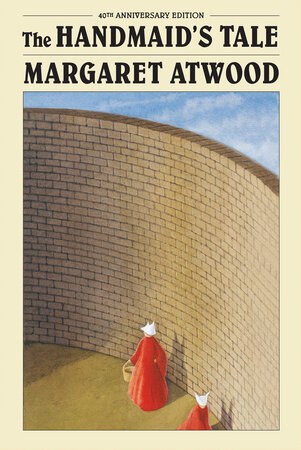
Selected edition: Vintage fortieth-anniversary deluxe paperback, September 23, 2025, 336 pages, ISBN 9798217009114.
Begin with the novel in which language itself becomes contested territory. Offred inherits prescribed phrases, a patronymic name and a public role, yet her private narration keeps testing how experience can remain her own.
Notice: the difference between the state’s fixed vocabulary and the narrator’s shifting, self-correcting sentences. Ask how memory interrupts official grammar.
2. Continue with Alias Grace
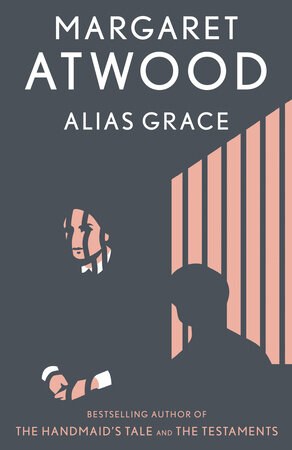
Selected edition: Vintage paperback, October 13, 1997, 480 pages, ISBN 9780385490443.
Move from a fictional future to a documented nineteenth-century case. Grace Marks has become an object of other people’s explanations; the novel restores not certainty, but the difficulty of listening when every listener brings a preferred verdict.
Notice: where evidence ends and story begins. Watch how domestic labor, quilts, remembered speech and gaps in memory complicate the demand for a single confession.
3. End with The Blind Assassin
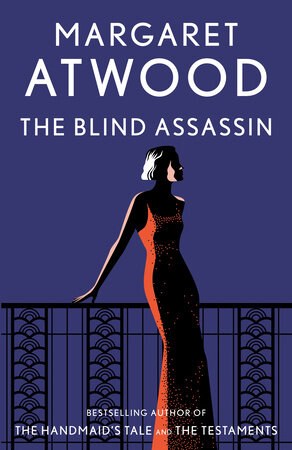
Selected edition: Vintage paperback, August 28, 2001, 544 pages, ISBN 9780385720953.
End with Atwood’s most layered demonstration of stories inside stories. Memoir, newspaper accounts, family history, romance and science fiction gather around a death whose meaning changes as each narrative frame is reconsidered.
Notice: how one form corrects, conceals or destabilizes another. The novel’s architecture shows that narrative power can come from placement as much as from revelation.
What writers can carry forward
Give silence a structure. If a narrator withholds something, let the omission affect pacing, relationships and the reader’s judgments. Mystery is strongest when absence has consequences.
Build speculation from existing pressures. Start with a documented practice, incentive or fear. Extend it through ordinary life before enlarging it into spectacle.
Separate evidence from invention. Know which details are recorded, which are probable and which belong entirely to the novel. The distinction creates freedom because it clarifies responsibility.
Let form participate in the argument. A story about contested truth should not arrive in a perfectly uncontested shape. Use documents, interruptions or competing voices only when they change what the reader must do.
Revise through transfer. Moving a draft from hand to screen, or from one form to another, can expose assumptions invisible inside the original phrasing. Treat transcription as thinking, not clerical work.
One word, then another
Atwood’s birthday invites celebration of an unusually large body of work, but the line from “Spelling” returns us to the smallest unit. A word does not become powerful because it stands alone. Its force comes from sequence, memory and relation—from what precedes it, what it permits next and who is allowed to keep speaking.
For the next page you write, look for the word your character has been given by someone else: a name, a diagnosis, a title, a polite explanation. Then ask what happens when the character places a different word after it.
That may be where the story begins to change hands.
Sources
- Margaret Atwood: Official Biography
- Margaret Atwood: Full Bibliography
- Margaret Atwood: Official FAQ
- Margaret Atwood, “I Do Some Sermonizing”
- Barnard Center for Research on Women: “Spelling” citation
- The Paris Review: Margaret Atwood, The Art of Fiction No. 121
- Penguin Random House: The Handmaid’s Tale
- Penguin Random House: Alias Grace
- Penguin Random House: The Blind Assassin
Image and edition notes
- Website cover: the original illustrated Margaret Atwood Resonance card published by DeepCrafter; it is an illustration, not an archival photograph.
- The Handmaid’s Tale cover: Vintage fortieth-anniversary deluxe paperback, ISBN 9798217009114; cover and edition metadata from Penguin Random House.
- Alias Grace cover: Vintage paperback, ISBN 9780385490443; cover and edition metadata from Penguin Random House.
- The Blind Assassin cover: Vintage paperback, ISBN 9780385720953; cover and edition metadata from Penguin Random House.
- The opening sentence is a brief excerpt from “Spelling,” collected in True Stories (1981); original lineation was reflowed on the Resonance card without changing the wording.
Sources
- Margaret Atwood: Official Biography
- Margaret Atwood: Full Bibliography
- Margaret Atwood: Official FAQ
- Margaret Atwood: I Do Some Sermonizing
- Barnard Center: Spelling citation
- The Paris Review: The Art of Fiction No. 121
- Penguin Random House: The Handmaid’s Tale
- Penguin Random House: Alias Grace
- Penguin Random House: The Blind Assassin