Give Name to the Nameless: Audre Lorde and the Work of Poetry
On Audre Lorde’s death anniversary, trace how she turned feeling into language, language into action and a writing life into space for other voices.
Give Name to the Nameless
Audre Lorde and the Work of Poetry
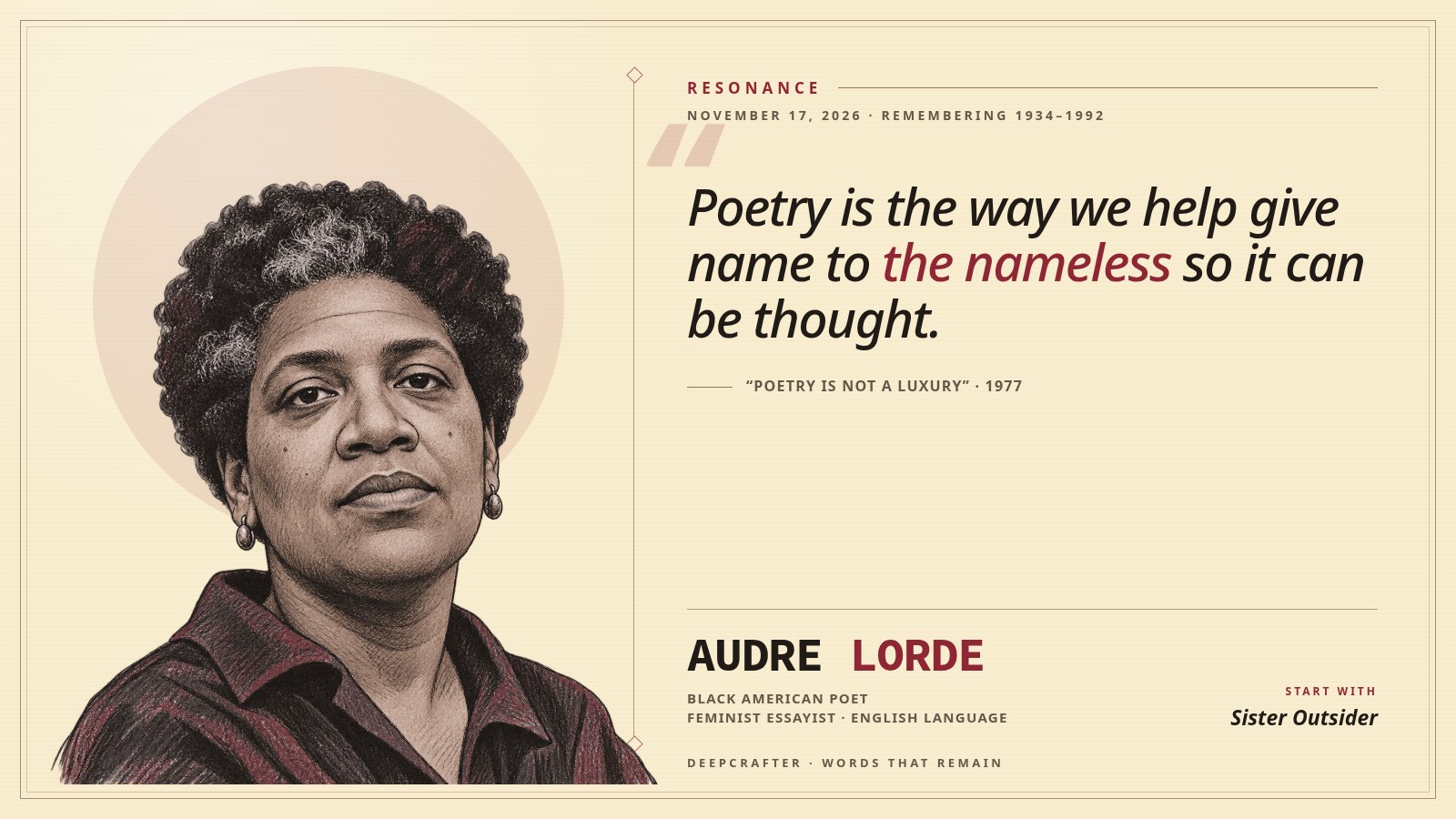
“Poetry is the way we help give name to the nameless so it can be thought.”
Audre Lorde wrote that sentence in “Poetry Is Not a Luxury,” first published in 1977. It explains why poetry mattered to her before it explains anything about literary form: a feeling that has not yet entered language cannot easily become a choice, a demand or a shared future.
November 17 marks Lorde’s death in 1992. We return to this line today because it refuses the idea that poetry is an ornament added after serious thinking is done. In Lorde’s work, language is one of the places where thought begins. Naming is not the end of a private discovery. It is the first step toward making experience communicable—and therefore capable of changing a life beyond the page.
A child who answered in poems
Lorde was born in New York City in 1934 to parents from the Caribbean island of Grenada. She grew up in Harlem and attended Catholic schools, in a household shaped by migration, work and the pressures of racism.
Long before she became the writer who described herself as “black, lesbian, mother, warrior, poet,” she used poetry as a practical language. According to the Poetry Foundation’s account of her life, Lorde memorized poems and drew on them when ordinary conversation failed her. When no poem she knew matched what she needed to say, she began writing one.
That origin matters. It suggests that a poem does not begin with a desire to sound poetic. It begins at the edge of available speech. A writer feels that the inherited phrases are too small, too smooth or simply false, and must make a form capable of carrying what has not yet found words.
Her first published poem appeared in Seventeen while she was still in high school. She later earned a degree from Hunter College and a master’s in library science from Columbia University, then worked as a librarian in New York public schools during the 1960s. The sequence is revealing: reader, keeper of books, teacher, poet. Lorde’s writing life developed alongside institutions of access and learning, not apart from them.
The poem as a movement from feeling to action
“Poetry Is Not a Luxury” was first printed in the feminist journal Chrysalis under the title “Poems Are Not Luxuries.” The essay argues from a process: something is felt before it is fully understood; poetry gives that feeling form; the formed thought can then enter action.
This is not a claim that every poem must deliver a program. Lorde’s poems can be intimate, erotic, grieving, furious, mythic or domestic. Their public force comes from refusing to treat those domains as sealed rooms. The body is historical. Love is shaped by power. Anger may contain knowledge. Survival produces its own images and rhythms.
For writers, the sequence offers a useful reversal. We often begin with a position we already understand and then search for language to communicate it. Lorde’s method asks what language can discover before the position hardens. Instead of drafting the conclusion first, stay with the image, pressure or contradiction that made the work necessary. Let the sentence become an instrument of inquiry.
A voice built from difference, not simplification
Lorde’s work is frequently approached through a list of identities. The list is historically necessary, but it can become a shortcut that makes the writing seem pre-explained. Lorde’s own project was more exacting. She examined how differences of race, gender, sexuality, class, age and health alter what a person can see, fear, desire and risk. She did not ask readers to collapse those differences into a single account.
That insistence gives her essays their architecture. The speaker is situated, but never isolated. She addresses audiences, disagreements and unequal relations directly. The work moves between self-examination and coalition without pretending that solidarity erases conflict.
Her poetry makes a related move through sound. The line can tighten into declaration, widen into invocation or turn suddenly from tenderness to danger. Images of stone, fire, blood, water, mothers, warriors and ancient female figures create a language in which personal experience can meet histories larger than one life. The mythic scale does not make the body abstract; it gives bodily knowledge more than one time frame.
This is why “voice” in Lorde is not merely a recognizable tone. It is the shape made when several truths are allowed to remain present at once. A writer can learn from that without copying her cadence: do not smooth away the contradiction that gives the sentence its pressure.
Teaching, publishing and making space
In 1968, Lorde was poet-in-residence at Tougaloo College in Mississippi. She later taught at John Jay College and Hunter College. Teaching placed her writing in conversation—with younger writers, movements and readers who would not all agree with one another.
She also helped create the material conditions for other writers to be read. In 1980, Lorde and Barbara Smith founded Kitchen Table: Women of Color Press with other collaborators. The press addressed a basic structural problem: important work could not change literary culture if gatekeeping prevented it from reaching the page.
Lorde’s archive at Spelman College also records the breadth of her international relationships, including her work with Afro-German women and other communities beyond the United States. Her influence was not only the transmission of finished texts. It included correspondence, teaching, organizing, editing and the patient creation of networks.
For a writer, this enlarges the meaning of practice. A writing life includes the hours alone with a page, but it may also include reading someone else’s draft, building a journal, finding a printer, organizing a room or preserving an archive. Literature survives through forms of attention that do not appear on a book cover.
The journal at the point of pressure
Lorde’s writing was not detached from the conditions that provoked it. The Poetry Foundation recounts the origin of “Power,” written after the acquittal of a police officer who had killed a ten-year-old Black boy. Overcome while driving, Lorde pulled over and wrote in her journal. The poem would transform that immediate record of fury into a work about language, violence and what a poet does with rage.
The example is useful because it separates the first act of writing from the last. A journal can preserve heat before explanation cools it. Revision can then give the heat structure without pretending it was never dangerous.
Writers often force themselves to perform both tasks at once: experience the feeling, understand it, judge it and produce a finished form. Lorde’s practice suggests a more humane sequence. Record before you resolve. Return when you can hear what the record contains. Then decide what shape will let another person encounter it.
Reading aloud also belongs to that process. Recordings held by the Library of Congress preserve Lorde reading and commenting on her poems. On the page, her work is visually controlled; in the voice, its pacing, recurrence and address become unmistakable. A line is not finished merely because its meaning is clear. It must also know how it moves through breath.
Illness without surrendering the whole life
Lorde was diagnosed with breast cancer in 1978 and later with liver cancer. The Cancer Journals turns illness, surgery and the cultural pressure to conceal bodily difference into inquiry. A Burst of Light continues that work through journal entries, linking health, mortality, political struggle and daily attention.
These books resist the sentimental plot in which illness supplies a single lesson. Cancer changed the conditions of Lorde’s life, but it did not become the only key to her work. She continued to write, teach, travel and organize. She became New York State Poet for 1991–92 and died in St. Croix on November 17, 1992, at fifty-eight.
To read her only as a heroic survivor would flatten the very complexity she defended. The stronger legacy is a practice of making language answerable to the life actually being lived: multiple, embodied, unfinished and in relation to others.
Three books, three ways into Lorde
1. Begin with Sister Outsider
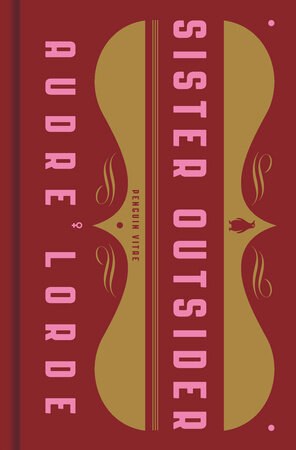
Selected edition: Penguin Vitae hardcover, February 25, 2020, 208 pages, ISBN 9780143134442.
Begin with the essays and speeches that made Lorde an essential public thinker. “Poetry Is Not a Luxury” gives the Resonance line its full argument, while the collection as a whole shows her moving between difference, anger, silence, erotic knowledge and collective responsibility.
Notice: how often an abstract idea begins in the body, a room, a conversation or a specific failure of language.
2. Continue with Zami: A New Spelling of My Name
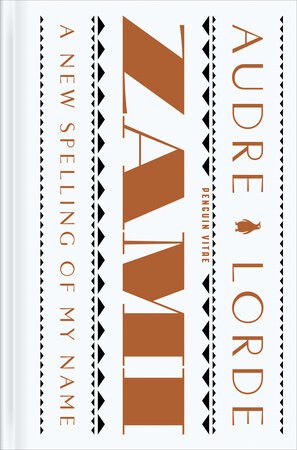
Selected edition: Penguin Vitae hardcover, February 3, 2026, 320 pages, ISBN 9780143139164.
Lorde called Zami a biomythography: a form in which memory, history and myth meet without becoming conventional autobiography. It follows childhood, work, love and community while asking how a self is made through the women and places that shape it.
Notice: how form changes when factual sequence alone cannot hold the truth of a life.
3. End with The Black Unicorn
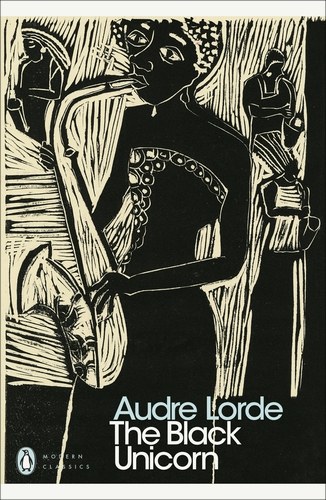
Selected edition: Penguin Modern Classics paperback, July 4, 2019, 144 pages, ISBN 9780241396865.
End inside the poems themselves. The Black Unicorn brings Lorde’s political, erotic, maternal and mythic registers into their fullest relation. Read slowly enough to hear repetition and silence, and aloud when a line seems to ask for breath.
Notice: how the poem can enlarge a private feeling without turning it into a slogan.
What writers can carry forward
Lorde’s work does not reduce to a transferable formula, but it does leave writers with a demanding set of practices.
Name the pressure before the thesis. Write down the image, bodily response or contradiction that arrived before you understood it. Do not rush to make it respectable.
Let identity locate the voice without closing the world. Ask what the speaker can know from this position, what remains outside it and whom the sentence is addressing.
Preserve heat, then build form. A journal entry can catch the first urgency. Revision can decide how much context, rhythm and distance another reader needs.
Read for breath. Speak the paragraph aloud. Where the voice strains, races or goes flat, the thought may need a different line.
Make conditions for other work. Share a source, read a draft, preserve an archive or support a small press. The literary future is also built by acts that carry no byline.
From the nameless to the shareable
The sentence we chose for November 17 does not promise that naming will solve what it reveals. Lorde knew that thought could sharpen conflict as readily as it could create understanding. But without language, experience may remain available only as pressure: felt, endured and difficult to share.
Poetry begins by refusing that silence. It gives a shape to what has not yet become speakable, then places the shape between people.
For the next page you write, begin one step before your argument. Ask what in the story is present but still unnamed. Give it an image before you give it an explanation. Then listen for the thought the image makes possible.
Sources
- Poetry Foundation: Audre Lorde
- Smithsonian National Museum of African American History and Culture: Audre Lorde
- Library of Congress: Rediscovering the Warrior Poet
- Spelman College: Audre Lorde Papers
- Academy of American Poets: Audre Lorde
- Penguin Random House: Sister Outsider
- Penguin Random House: Zami: A New Spelling of My Name
- Penguin: The Black Unicorn
Image and edition notes
- Website cover: the original illustrated Audre Lorde Resonance card published by DeepCrafter; it is an illustration, not an archival photograph.
- Sister Outsider cover: Penguin Vitae, ISBN 9780143134442; cover and edition metadata from Penguin Random House.
- Zami: A New Spelling of My Name cover: Penguin Vitae, ISBN 9780143139164; cover and edition metadata from Penguin Random House.
- The Black Unicorn cover: Penguin Modern Classics, ISBN 9780241396865; cover and edition metadata from Penguin.
- The opening sentence comes from “Poetry Is Not a Luxury,” first published in 1977 and collected in Sister Outsider.