Far from Our Own Life: René Belletto and the Music of Uncertainty
Remember René Belletto through the lucid unease, black humour, musical structures and genre-crossing plots that made his fiction singular.
Far from Our Own Life: René Belletto and the Music of Uncertainty
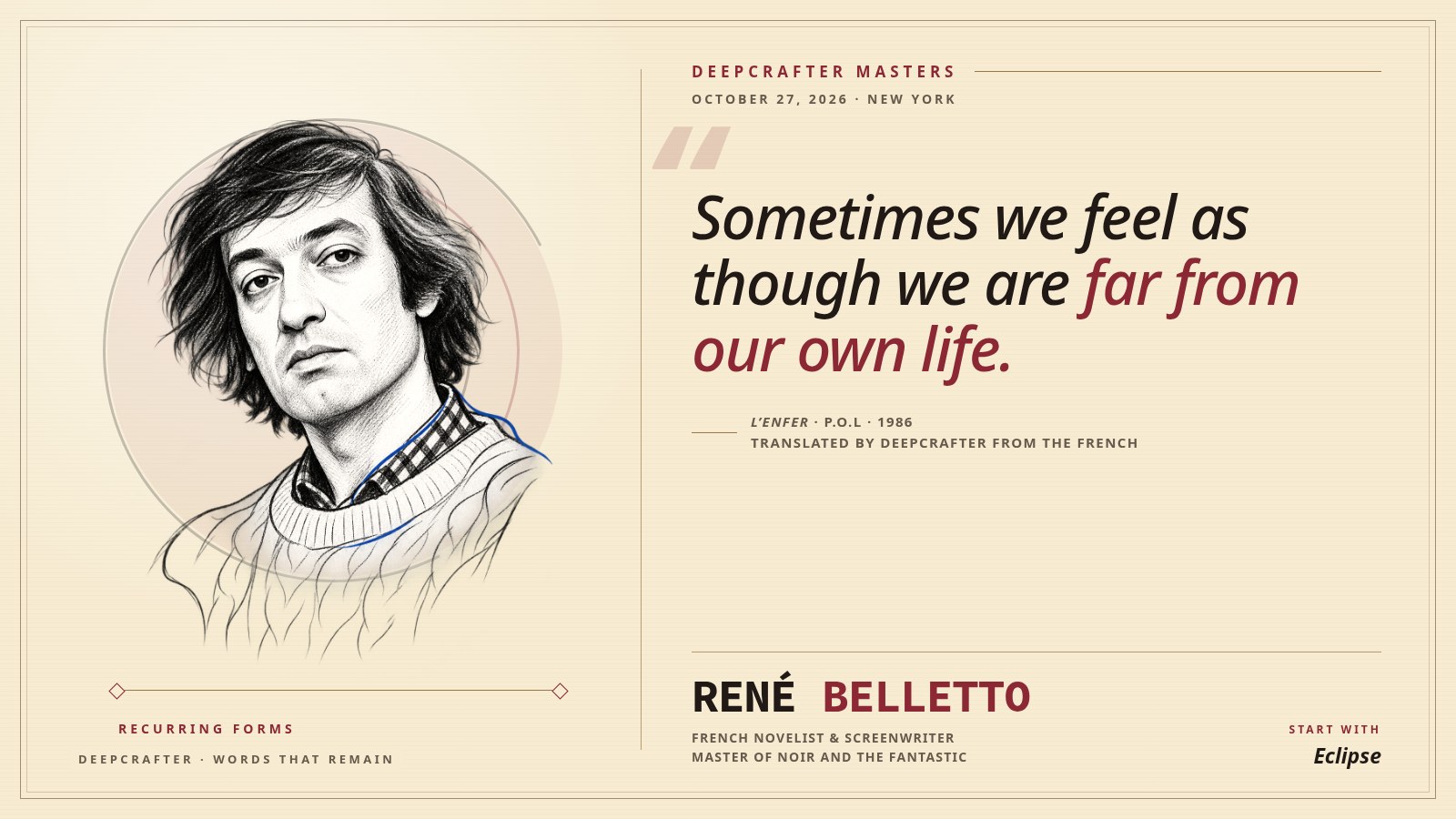
“Sometimes we feel as though we are far from our own life.”
Why we chose René Belletto today
For our October 27, 2026 New York publication, we are remembering René Belletto after Éditions P.O.L announced on October 26 that he had died the previous day, October 25, at the age of eighty-one. We are choosing him today not because death supplies a convenient anniversary, but because the news invites English-language readers back to a writer who repeatedly made disappearance, doubled identity and the instability of the real feel both terrifying and funny.
The line above opens L’Enfer (1986); the English rendering here is ours. It offers the best doorway into Belletto’s fiction. His narrators often begin at a distance from themselves: stalled, lonely, bereaved, bored or uncertain that the life around them is entirely real. Then a phone call, a package, a letter, a patient, an object in the wrong place or an apparently accidental encounter starts a plot that grows with the logic of a nightmare.
Yet Belletto did not simply write about alienation. He turned estrangement into narrative energy. A person who feels far from life becomes unusually alert to every street, room, sound and coincidence. The world sharpens just as its reliability begins to fail. That double movement—precision and vertigo at once—is the signature of his work.
From Lyon into the labyrinth
Belletto was born in Lyon on September 11, 1945, to a family of Spanish and Franco-Italian origins. He studied literature in Lyon and worked as a film critic for the weekly Lyon Poche from 1976 to 1982, using the name François Labret. He moved to Paris in 1978, but Lyon remained one of the governing spaces of his imagination.
His first book, the story collection Le Temps mort, won the Prix Jean Ray for fantastic literature in 1974. Wider recognition came with the sequence often called his Lyon trilogy: Le Revenant (1981), Sur la terre comme au ciel (1982) and L’Enfer (1986). Sur la terre comme au ciel won the Grand Prix de littérature policière in 1983 and was adapted by Michel Deville as Péril en la demeure. L’Enfer won both the Prix Femina and the Prix du Livre Inter in 1986.
Those prizes could have fixed Belletto as a prestigious crime novelist. He kept moving. La Machine (1990) turned an experiment in exchanging minds and bodies into a speculative thriller; François Dupeyron later adapted it for film. The Michel Rey novels returned to murder and investigation while bending the detective form toward obsession and unreality. Later works such as Coda (2005), Le Livre (2014) and Être (2018) became more openly self-reflexive, asking whether a book can contain its reader, its author or the life that produced it.
P.O.L published twenty-two of his books, from novels and stories to poems, remarks, criticism and his late meditation Jean-Sébastien Bach (2023). Across that range, Belletto remained recognizably himself: a builder of exact mechanisms that create doubt instead of resolving it.
Crime fiction that refuses to stay solved
Belletto understood the pleasure of a plot. His novels offer kidnappings, murders, missing people, secret messages, pursued bodies and accumulating clues. But the machinery of suspense is never the whole design.
In a conventional mystery, each clue should reduce uncertainty. In Belletto, a clue often has the opposite effect. It makes several explanations possible at once. A precise address may prove that a place exists, or it may lure a character deeper into an invented geography. A familiar object may anchor reality, or become evidence that reality has been rearranged. A coincidence may be chance, conspiracy, fate, dream logic or the private joke of a novelist who knows that readers want an answer.
This is why his crime fiction feels close to the fantastic. The supernatural does not always arrive as an openly impossible event. It begins as a pressure on ordinary explanation. The reader keeps trying to restore a stable world, while the novel quietly changes the rules by which stability could be proved.
Belletto’s black humor is essential to that effect. He does not let terror become solemn. Exaggeration, verbal play and comic excess puncture the machinery even as it tightens. The laughter does not release suspense; it makes the situation stranger. A plot can be deadly and absurd at the same time because a human mind under pressure is capable of treating catastrophe as both.
Music as a way of building fiction
Belletto was a guitarist, a passionate listener and a writer for whom music was never decorative background. Musicians, instruments, recordings and listening rooms recur throughout his fiction. His final P.O.L book, Jean-Sébastien Bach, makes that lifelong concern explicit in short, fugue-like reflections on the composer’s life, art and interpretations.
The deeper influence is structural. His novels often behave less like straight lines than like musical forms:
- a motif returns in a changed key;
- one identity answers another like a counterpoint;
- an apparently minor object becomes a recurring phrase;
- repetition creates difference rather than reassurance;
- an ending sends the reader back to the opening with altered ears.
Coda makes the principle visible. Its opening sentence is also its final sentence, so the book closes by restarting itself. The title names the passage that ends a musical work, but the ending does not simply stop the motion. It gathers the first theme again and turns conclusion into recurrence.
This helps explain the peculiar rhythm of Belletto’s suspense. Events may accelerate wildly, but the larger design feels composed. Apparent digressions, names, objects and echoes accumulate until the reader senses a pattern before being able to state it. The plot does not merely ask, “What happens next?” It asks, “What have I heard before, and why has it returned now?”
His style: lucid sentences, unstable worlds
1. Exact detail as a trapdoor
Belletto’s prose can be meticulously concrete: street names, medicines, cars, musical works, household tasks and the texture of rooms. The detail creates trust. Once that trust is established, the same precision can guide us into a world whose logic is no longer secure.
2. The ordinary brushed by the uncanny
His plots often begin with a small displacement rather than a spectacle. A package of frozen seafood appears in a freezer. A patient gives a stranger a hateful look. A lesson in a wealthy house becomes an entrance into erotic and criminal intrigue. The uncanny grows from the ordinary because the ordinary has been observed closely enough to register one wrong note.
3. Characters divided from themselves
Belletto repeatedly returns to doubles, exchanged identities, aliases, mirrored lives and people uncertain whether they are acting or being written. These devices are not puzzles alone. They test how fragile identity becomes when memory, body, desire and social role no longer agree.
4. Genre as material, not a cage
Crime, horror, science fiction, metaphysical fiction, romance and comedy can occupy the same book. Belletto uses genre conventions because they carry strong expectations; he then lets those expectations collide. The reader feels the force of a thriller while confronting questions that a solved crime cannot settle.
5. Seriousness with a grin inside it
His fiction approaches death, loneliness and metaphysical dread without giving up play. The comic energy is not an escape from the serious material. It is one of the ways the books resist becoming predictable, even when they contemplate the oldest subjects.
What his work reveals about a writing practice
Belletto left a clearer record of his artistic range than of a fixed daily ritual. It would be misleading to invent a desk, a schedule or a quota. His bibliography, revisions and work across forms nevertheless reveal several durable practices.
He let one art train another. Film criticism sharpened his sense of framing, montage and suspense. Screenwriting tested how information moves through a scene. Guitar and close listening offered models of rhythm, recurrence and counterpoint. His books do not merely mention these arts; they think with them.
He revised the object, not only the sentence. Several earlier novels were later issued in author-revised editions. That record suggests a writer willing to treat a published work as a structure that could still be tuned rather than as an untouchable artifact.
He reused motifs without merely repeating plots. Lyon, guitars, recordings, cars, doubles, children in danger, impossible coincidences and unstable identities return across decades. Each recurrence changes the motif’s function. Repetition becomes a long conversation among books.
He moved toward formal risk after success. The acclaim for the Lyon trilogy did not narrow his ambitions. La Machine, Coda, Le Livre and Être keep testing how much disorientation a readable narrative can hold.
He made clarity carry strangeness. The sentences often remain lucid even when the ontology does not. For writers, that is a crucial distinction: a bewildered reader is not the same as a reader witnessing a character’s bewilderment with precision.
A Belletto exercise for writers
Build a scene in which certainty increases and reality becomes less secure.
- Begin with a character who feels detached from their own life.
- Place one ordinary object where it should not be.
- Offer three explanations: accidental, criminal and impossible.
- Add a precise address, time or technical detail that appears to settle the matter.
- Return one earlier phrase or object in a changed context.
- Let the character act before the reader can decide which explanation is true.
- End the scene with a consequence, not a solution.
The aim is not to imitate Belletto’s plots. It is to learn his balance: keep the prose clear, the action consequential and the world open to more than one logic.
Where to start reading
For the breakthrough: Eclipse
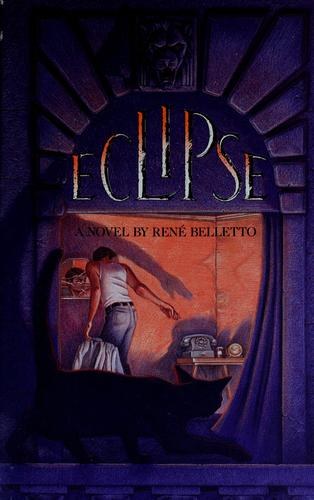
Book information: Novel · originally published in French as L’Enfer (P.O.L, 1986) · translated by Jeremy Leggatt · Mercury House hardcover, 1990 · 312 pages · ISBN 9780916515645.
Begin here for Belletto at his most expansive: existential exhaustion turns into kidnapping, pursuit, erotic entanglement, music and black comedy. The book won both the Prix Femina and the Prix du Livre Inter in France. Its velocity makes the philosophical unease readable as adventure.
For identity under pressure: Machine
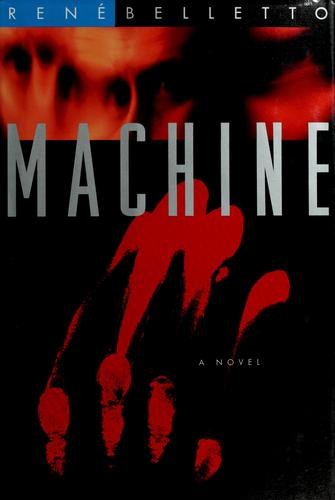
Book information: Speculative thriller · translated by Lanie Goodman · Grove Press hardcover, 1993 · 359 pages · ISBN 9780802114372.
A psychiatrist’s device allows two people to exchange minds; the experiment leaves a dangerous patient inside the doctor’s body. Read it for the way Belletto makes a high-concept premise intimate: identity becomes a contest among consciousness, appearance, social trust and the body other people recognize.
For the formal puzzle: Coda
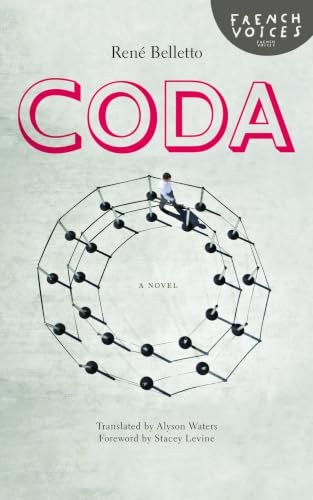
Book information: Novella · translated by Alyson Waters, with a foreword by Stacey Levine · Bison Books / University of Nebraska Press paperback, 2011 · 88 pages · ISBN 9780803224414.
Choose Coda to see Belletto compress thriller, horror, speculative fiction and literary experiment into a short recursive form. A strange item in a freezer opens onto kidnapping, desire, perpetual motion and the possible elimination of death. The book is brief; the loop it creates in the reader is not.
Why read René Belletto now?
Contemporary storytelling often treats genre as a promise of efficient delivery: the mystery will solve, the thriller will accelerate, the speculative premise will explain its rules. Belletto reminds us that genre can do more than satisfy expectation. It can create a stable surface from which reality is allowed to slip.
He also offers an alternative to the idea that experimental fiction must abandon narrative pleasure. His books are playful, propulsive and full of contraptions. They invite the reader forward even while making the ground uncertain. Plot and form are not rivals. The plot is the instrument through which form becomes felt.
“Sometimes we feel as though we are far from our own life.” Belletto made that distance audible. Then he filled it with footsteps, engines, guitar strings, telephones, jokes, threats and returning themes—until estrangement itself became a way back into the intensity of being alive.
Sources and edition notes
- Éditions P.O.L: announcement of René Belletto’s death
- Éditions P.O.L: René Belletto biography and bibliography
- Éditions P.O.L: L’Enfer
- Éditions P.O.L: La Machine
- Éditions P.O.L: Coda
- Éditions P.O.L: Jean-Sébastien Bach
- University of Nebraska Press: Coda
- Télérama: obituary, October 26, 2026
The opening line is our English translation of the brief opening sentence “Parfois, on se sent comme loin de sa vie” from L’Enfer (P.O.L, 1986), quoted for literary commentary. The cover is a DeepCrafter-created typographic illustration, not an archival photograph. Book-cover images identify the exact editions discussed.