Where the Bud Breaks: Karin Boye and the Courage of Becoming
Meet Karin Boye through the painful transformation of her poetry, the inward struggle of Crisis and the surveillance state of Kallocain.
Where the Bud Breaks: Karin Boye and the Courage of Becoming
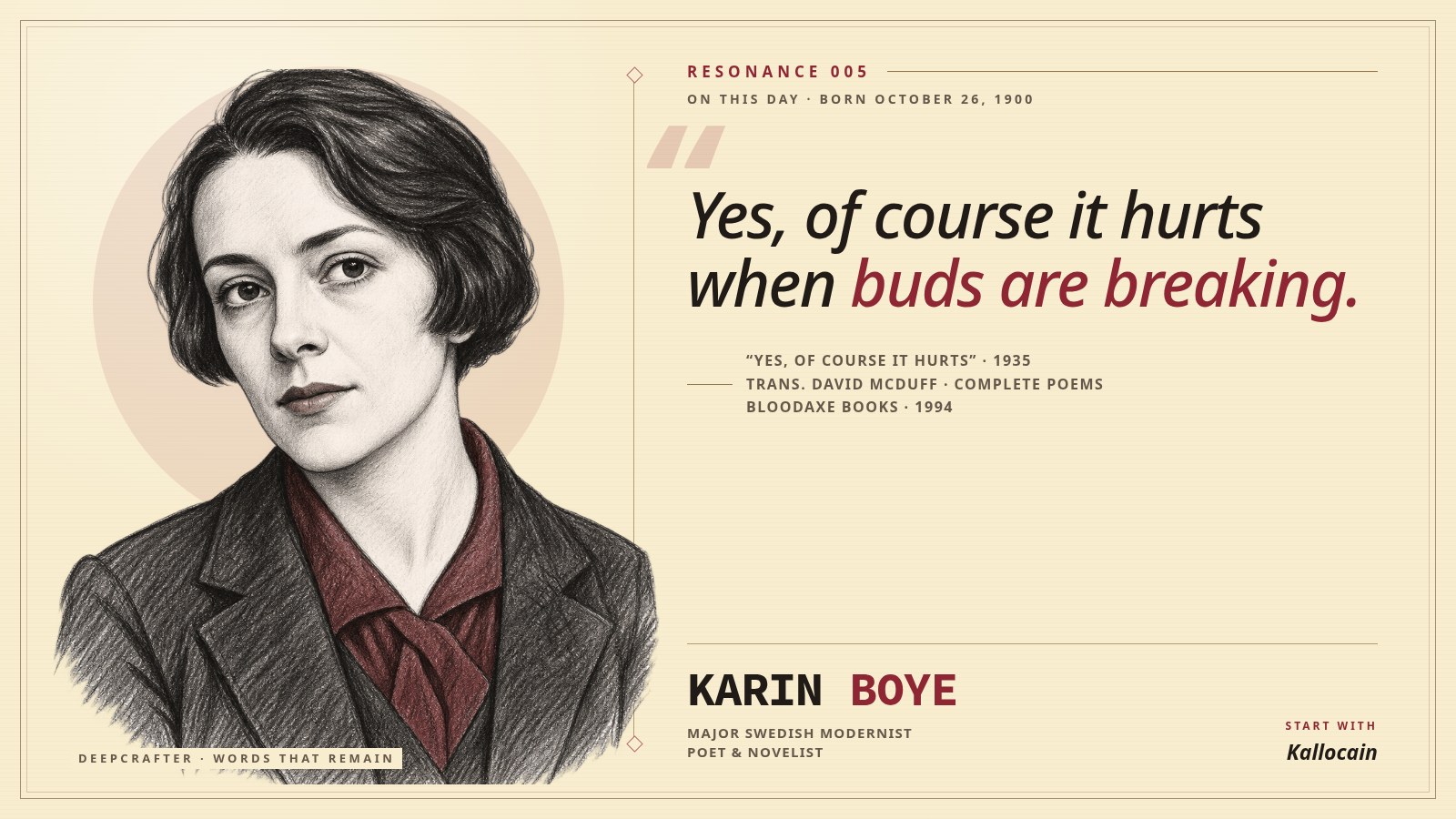
“Yes, of course it hurts when buds are breaking.”
Why we chose Karin Boye today
We chose Karin Boye for October 26, the anniversary of her birth in Gothenburg in 1900. The line comes from the opening of “Yes, Of Course It Hurts,” first published in the 1935 collection För trädets skull and translated by David McDuff in Complete Poems.
It is an ideal entrance to Boye because it refuses the easy language of transformation. A bud opening is usually treated as a decorative emblem of hope. Boye restores the pressure inside the image: growth has to split a form that once offered protection. The poem does not worship pain. It follows hesitation until change becomes possible.
That tension runs through Boye’s poetry and prose. Her characters and speakers want integrity, freedom and intimacy, yet they know that every new truth may break an older shelter—religious certainty, social permission, political faith or the privacy of the self. She wrote about becoming as both wound and necessity.
A life shaped by competing loyalties
Boye grew up in a liberal, pacifist household and began reading and writing early. After moving with her family from Gothenburg to Stockholm and then to Huddinge, she filled her youth with poems, stories, plays, drawings and music. She trained as a teacher before studying Greek, Nordic languages and literature at Uppsala University, later completing a degree in history in Stockholm.
Her years as a student brought several loyalties into conflict. The intense Christianity of her adolescence gave way to a crisis of faith. At the same time, she confronted desires that the moral and legal language around her could not accommodate. That experience would later enter the novel Crisis, but Boye did not simply turn life into confession. She transformed private division into questions about authority: Who gets to name a person’s inner life? What happens when inherited ideals no longer tell the truth?
She joined the Swedish Clarté movement, wrote criticism and essays, and worked on its journal. A 1928 journey to the Soviet Union complicated her political idealism. In the early 1930s she helped found the modernist journal Spektrum, which connected Swedish readers to new European writing; she also translated T. S. Eliot’s The Waste Land into Swedish.
In 1932 Boye went to Berlin for psychoanalysis. She left Germany after the Nazi seizure of power and returned to Sweden. Her marriage to Leif Björk ended, and she built a life with Margot Hanel, a German Jewish woman. Boye’s work after this period became more openly attentive to desire, psychic conflict and the violence imposed by systems that demand conformity.
From inward crisis to public form
Boye’s first collection, Moln (Clouds), appeared in 1922. Gömda land (Hidden Lands) followed in 1924 and Härdarna (The Hearths) in 1927. These early poems often test ethical aspiration against less governable forces: fear, desire, the unconscious and the body.
By För trädets skull (For the Tree’s Sake) in 1935, her symbolism had become stranger and more concentrated. Trees, seeds, fire, thresholds and water are not ornamental scenery. They are structures of thought. Nature carries processes the conscious will cannot fully command: ripening, breaking, falling, surrendering and beginning again.
Her prose asks similar questions through social worlds. Astarte examines modern consumer culture and the manufacture of feminine ideals. Crisis turns spiritual and erotic conflict into a formally restless novel, moving among realism, correspondence, poetic prose and imagined debate. Kallocain, published in 1940, projects the struggle outward into a totalitarian state that claims the right to inspect thought itself.
The scale changes, but the pressure remains recognizable. In the poems, an inner truth strains against the self that contains it. In Kallocain, private truth strains against a state that treats secrecy as treason.
Kallocain: the state enters the inner room
Kallocain is narrated by Leo Kall, a chemist in the underground World State who invents a drug that compels truthful speech. At first he sees the serum as a perfect instrument of loyalty. If thought can be exposed, the state can punish betrayal before it becomes action.
The invention instead reveals what the regime cannot safely possess. People dream of trust, unregulated affection, sunlight and forms of community that cannot be reduced to official usefulness. The truth serum gives the state access to private life, but access is not control. Once spoken, inward experience becomes evidence that another way of living can be imagined.
Boye wrote the novel amid fascism, Stalinism and war, yet its power does not depend on a single political allegory. It understands surveillance psychologically. A regime becomes durable when people internalize its suspicion—when spouses police one another, when fear makes intimacy look dangerous, and when the self begins editing thoughts before any officer arrives.
That is why the novel still feels contemporary. Its deepest conflict is not between truth and lies. It is between coerced disclosure and freely offered trust.
Her style: clarity under pressure
1. Natural images that perform thought
Boye’s buds, seeds, trees and waters do not merely illustrate an emotion already understood. They let the poem discover its argument through physical change. The image thinks alongside the speaker.
2. Ethical tension without a sermon
Her work is full of convictions, but it rarely settles into instruction. Competing values remain alive: discipline and freedom, purity and desire, service and selfhood, safety and growth. The writing earns its intensity by refusing to make those conflicts painless.
3. Rhythm as meaning
In an interview preserved by the Karin Boye Society, her brother Ulf said that her poems were not spontaneous outpourings. She was exacting about word choice and rhythm, revising them in her mind while searching for the right word. Sound was not decoration added after meaning; it was one of the ways meaning became exact.
4. The private and political inside one another
Boye’s poetry can feel inward and symbolic, while Kallocain can look like public political fiction. Read together, they reveal the same concern at different scales: how power reaches the inner life, and how an inner life resists being completely named from outside.
5. Transformation without sentimentality
Change in Boye is neither self-improvement nor a clean escape from the past. It is a biological and moral disturbance. Something new becomes possible because an old form can no longer remain intact.
The discipline behind the intensity
Boye worked across poetry, novels, short stories, essays, criticism, drama and translation. Her brother remembered her as constantly working and extraordinarily productive during a short life. That range matters because it corrects the myth that her lyric intensity came only from crisis.
Her practice suggests a more deliberate craft:
- Revise by ear. Hold a sentence in the mind long enough to hear where rhythm and meaning disagree.
- Let symbols develop across works. A tree, threshold or enclosed room becomes more powerful when it is allowed to change meaning rather than carry one fixed message.
- Use translation as apprenticeship. Translating writers such as Eliot and Thomas Mann sharpened Boye’s attention to syntax, register and the movement of thought between languages.
- Move a question between genres. A conflict that appears as an image in a poem can become a character’s crisis in a novel or the architecture of a dystopian state.
- Keep the contradiction alive. Boye did not solve difficult experience by choosing a single vocabulary. Spiritual, psychological, erotic and political meanings remain in contact.
The lesson is not to imitate her suffering. It is to recognize the precision with which she gave conflict a form.
A Boye exercise for writers
Build a transformation from the inside rather than announcing it.
- Choose a small natural process: a shell cracking, frost releasing soil, fruit bruising as it ripens, or a tide loosening something buried.
- Give your character an old form of safety that has become too narrow.
- Describe the physical process without naming the character’s emotion.
- Introduce one pressure from outside—a law, promise, family expectation or public role.
- Let the natural image change meaning midway through the scene.
- End before transformation becomes triumph. Leave the new state vulnerable and unfinished.
The goal is not to borrow Boye’s symbols. It is to let an image generate thought instead of merely decorating it.
Where to start reading
For the poems: Complete Poems
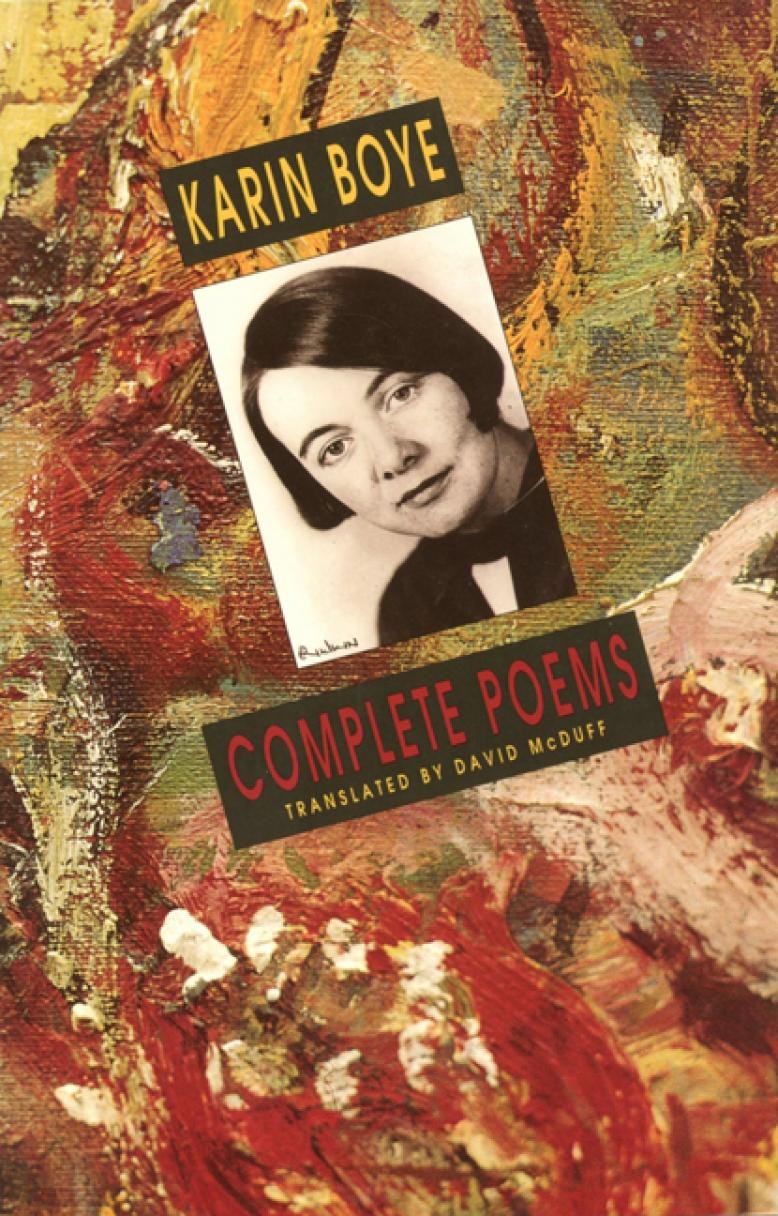
Book information: Poetry · translated by David McDuff · Bloodaxe Books paperback, 1994 · ISBN 9781852241094.
Begin here for the full movement from early ethical idealism toward the darker, freer symbolism of the later collections. Read “Yes, Of Course It Hurts” beside “On the Move” and poems from For the Tree’s Sake to hear how rhythm carries philosophical pressure.
For the most intimate novel: Crisis
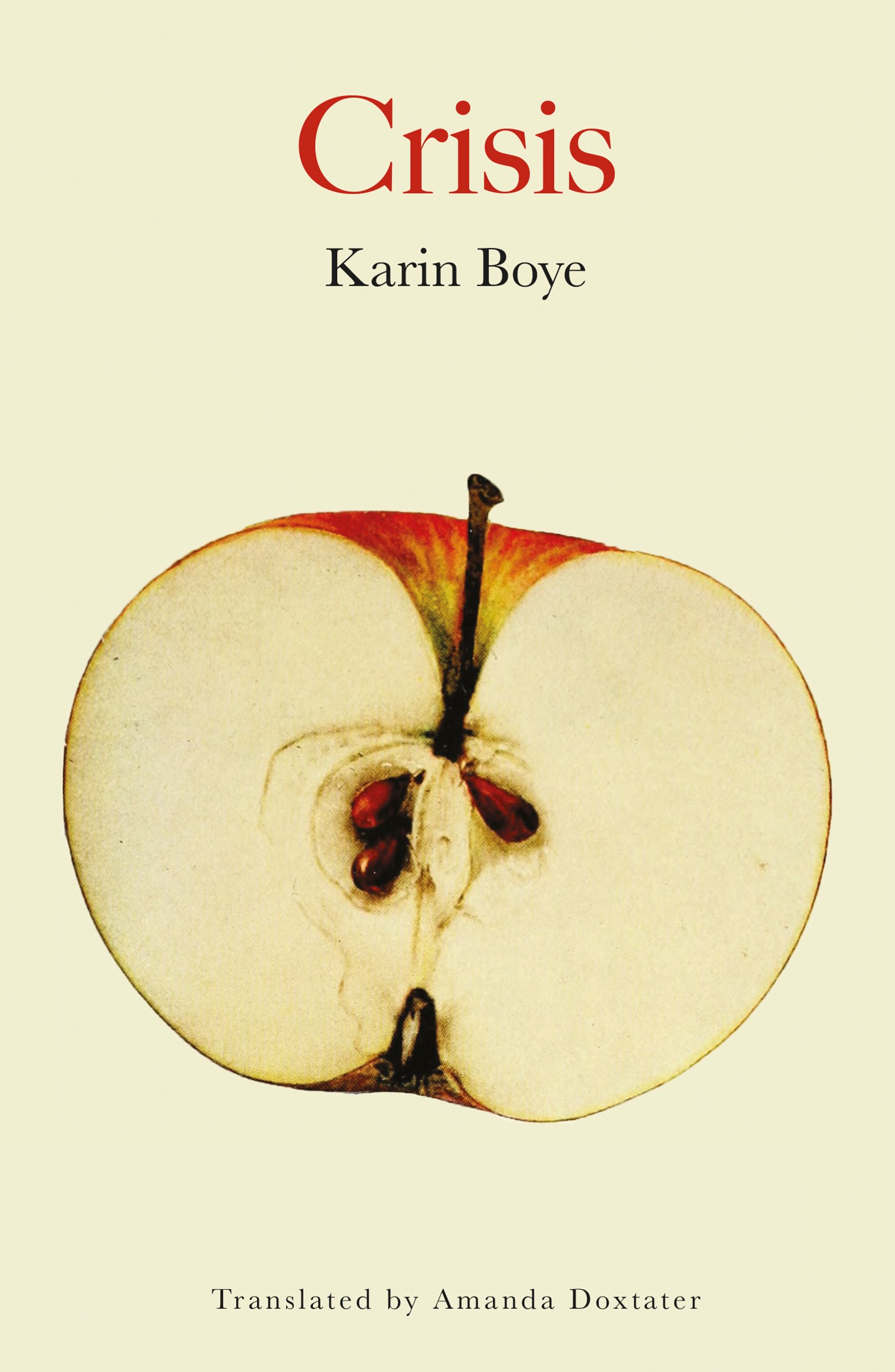
Book information: Novel · translated by Amanda Doxtater · Norvik Press paperback, 2020 · 192 pages · ISBN 9781909408357.
Choose Crisis to see Boye turn religious doubt, desire and divided consciousness into experimental form. It is the best bridge between the poems’ interior struggle and the social structures of her fiction.
For the public nightmare: Kallocain
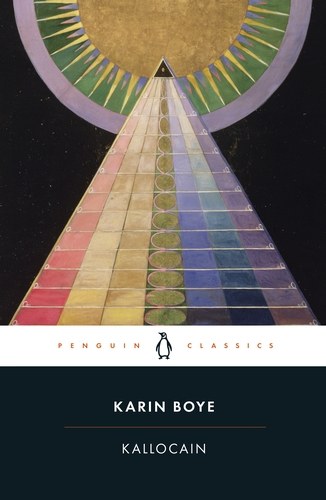
Book information: Dystopian novel · translated with an introduction by David McDuff · Penguin Classics paperback, 2023 · 192 pages · ISBN 9780241608302.
Read Kallocain for Boye’s largest political design. Its truth serum is memorable, but the novel’s lasting subject is trust: what makes it possible, what surveillance destroys, and why an inner life remains dangerous to absolute power.
Why read Karin Boye now?
Our culture often describes change as optimization: become more productive, more visible, more certain, more complete. Boye offers a harder account. Becoming may involve losing a form that once kept us safe. Truth may arrive before we know how to live with it. Freedom may begin as a crack rather than a door.
Her work also joins two kinds of literature too often separated. The lyric poem and the dystopian novel both ask who has authority over the self. One listens to the pressure inside a bud; the other imagines a state that wants to hear every hidden thought. Between them lies Boye’s enduring subject: the inner life cannot grow without risk, and it cannot remain human under total control.
“Yes, of course it hurts when buds are breaking.” The line survives because it contains no false promise that pain automatically makes us better. It simply recognizes the cost of becoming—and the greater cost of never opening.
Sources and edition notes
- Biographical Dictionary of Swedish Women: Karin Boye
- Karin Boye Society: chronology
- Karin Boye Society: interview with Ulf Boye on her life and working practice
- Karin Boye Society: English translations of the poems
- Bloodaxe Books: Complete Poems
- Norvik Press: Crisis
- Penguin Classics: Kallocain
The opening quotation is the first ten words of “Yes, Of Course It Hurts,” translated by David McDuff in Complete Poems (Bloodaxe Books, 1994). It is used here as a brief attributed excerpt for literary commentary. The cover image is the same DeepCrafter-created illustrated quotation card used in the original X Resonance post, not an archival photograph. Book-cover images are publisher-supplied images identifying the specific editions discussed.