The Country That Remains in the Language
Sergio Ramírez on exile, language, political history, disciplined craft, and three books that make public history speak through ordinary lives.
The Country That Remains in the Language
Sergio Ramírez and the art of making history speak through ordinary lives
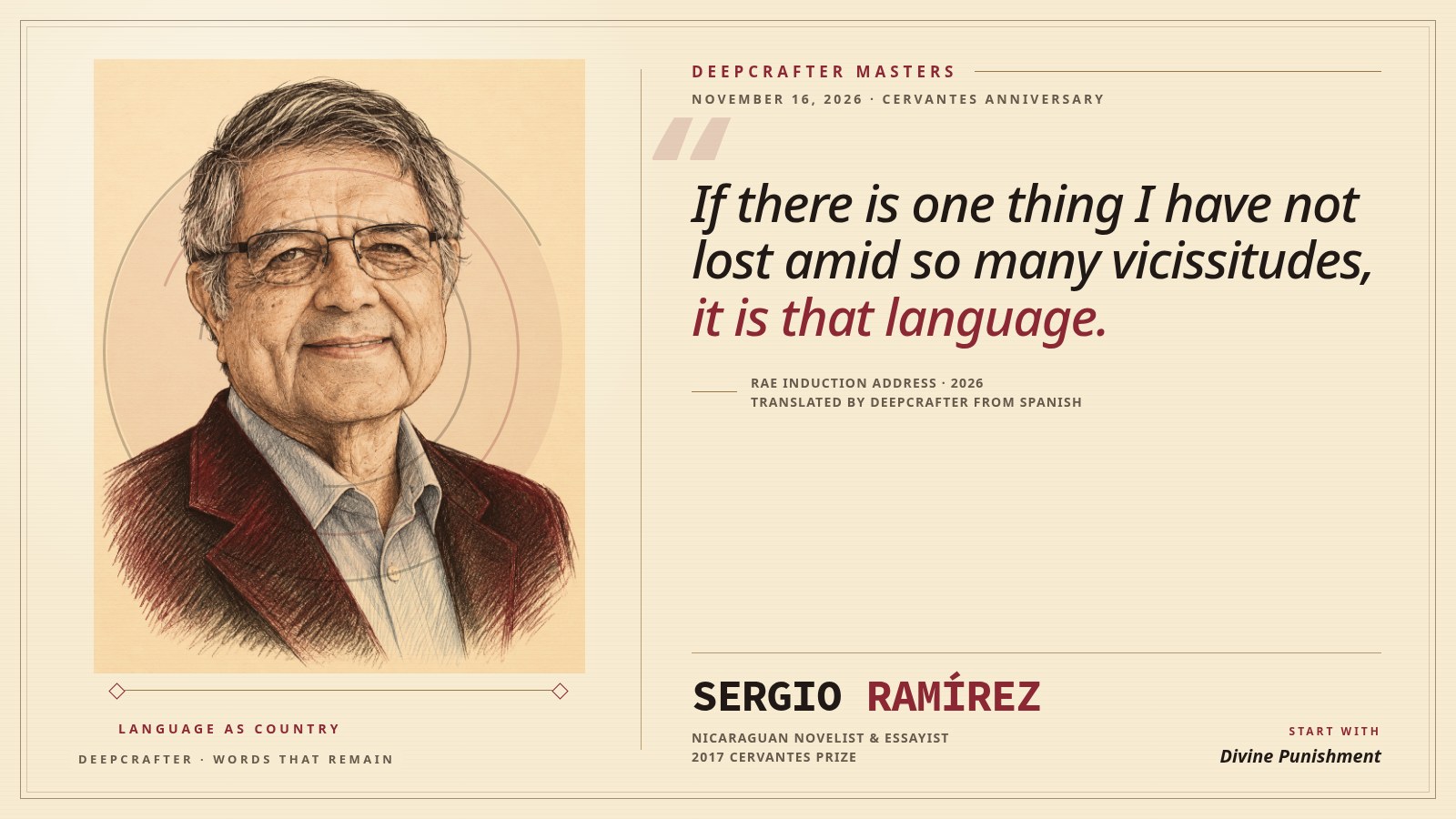
“If there is one thing I have not lost amid so many vicissitudes, it is that language.”
Sergio Ramírez spoke those words on November 15, 2026, as he entered the Real Academia Española to occupy Seat L, left vacant by Mario Vargas Llosa. The next day carries another marker in his literary life: on November 16, 2017, the jury awarded him the Miguel de Cervantes Prize, the foremost honor in Spanish-language literature.
The two dates meet in the same question. What can remain when a writer loses the country in which his language was formed?
Ramírez was born in Masatepe, Nicaragua, in 1942. He became a lawyer, a fiction writer, a revolutionary, a member of the government that followed the Somoza dictatorship, and vice president of Nicaragua from 1985 to 1990. Decades later, after opposing the authoritarian turn of Daniel Ortega’s government, he went into exile in Spain. Nicaragua stripped him of his citizenship in 2023.
Yet his work has never treated history as a parade of official names. Dictators, revolutions, courts and police services matter because of the atmosphere they create around shopkeepers, lawyers, poets, gossips, conspirators, disappointed believers and people trying to survive. Ramírez writes where public history enters private speech.
That makes the sentence from his RAE address more than a declaration of belonging. Language is not a substitute for a lost country. It is the living material through which that country—its voices, absurdities, cruelties, jokes and unfinished arguments—can still be examined.
A writer before he became a public figure
Ramírez published his first story as a teenager and joined the literary group around the Nicaraguan magazine Ventana while studying law at the National University in León. His first book, the story collection Cuentos, appeared in 1963. Literature was not an occupation discovered after politics. It came first.
In the years of opposition to the Somoza dictatorship, Ramírez lived abroad, including periods in Costa Rica and West Berlin. He helped organize intellectual and political resistance, and after the dictatorship fell in 1979 he joined the Junta of National Reconstruction. The revolution eventually brought him into the vice presidency.
That biography can tempt readers to approach every novel as political testimony with invented names. Ramírez’s fiction resists the reduction. He has repeatedly distinguished the responsibilities of a citizen from the freedom of a novelist. In a 2022 Princeton interview, he described fiction as a critical space: it can represent real social conditions through invented characters, allowing readers to see their society as if in a mirror.
The important word is space. A novel does not deliver the correct conclusion and close the argument. It makes room for competing voices, self-deceptions, partial evidence and unintended consequences. The reader must judge.
Write the dictatorship, not only the dictator
In a 2003 interview, Ramírez made one of the clearest statements of his narrative method: he was interested in writing about the dictatorship rather than merely the dictator. The distinction changes the scale of the novel.
A dictator-centered story can become a portrait of one monstrous will. A dictatorship is also an environment. It changes how a judge understands independence, how a journalist decides what can be printed, how neighbors trade rumors, how a minor official protects a favor and how an ordinary person learns to speak in two registers—one private, one safe.
This is why Ramírez’s fiction is so often crowded. His novels move through salons, courtrooms, cafés, police offices, family tables and streets. Documents and testimony interrupt narration. Gossip can carry evidence; comedy can reveal submission; a minor character can hold the detail that reorganizes the whole story.
The method is political without requiring every character to become a spokesperson. Power appears in habits, permissions and fear. It becomes visible in what people will say, what they will not say and what they pretend not to know.
For writers, the lesson is concrete: if a story contains an oppressive system, do not place all of its force in the ruler. Give the system a waiting room, a form, a favor, a euphemism and a consequence. Let it live in the decisions of people who may never meet the person at the top.
The true lie and the active reader
Ramírez explored his ideas about invention in the 1999 lecture True Lies: On the Subject of Literary Creation. Imagination, he argued, begins when direct perception is no longer enough. The mind moves beyond the visible world, but it does not leave reality behind. It recombines reality under the pressure of desire, fear, curiosity and need.
That helps explain the density of his historical novels. Facts provide resistance. Dates, court records, newspaper language and public events limit what can plausibly happen. Imagination does not escape those limits; it discovers the human possibilities inside them.
In Divine Punishment, a celebrated 1930s poisoning case becomes more than a mystery about guilt. The novel assembles reports, testimony, letters and social rumor until the investigation becomes a portrait of León on the edge of the first Somoza dictatorship. The documentary texture creates authority, then makes the reader question how authority is produced.
In Margarita, How Beautiful the Sea, two historical moments separated by half a century converge: Rubén Darío’s return to León in 1907 and the 1956 conspiracy against Anastasio Somoza García. Poetry, national myth, private obsession and political violence occupy the same narrative field. History is not background. It is a set of stories people inherit, perform and attempt to revise.
Ramírez trusts the reader with this plurality. He does not simplify public life into a contest between transparent motives. He allows evidence to accumulate across voices until a pattern becomes visible—but never frictionless.
Two lives, and the return to the desk
When Ramírez left active politics, he described the move not as retirement but as a return to his trade. The phrasing matters. Writing was the durable vocation; public office was a chapter with an ending.
His working life has been disciplined rather than mystical. In the 2003 interview, he described an early walk, time spent reading newspapers, then writing from about eight in the morning until noon. Afternoons were for correspondence and the administrative labor that surrounds literature. His advice to younger writers was equally plain: write every day, read extensively, correct patiently, discard when necessary and begin again.
An anecdote from the 2018 Cervantes ceremony captures the same rhythm. When the Spanish minister called at seven in the morning in Nicaragua to tell Ramírez that he had won the prize, the writer was already awake. Friends later reassured the minister that by that hour Ramírez had been writing for several hours.
Routine here is not merely a productivity system. It protects a second form of attention from the claims of public life. Newspapers keep the writer close to the day’s language and conflicts; the morning desk converts that pressure into scenes, structures and voices.
Writers can borrow the separation without copying the clock: gather the world, then transform it. Do not confuse following events with making fiction from them. Reporting tells you what happened. The novel asks what kind of human world could make it happen, and how that world sounds from more than one position.
Exile and the country carried in speech
Ramírez has lived in Madrid in exile since 2021. In his RAE induction address, he described a life of climbs, falls, turns, exile, one country lost and another gained. He then named what had survived those reversals: the Spanish language.
The statement gains force from the kind of Spanish his fiction preserves. His language is not abstractly universal. It carries Nicaraguan speech, political slogans, legal formulas, popular humor, journalistic cadence and the rhythms of oral storytelling. Its specificity is precisely what allows it to travel.
In the same address, while discussing the Latin American boom, Ramírez observed that regional speech once appeared in literature behind quotation marks and explanatory glossaries. The great renewal of the novel allowed everyday rural and urban language to enter without apology. Context taught the reader how to listen.
That principle also describes Ramírez’s own work. The local word is not an obstacle to universality. It is one of the means by which a novel becomes fully inhabited.
For a writer, exile can create the temptation to preserve a place as a fixed image. Ramírez’s fiction does something more difficult. It keeps the country argumentative. Memory is joined by investigation; affection by satire; loss by the willingness to examine failed ideals. The homeland in language remains alive because it is not required to remain innocent.
Three books, three ways into Sergio Ramírez
1. Begin with Divine Punishment
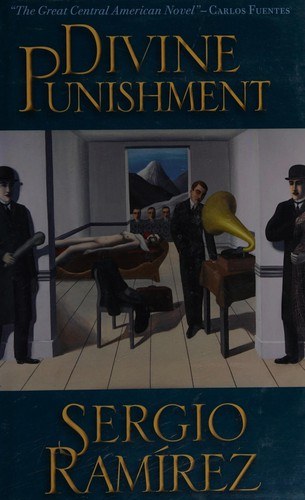
Selected edition: McPherson & Company hardcover, translated from the Spanish by Nick Caistor with Hebe Powell, 2015, 512 pages, ISBN 9781620540145.
Begin with Ramírez at his most polyphonic. A real poisoning case becomes a legal archive, a social comedy and a study of a city learning to live with corrupted institutions.
Notice: how each document appears to clarify the crime while also revealing the interests of the person who produced it.
2. Continue with Margarita, How Beautiful the Sea
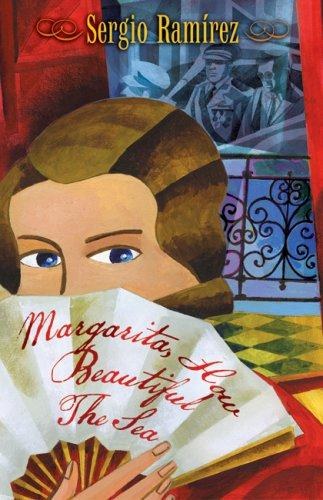
Selected edition: Curbstone Books paperback, translated by Michael B. Miller, September 2007, 320 pages, ISBN 9781931896412.
Continue with the novel that won the 1998 Alfaguara Prize. Ramírez brings Rubén Darío, national memory and a conspiracy against Somoza into a structure whose two timelines move toward collision.
Notice: how poetry can become public mythology—and how public mythology enters the motives of individuals.
3. End with Tongolele no sabía bailar
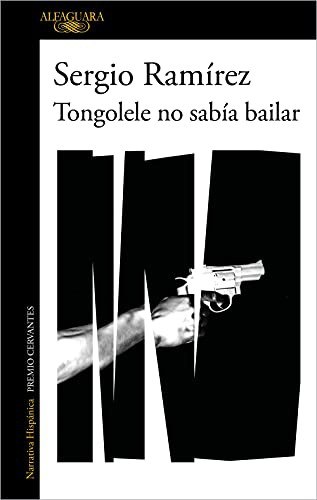
Selected edition: Alfaguara paperback in Spanish, September 16, 2021, 344 pages, ISBN 9788420460536.
End in the present tense of political noir. Inspector Dolores Morales, already in exile, confronts a system of intelligence, repression and betrayal shaped by the Nicaragua of the 2018 protests. The book connects Ramírez’s long interest in institutions to the political conditions that preceded his own exile.
Notice: how the machinery of power is distributed among agents, informants, rumors, digital evidence and people trying to decide what can still be believed.
Let history enter through a voice
Ramírez’s career is unusually public, but the deepest lesson of his fiction is not that a novelist must become a public figure. It is that public history becomes narratively alive only when it changes the texture of individual life.
Take one large event in your story and remove its headline. Enter through a person who handles only one small part of it: a clerk who stamps the form, a neighbor who repeats the rumor, a lawyer who notices the missing page, a child who hears the adults lower their voices.
Give that person a vocabulary, a private interest and something they misunderstand. Then let another voice complicate the first.
A country may be lost, renamed or made inaccessible. In fiction, it can remain present without becoming a monument. It survives as an argument among voices—and as the language in which the argument can still be heard.
Sources
- Real Academia Española: Sergio Ramírez enters the RAE and occupies Seat L
- Spanish Ministry of Culture: 2017 Cervantes Prize ceremony and jury date
- Sergio Ramírez: 2017 Cervantes Prize acceptance address
- Princeton University: interview with Sergio Ramírez
- PEN America: Sergio Ramírez writer-at-risk profile
- Inter-American Development Bank: True Lies: On the Subject of Literary Creation
- Carlos Powell: 2003 interview with Sergio Ramírez
- McPherson & Company: Divine Punishment edition data
- Northwestern University Press: Margarita, How Beautiful the Sea
- Penguin Random House: Tongolele no sabía bailar
Image and edition notes
- Website cover: an original DeepCrafter editorial illustration based on a 2026 photographic reference; it is not an archival photograph.
- Divine Punishment cover: McPherson & Company edition, ISBN 9781620540145; edition identity verified with the publisher’s opening pages and cover matched by ISBN through Open Library.
- Margarita, How Beautiful the Sea cover: Curbstone Books edition, ISBN 9781931896412; metadata verified with Northwestern University Press and cover matched by ISBN through Open Library.
- Tongolele no sabía bailar cover: Alfaguara edition, ISBN 9788420460536; metadata verified with Penguin Random House and cover matched by ISBN through Open Library.
- The opening sentence is translated by DeepCrafter from Ramírez’s Spanish-language RAE induction address.
Sources
- RAE: Sergio Ramírez enters the RAE and occupies Seat L
- Spanish Ministry of Culture: 2017 Cervantes Prize ceremony and jury date
- Sergio Ramírez: 2017 Cervantes Prize acceptance address
- Princeton University: interview with Sergio Ramírez
- Inter-American Development Bank: True Lies
- PEN America: Sergio Ramírez writer-at-risk profile