Carry the Vanished World: Paul Celan and the Language That Remains
On Paul Celan’s birthday, follow the multilingual life, compressed poetics and three-book route behind a line that carries loss toward another person.
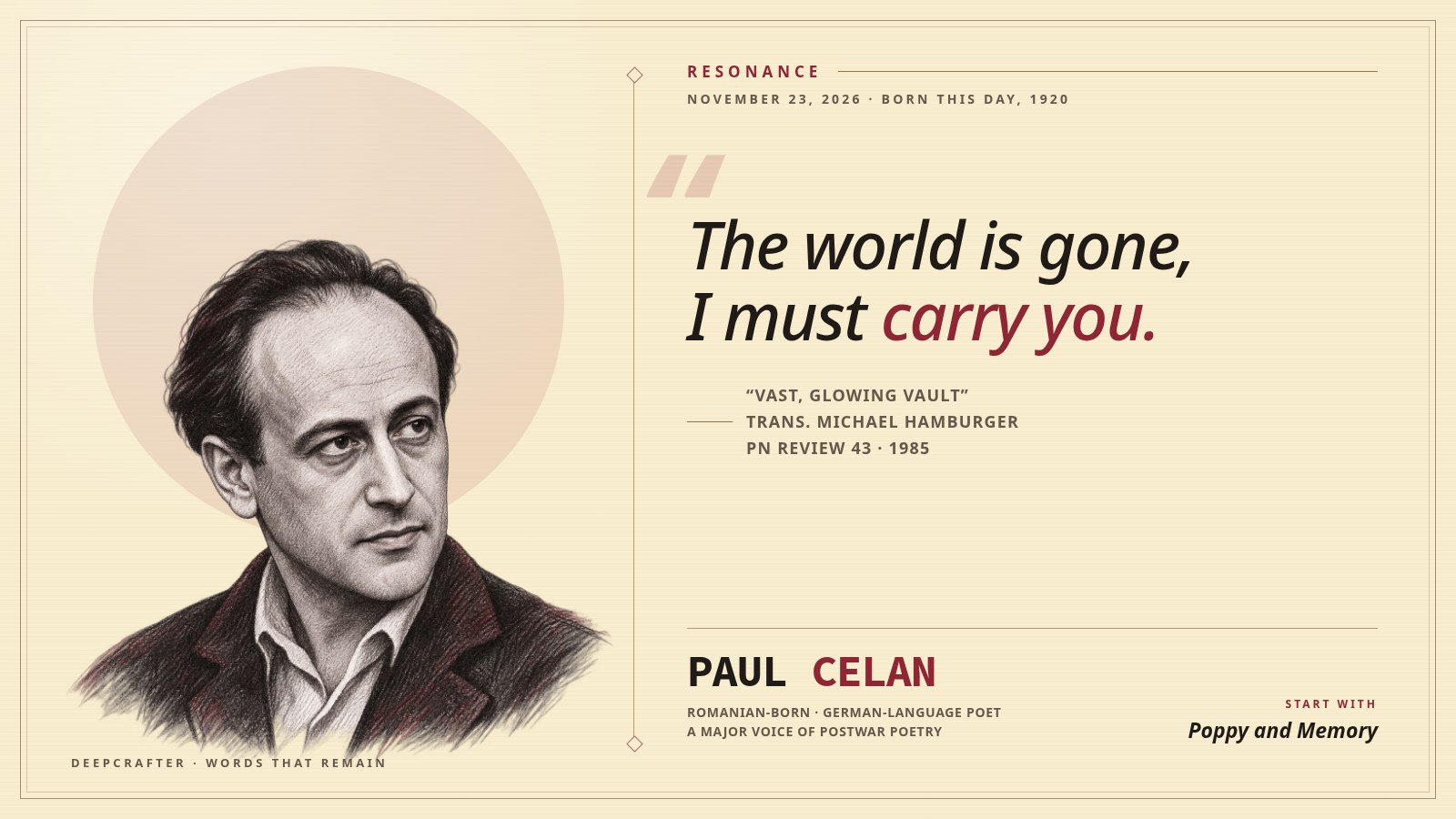
“The world is gone, I must carry you.”
We chose this final line from Paul Celan’s “Vast, Glowing Vault” for his 23 November birthday because it does not offer consolation cheaply. In Michael Hamburger’s translation, published by PN Review in 1985, the line holds loss and obligation in the same breath. The world can be gone; the address to another person remains. Poem and translation record
Celan was born on 23 November 1920 in Czernovitz, then part of Romania and now Chernivtsi, Ukraine. He became one of the defining German-language poets of the postwar period. Reading him today means entering a body of work that asks what language can still do after history has damaged both the world and the words used to describe it.
This is not an invitation to turn difficulty into a badge of seriousness. It is an invitation to read slowly enough for a poem’s exact pressures to become audible.
A multilingual beginning, and a language under pressure
Born Paul Antschel into a German-speaking Jewish family, Celan grew up among several languages. The Academy of American Poets records that he spoke Romanian, Russian and French, understood Yiddish, and later wrote under “Celan,” an anagram of Ancel, the Romanian form of his surname. Academy of American Poets biography
The Second World War made language inseparable from survival and loss. Celan’s parents were deported and died in Nazi labor camps; he was himself interned for eighteen months. Any account of his poetry has to acknowledge that history without reducing every line to a biographical code.
After the war, he worked in Bucharest as a publishing-house reader and translator, published poems under several pseudonyms, lived briefly in Vienna, and settled in Paris in 1948. There he studied German philology and literature. His second collection, Mohn und Gedächtnis (Poppy and Memory), established his reputation; it contains “Death Fugue,” the poem through which many readers first encounter him.
The biographical sequence matters, but it does not solve the poems. It tells us instead why Celan’s choice to keep writing in German was never neutral. The language carried family, literature and intimacy, but also the vocabulary of those who had destroyed his family’s world.
From image-rich poems to a more fractured music
Celan’s early poetry can be sensuous, musical and crowded with surreal images. Over time, the poems grow shorter and their syntax more broken. Compounds, abrupt turns and silences ask the reader to attend not only to what a sentence says, but to how words collide, separate and leave gaps around one another.
The Academy’s biography describes this later work as increasingly fragmented in syntax and perception. Farrar, Straus and Giroux’s editions make the arc visible across nine books: Memory Rose into Threshold Speech gathers the first four collections, while Breathturn into Timestead gathers the final five. Earlier poetry edition · Later poetry edition
For a writer, the useful lesson is not “make the poem obscure.” Compression works only when every surviving word has become more necessary. A line break can be an act of thought. A compound can force two histories into contact. Silence can hold the part that paraphrase would flatten.
Try reading one poem twice: first for its images, then for its grammar. Where does a sentence refuse to move in the expected direction? Which word becomes strange because of the word beside it? That second reading often reveals the poem’s movement more clearly than a search for a single hidden message.
Translation was part of the writing life
Celan’s working life did not divide neatly into “his own poems” and everything else. He translated writers including Osip Mandelstam, René Char, Paul Valéry and Fernando Pessoa. In 1959 he became a reader in German language and literature at the École Normale Supérieure, a position he held until his death in 1970. Academy of American Poets biography
Translation placed him repeatedly inside another writer’s decisions: where a word’s history sits, what a rhythm permits, what cannot cross into a new language without changing. That practice is relevant when reading Celan in English. A translation is not a transparent pane through which we see an untouched original; it is another made text, with its own line, sound and lexical choices.
The quotation that opens this article comes from Michael Hamburger. The three-book route below uses editions translated by Pierre Joris and Rosmarie Waldrop. Keeping those names visible is part of reading accurately. Different translations can illuminate different pressures in the same work.
The poem as an address
Celan’s poems are often described through silence, fracture and historical darkness. All three matter, but they can obscure another quality: the poems keep reaching toward an addressee.
The “you” in “I must carry you” is not explained into a single identity. That openness does not make the address vague. It makes the obligation larger than biography while preserving the intimacy of one voice speaking to another.
This gives writers a practical question. When a passage becomes abstract, who is being addressed? An unnamed reader, a lost person, a lover, an adversary, the dead, or language itself? You do not have to identify the addressee explicitly, but knowing the direction of the speech can change every word.
Celan’s rare prose is especially helpful here. The 2026 New Directions volume Conversation in the Mountains brings together essays, speeches, letters and notes, including “The Meridian.” These writings do not decode the poems, but they show how persistently he thought about encounter, estrangement and the poem’s movement toward another person. New Directions edition
The working life we can document
The surviving record supports a life of reading, translating, teaching and writing across poetry, speeches, letters and prose. It does not give us a simple daily routine that can be copied as a productivity method.
That boundary is useful. A writer does not need an invented ritual to learn from Celan. A more faithful practice is smaller: keep the languages around a word visible. Note its literal meaning, its sound, its historical associations and the other words it touches. Then decide which of those pressures the line can carry.
This is an editorial exercise inspired by the documented breadth of Celan’s language work, not a method he prescribed.
A three-book route into Paul Celan
The covers below show specific English-language editions. The reading order is ours, not Celan’s. The opening Resonance quotation uses Michael Hamburger’s translation; these books use different translators, as noted.
1. Memory Rose into Threshold Speech
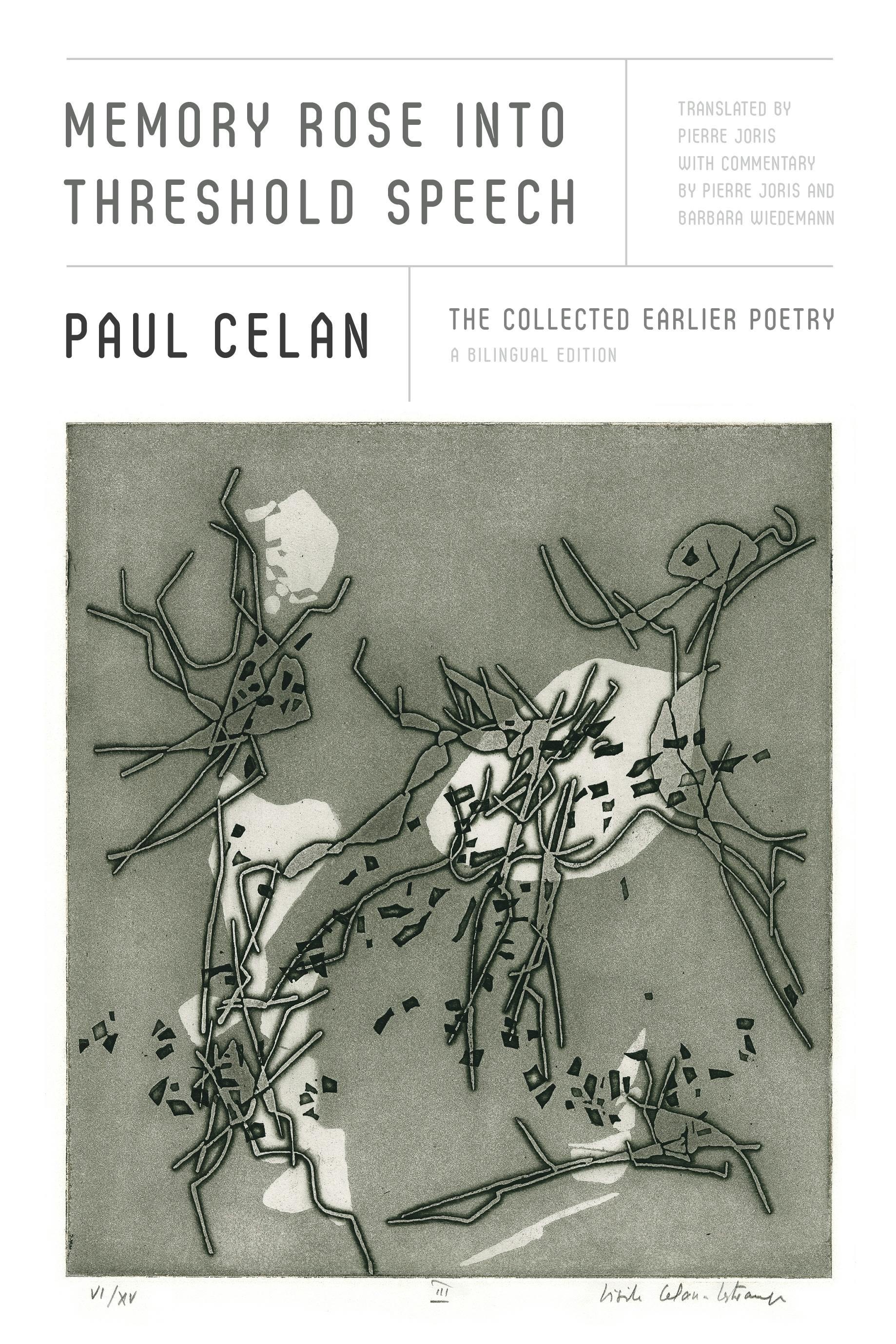
Start with the earlier poetry. This bilingual volume gathers Celan’s first four books, from Poppy and Memory through NoOnesRose. It lets you hear the image-rich early music and then watch the syntax tighten. Read a small group of poems at a time, using Pierre Joris’s commentary only after you have made your own first pass.
Edition shown: Memory Rose into Threshold Speech: The Collected Earlier Poetry, bilingual edition, translated by Pierre Joris with commentary by Joris and Barbara Wiedemann; Farrar, Straus and Giroux, paperback on sale 15 November 2022, ISBN 9780374603236. Publisher’s edition and cover
2. Breathturn into Timestead
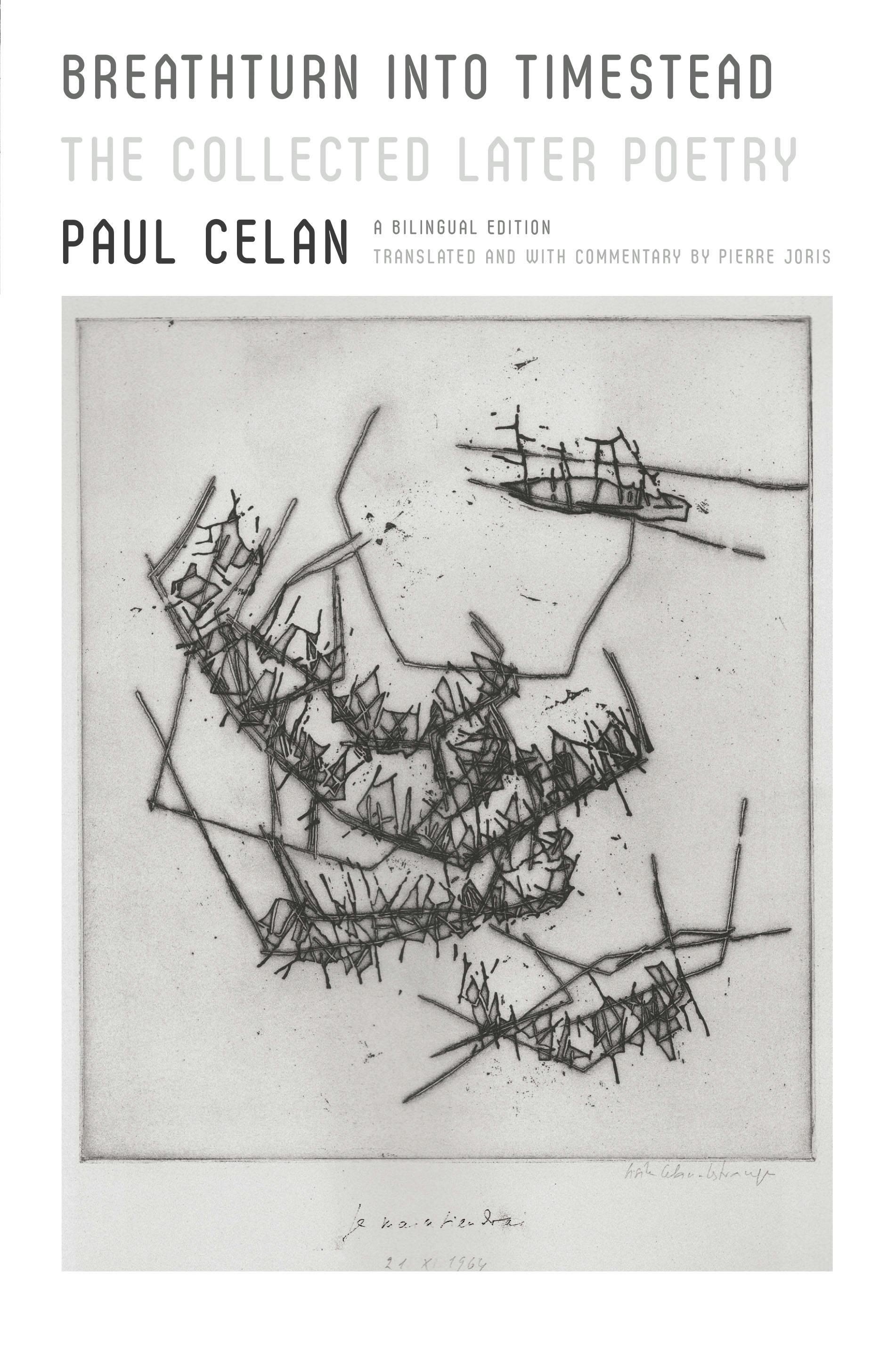
Continue into the five later collections. The poems are leaner, stranger and more visibly built from breaks, compounds and pressure between words. Do not measure progress by how many poems you can explain. Choose one short poem and stay with its grammar until you can describe how it moves.
Edition shown: Breathturn into Timestead: The Collected Later Poetry, bilingual ebook edition, translated and with commentary by Pierre Joris; Farrar, Straus and Giroux, ISBN 9780374714215. The publisher’s current paperback listing is ISBN 9780374608033. Publisher’s edition and cover
3. Conversation in the Mountains
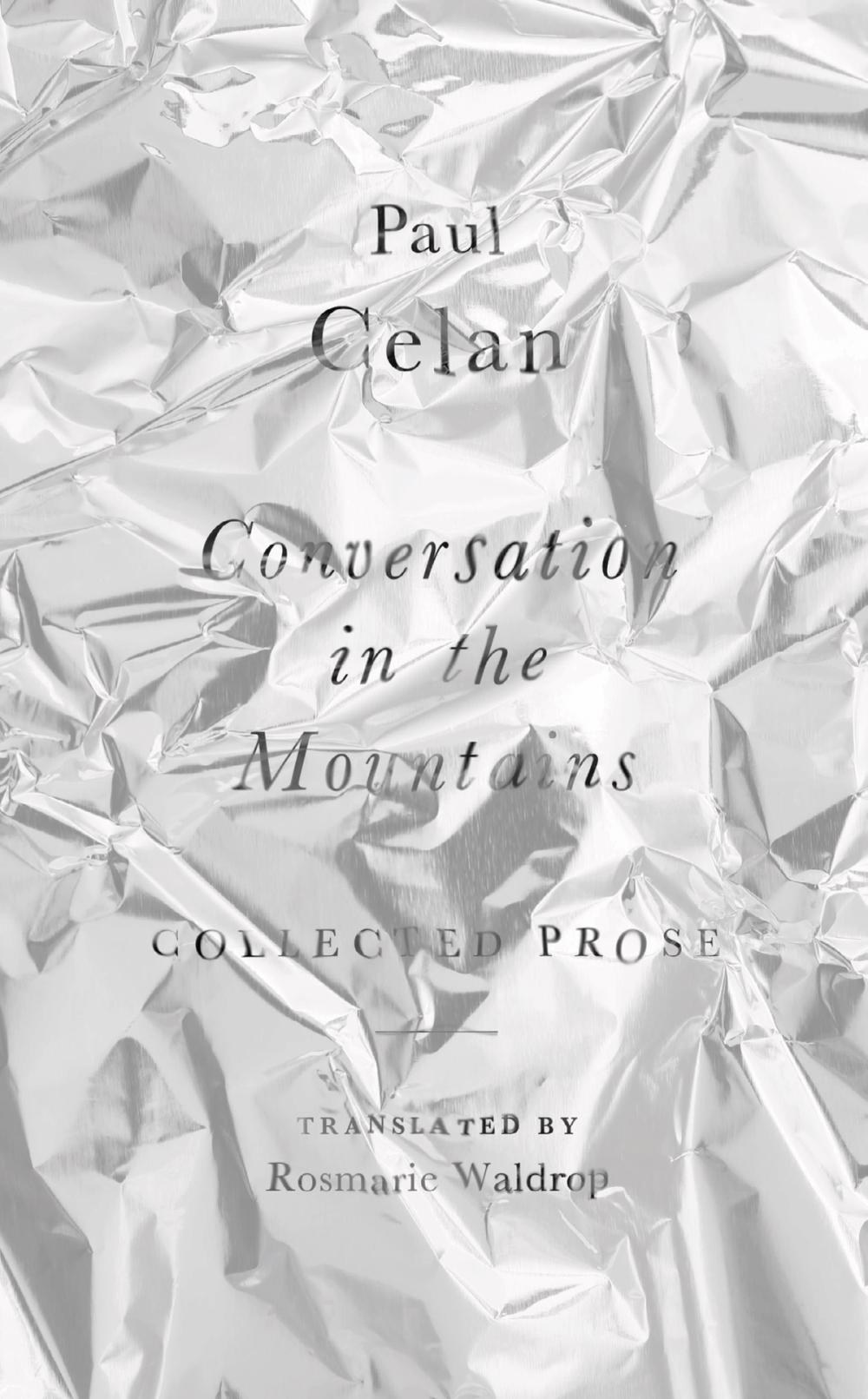
Finish with prose: essays, speeches, letters and notes translated by Rosmarie Waldrop. Read “The Meridian” beside a poem you already know. The point is not to extract a universal theory, but to see a poet thinking in another form about language, encounter and the route toward an other.
Edition shown: Conversation in the Mountains: Collected Prose, translated from German by Rosmarie Waldrop; New Directions, paperback published 26 May 2026, ISBN 9780811240529. Publisher’s edition and cover
Carry one line back to your own page
Choose a sentence in your draft that tries to hold more than it can comfortably say. Do not make it grander. Remove the explanation around it and ask what must remain: an image, an address, a historical pressure, a sound.
Then read the sentence aloud. If one word is carrying only atmosphere, replace it with a word that changes the relation between speaker and listener. Celan’s difficulty is not a style to imitate. His example is the seriousness with which a word can be asked to remember, answer and move toward someone else.
On his birthday, the line remains both severe and tender: the world may be gone, but language is still responsible for whom it carries.