André Malraux: A Life Inside History
On the fiftieth anniversary of his death, return to Malraux’s fiction, working life and three books about people facing the pressure of their times.
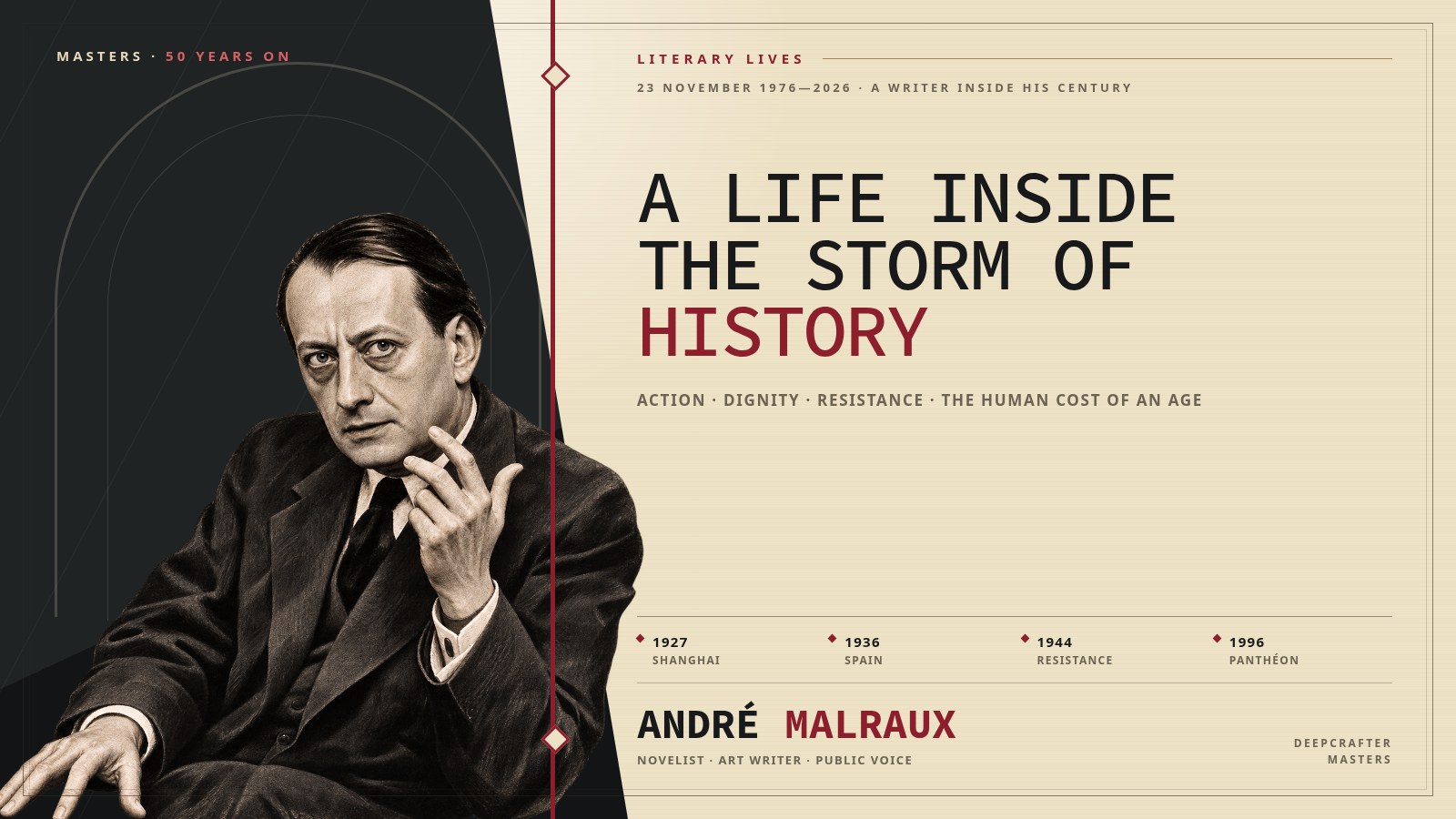
Fifty years after André Malraux’s death on 23 November 1976, the most useful way to meet him may be to put the monument to one side and open a novel. Before the minister and the public voice, there is a writer asking what a person can do when history makes neutrality impossible.
The Panthéon’s official programme marks the anniversary from 21 to 23 November 2026, also recalling the transfer of his ashes there in 1996. Its programme revisits his tribute to Jean Moulin and includes activities for younger visitors. These are announced commemorations, not a report of a new speech delivered today. Official programme
For a writer, this anniversary offers a reading invitation rather than a duty to admire. How do you give a large historical subject the pressure of one person’s immediate life?
Before the public voice: learning among books and images
Born in Paris in 1901, Malraux developed through reading, publishing and encounters with art. The French National Assembly’s chronology describes extensive reading, visits to museums and second-hand bookstalls, early magazine contributions and work on art publications at Gallimard. His first book, Lunes en papier, appeared in 1921 with illustrations by Fernand Léger. Later fiction included Les Conquérants and La Voie royale, before the Goncourt-winning La Condition humaine in 1933. Biographical chronology
This is a more concrete picture of a developing writer than the idea of a solitary genius waiting for experience. Reading and making publications are already forms of work. Looking at an image, choosing what to reproduce and putting words beside it all involve attention and selection.
For someone beginning now, the encouraging part is not the scale of Malraux’s later reputation. It is that a writing life can grow through several adjoining practices. Reviewing, reading closely and working with other people’s books need not be interruptions to becoming a novelist. They can help build the capacity to notice.
Fiction under historical pressure
Malraux’s public commitments and literary work repeatedly intersected. He supported the Spanish Republic during the civil war, later served in the French Resistance and held the cultural affairs ministry from 1959 to 1969. L’Espoir appeared in 1937; Antimémoires followed in 1967. Ordre de la Libération biography and bibliography
His books invite a distinction that matters to anyone writing a story with politics in it: the setting can explain the danger, but it cannot make a character’s decision on their behalf. The reader still needs to feel the distance between a conviction and the action it demands.
Our suggested approach is to read for that distance. When a character believes something, what becomes harder to do? Who shares the belief but chooses differently? Where does a collective purpose fail to settle a private fear? These questions keep a novel from becoming only an illustrated position.
A style to read for tension, not to imitate
Our reading of Malraux places action beside reflection. A scene can move toward a practical decision while opening onto a much larger question about dignity, solidarity or death. The useful tension is between the urgent and the unresolved: something must happen now, even when the people involved cannot resolve everything they believe.
That is different from adding a philosophical speech after an exciting event. Try watching how a conversation changes what someone can do next. A claim becomes dramatic when another person resists it, misunderstands it or asks the speaker to pay its price.
You do not need to borrow Malraux’s scale or rhetorical intensity. A family departure can carry its own version of this pressure. Someone must hand over a key; someone else refuses to take it. The wider situation becomes legible through the action, without disappearing into it. This is an editorial example, not a scene from his books.
The working life we can actually document
The available chronology supports a life of reading, editorial activity, art study and writing across forms. It does not establish a dependable daily timetable or a universal productivity formula. There is no need to invent either.
For a reader who also writes, the practical invitation is to build a small working habit around those documented activities: keep notes on what a passage makes you see, and on what a picture leaves you to imagine. Then return to your own pages. Which detail earns its place? Which explanation could become an exchange between people?
This is our exercise, not Malraux’s prescribed method. Its purpose is to make reading active without reducing a whole writer to a checklist.
A three-book route into Malraux
The covers below show French-language Gallimard editions. They are edition references, not claims that these are the original covers or English translations. Publication years in the reading sequence refer to the original works.
1. La Condition humaine (1933)
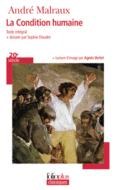
Start with the novel set amid the upheaval of 1927 Shanghai. Read for the different ways people meet a shared danger: conviction does not erase loneliness, fear or attachment. Keep a short note for each character: what can this person risk, and what feels impossible to surrender?
Edition shown: Gallimard, Folioplus classiques, 2007, ISBN 9782070346103; French text with study material. Publisher’s edition and cover
2. L’Espoir (1937)
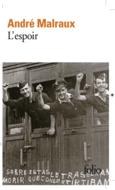
Move from individual pressure toward collective action in the Spanish Civil War. If you write an ensemble, ask what each person contributes besides agreement. A group becomes interesting when cooperation requires adjustments, not when every member gives the same speech.
Edition shown: Gallimard, Folio no. 20, ISBN 9782070360208; the publisher dates this edition to 27 January 1972. French-language edition. Publisher’s edition and cover
3. Antimémoires (1967)
Finish by changing form. Instead of expecting a novelist to explain himself in a tidy chronology, pay attention to how recollection is arranged. Which encounters are brought together? What question makes one memory follow another? Read the book as a made work of remembrance, alongside rather than instead of a checked biography.
Edition shown: Gallimard, Blanche, ISBN 9782070241354; French-language edition. The publisher’s page does not supply an edition date, so none is asserted here. Publisher’s edition and cover
Return from the anniversary to a page
This reading order is our recommendation, not the author’s. Begin with one novel, not a complete historical syllabus. Give yourself permission to read slowly and to use a short background account when needed.
Then find a paragraph in your own manuscript that explains a crisis from above. Ask what one person has to do before the scene can end. Let the action reveal a little more than the explanation did. An anniversary becomes useful when it sends us back to the living difficulty of writing a person, not merely naming an age.