Inside Anne-Sophie Mutter’s Literary Bookshelf
Eight literary works Anne-Sophie Mutter recommended, with verified English editions, real book covers and a practical route from Rilke to Klemperer.
Inside Anne-Sophie Mutter’s Literary Bookshelf
The Artist’s Library #001 · The Books Artists Keep
Beijing’s National Centre for the Performing Arts lists Anne-Sophie Mutter with Vasily Petrenko and the Royal Philharmonic Orchestra on November 11, 2026. Her China concert week offers a good occasion to open another door: the books she has publicly recommended. The concert is the invitation; the reading is the destination. NCPA concert announcement
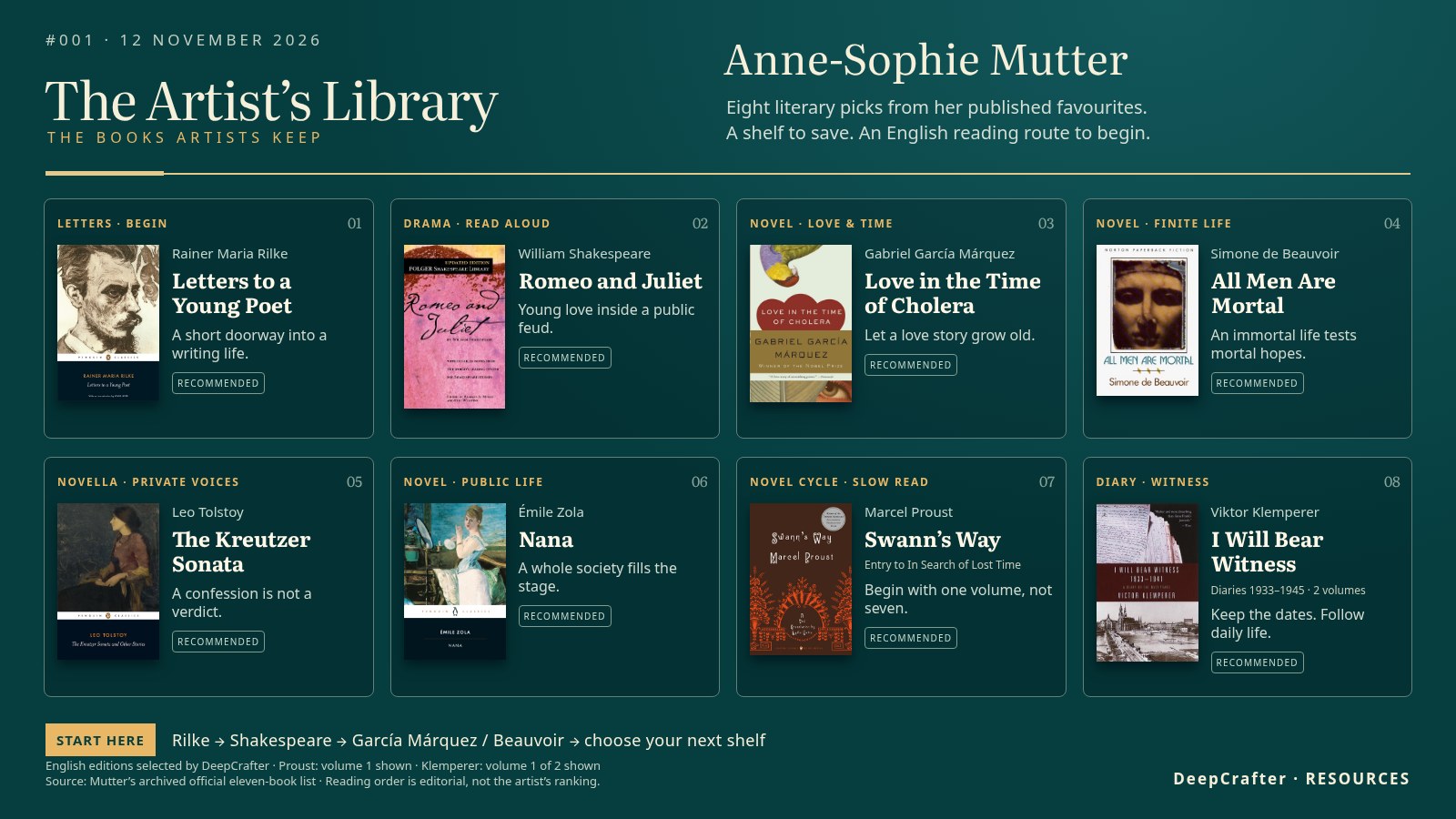
On an earlier version of her official website, Mutter assembled eleven favourite books and added personal comments. Eight belong to this literary shelf: novels, a play, letters and a diary. They range from the intimacy of Rilke’s correspondence to the long historical witness of Viktor Klemperer. Her appearance in lit.COLOGNE’s 2023 programme, devoted to the books of her life, independently confirms the broader reading interest. Archived official book list, February 26, 2024; lit.COLOGNE programme, printed p. 81
Here is a shelf to save, with a practical route through it. Recommended identifies a work on Mutter’s published list. The groupings, reading order and English editions below are DeepCrafter’s choices, not an order or set of translations prescribed by her.
First doorway: letters and a play
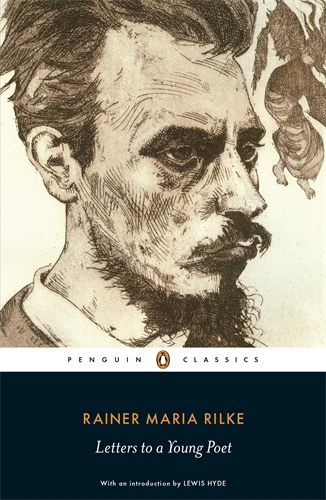
1. Rainer Maria Rilke — Letters to a Young Poet
Relationship: Recommended. Form: literary letters. Entry level: approachable, best read slowly.
Mutter identifies these letters as a significant personal reading experience. Begin here if a large classic feels like a commitment you cannot yet make. The letter form gives you a natural stopping point: one exchange, one walk, then a return. You do not need to agree with every piece of counsel to find the encounter worthwhile.
For a first reading, keep two small notes: advice you would welcome, and advice you would resist. Read the next letter before deciding whether the earlier one settles anything. This keeps a book of counsel alive as a conversation rather than turning it into a row of motivational quotations.
English edition: Penguin Classics, UK paperback 2012; translated by Charlie Louth, introduction by Lewis Hyde. ISBN 9780141192321. This volume also contains The Letter from the Young Worker; that additional work is not separately on Mutter’s list. Publisher
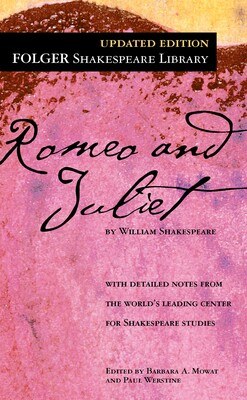
2. William Shakespeare — Romeo and Juliet
Relationship: Recommended. Form: drama. Entry level: familiar story, language that rewards reading aloud.
Mutter includes the play among her favourites. For readers who know the ending but have never read the whole work, this is an invitation to recover everything between its famous moments. Use the Folger edition’s facing-page notes when a word blocks the scene, then return to the speaking voices.
Try reading one scene with a friend, or give the characters different voices yourself. Notice who interrupts, who overhears and who receives a message too late. Familiarity with the plot need not remove the pleasure of discovery: the texture of a scene can still surprise you when its destination cannot.
English edition: Simon & Schuster, Folger Shakespeare Library, 2004; edited by Barbara A. Mowat and Paul Werstine. ISBN 9780743477116. English original, not a translation. Publisher
The central novels: love, time and a finite life
3. Gabriel García Márquez — Love in the Time of Cholera
Relationship: Recommended. Form: novel. Entry level: an inviting long read.
This is the specific García Márquez title on Mutter’s list—not a substitution for One Hundred Years of Solitude. Choose it when you want to settle into a novel rather than sample a writer. Edith Grossman’s English translation provides the route used here.
A useful reading companion is a short timeline. Record a few changes in the characters’ lives without trying to predict what those changes must mean. At the end, return to the beginning and ask how your impression of each person has altered. Let your answer remain your own; a recommendation opens a book, but it does not determine your response to it.
English edition: Vintage paperback, 2007; translated by Edith Grossman. ISBN 9780307389732. Publisher

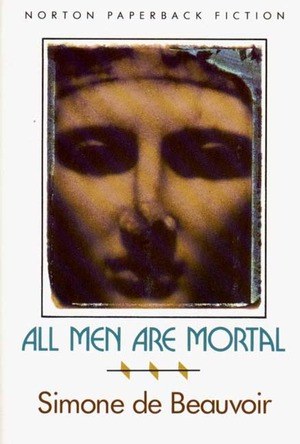
4. Simone de Beauvoir — All Men Are Mortal
Relationship: Recommended. Form: philosophical novel. Entry level: conceptually demanding, narratively accessible.
Mutter’s entry concerns immortality and the repeated failures of human ambition. Beauvoir gives that question a fictional life through Fosca, an immortal man, and Regina, an actress drawn to what his memory might preserve. The premise is a strong doorway for readers who enjoy an idea unfolding through people rather than an abstract argument.
Keep a changing answer to one question: what makes an action worth taking if there is always more time? Write a sentence near the beginning and another halfway through. You are not looking for the correct philosophical interpretation; you are making room to notice what the novel changes for you.
English edition: W. W. Norton paperback, 1992; translated by Leonard M. Friedman. ISBN 9780393308457. This is the Norton edition, not the differently credited Virago edition. Publisher
Private voices and public life
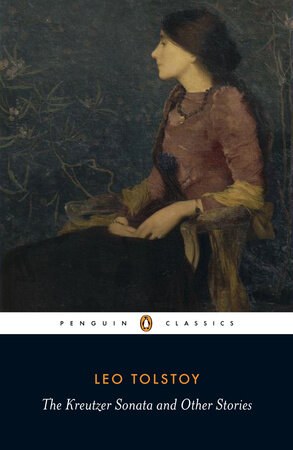
5. Leo Tolstoy — The Kreutzer Sonata
Relationship: Recommended. Form: novella. Entry level: short but emotionally difficult.
Mutter discusses this particular novella on her official shelf. It is included for that documented reading relationship, not because its title happens to belong to a piece of music. A murderous husband’s account makes this a demanding encounter with jealousy and self-justification.
Read it in two or three sittings. Keep the speaker’s claims separate from what you are prepared to accept as a reader. The compact length makes a second reading possible; even a return to the opening can be valuable after you know where the confession leads. Readers sensitive to domestic violence may prefer to leave this stop for later.
English edition: The Kreutzer Sonata and Other Stories, Penguin Classics, 2008; collection translated by David McDuff and Paul Foote. ISBN 9780140449600. Only the title novella—not all the accompanying stories—is attributed to Mutter here. Publisher
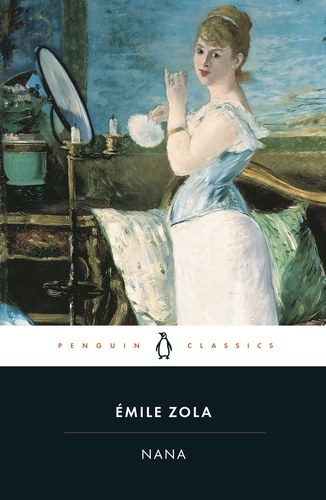
6. Émile Zola — Nana
Relationship: Recommended. Form: novel. Entry level: a substantial social world.
Mutter explicitly singles out Nana, with attention to passion and the unstable promise of beauty and wealth. After the private pressure of Tolstoy’s novella, this is a good place to widen the reading space. Keep a small cast list if the social traffic becomes crowded; no prior reading of Zola’s larger novel sequence is required for this route.
Try giving each reading session a concrete point of attention: a room, a sum of money, an entrance, a change of clothes. Such details offer an enjoyable way into a densely populated classic. You can follow them before trying to produce a grand account of the society around Nana.
English edition: Penguin Classics; translated and introduced by George Holden. ISBN 9780140442632. The UK publisher lists the paperback in 2004; Holden’s translation dates to 1972. Publisher
The long shelf: memory and witness
7. Marcel Proust — In Search of Lost Time
Relationship: Recommended. Form: novel cycle. Entry level: a long-term reading project.
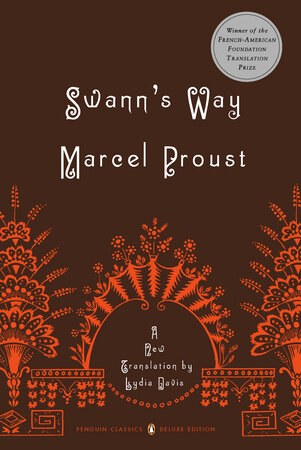
Mutter names the full cycle and comments personally on memory. Our practical entrance is Swann’s Way, its first volume. That distinction matters: the cover shown here identifies a starting edition, not the whole cycle or a translation she herself endorsed.
Begin with a modest appointment—perhaps twenty minutes three times a week—and let a paragraph take as long as it needs. You do not have to buy an entire set to discover whether you want to continue. Keep a page marker for a passage you would like to revisit, rather than measuring progress only by pages left. A first volume can be a complete reading experience as well as a beginning.
Entry edition: Swann’s Way, Penguin Classics, 2004; translated, introduced and annotated by Lydia Davis, series edited by Christopher Prendergast. ISBN 9780142437964. Publisher
8. Viktor Klemperer — I Will Bear Witness: Diaries 1933–1945
Relationship: Recommended. Form: literary diary and historical testimony. Entry level: sustained, emotionally demanding.
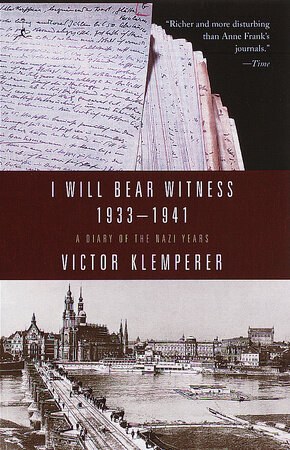
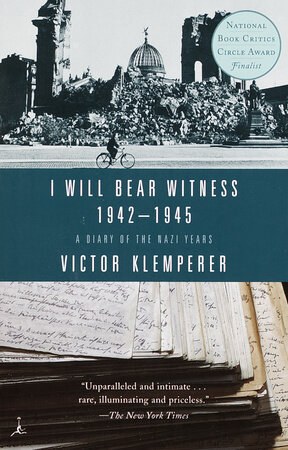
Mutter’s list names the diaries covering 1933–1945. The English reading route needs two volumes, both translated by Martin Chalmers. The US publisher uses the spelling Victor Klemperer. A single jacket should not conceal the second half of the named period.
Read chronologically and preserve the dates in your notes. Give this book its own time rather than treating it as a quick change of mood between novels. A diary invites an encounter with the limits of a particular day: what is known, what remains uncertain and what has become possible or impossible. Stop when you need to; the route is an invitation, not a reading quota.
English editions: Modern Library, I Will Bear Witness, volume 1, 1933–1941, paperback 1999, ISBN 9780375753787; volume 2, 1942–1945, paperback 2001, ISBN 9780375756979. Translated by Martin Chalmers. Volume 1; volume 2
A route you can actually follow 📚
For a first evening: one Rilke letter, followed by a scene from Romeo and Juliet. You have begun the shelf without promising yourself a season of reading.
For your next novel: choose García Márquez if you want a long love story, or Beauvoir if the idea of immortality catches you first. There is no need to finish both before moving elsewhere.
For a second direction: take Tolstoy’s concentrated novella or Zola’s larger social world. These are alternative reading scales, not successive levels in a test.
For a continuing companion: begin Swann’s Way. Give Klemperer a separate, chronological place in your reading week, with both diary volumes recorded on your list.
Save the map and circle the book you genuinely want to open. A personal library becomes useful when its next step is small enough to take.
Scope, sources and cover credits
This is the complete literary selection from the archived eleven-title list, not a claim to reconstruct everything Mutter has read. It includes diary and literary correspondence. Three other entries—Erich Fromm’s Die Kunst des Liebens, Bernd Harder’s Die goldenen Regeln der Menschheit and Elisabeth Kübler-Ross’s Gespräche mit Sterbenden—fall outside this issue’s literary selection. Mutter’s own 2011 acceptance speech independently confirms the Fromm reading relationship.
All eight relationship labels derive from her archived official list. The 2011 Fromm Prize laudation, pp. 3–5 supplies additional documentation for Tolstoy and Proust. No claim about literary influence on her performances is needed to enjoy these books.
The English editions are editorial reading suggestions, not identified copies from Mutter’s own library. Cover images identify the linked publisher editions; jacket artwork remains copyrighted to its respective rights holders. Credits: W. W. Norton; Penguin Classics/Penguin Random House; Vintage; Modern Library; Simon & Schuster/Folger Shakespeare Library.