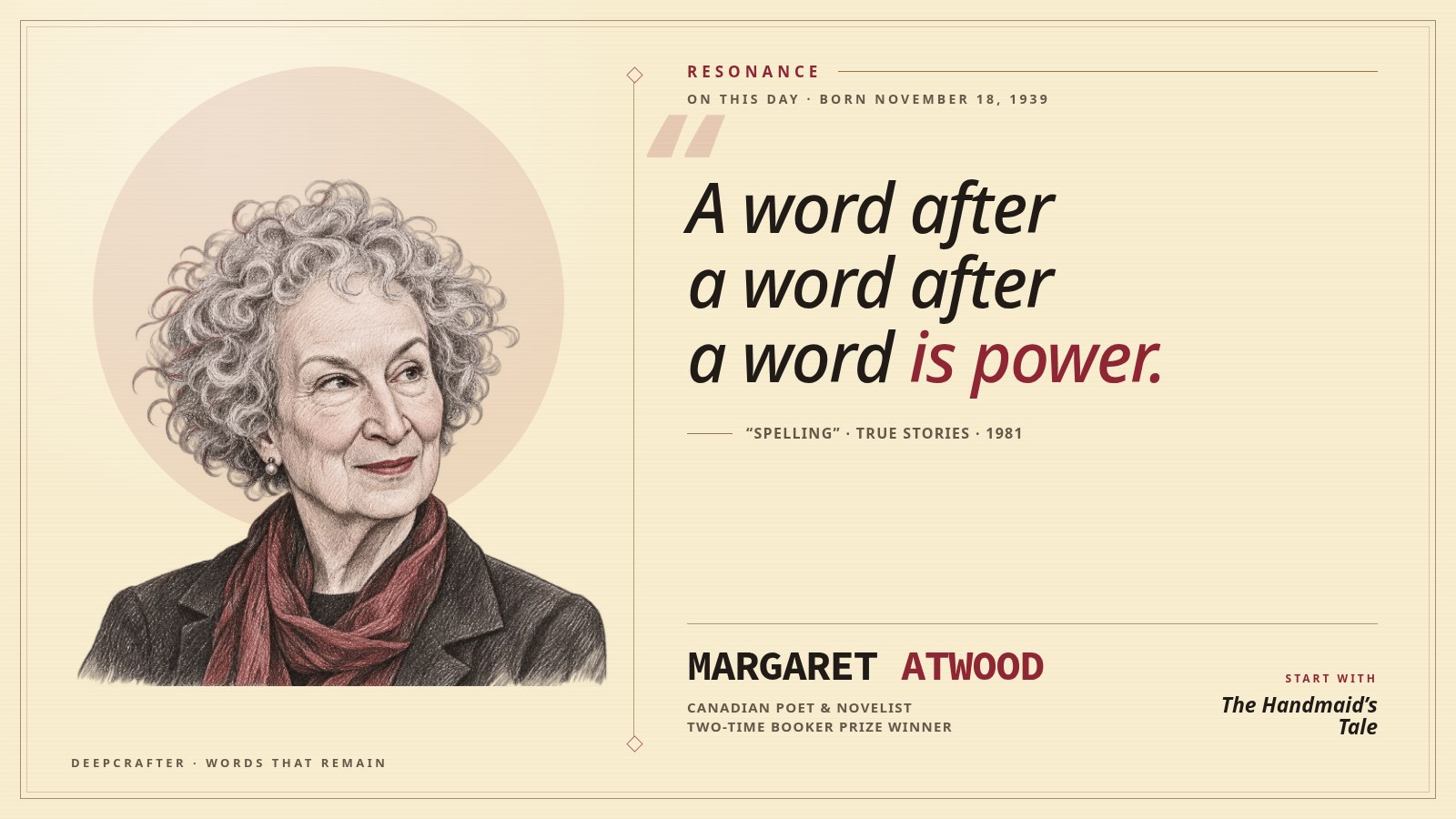
When the World Stops Explaining Itself: M. John Harrison
The 2026 Booker winner offers a new entrance to a boundary-crossing writing life, notebook practice and a three-book reading path.
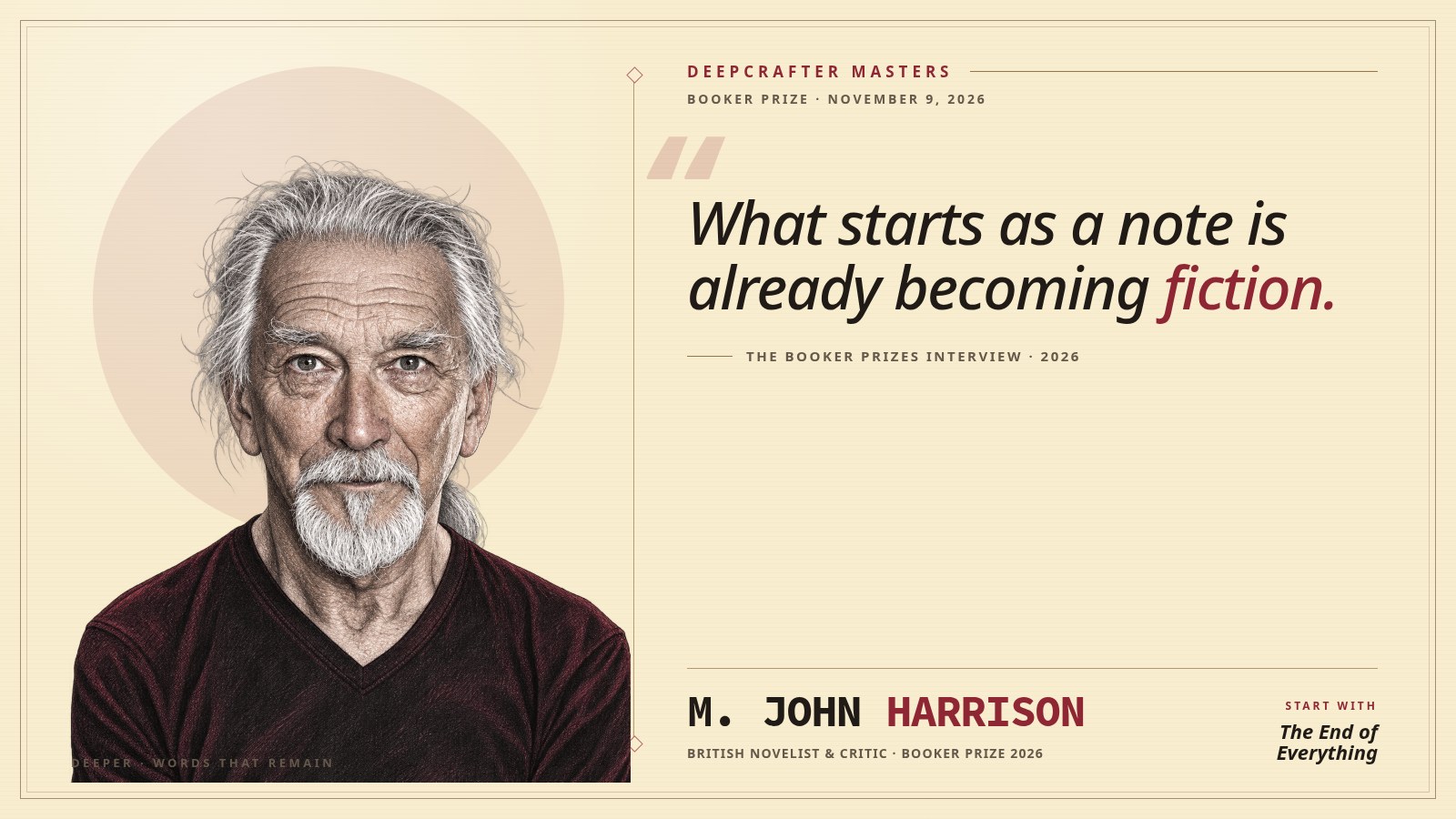
When the World Stops Explaining Itself
On November 9, 2026, M. John Harrison won the Booker Prize for The End of Everything. At 81, he became the prize's oldest winner. Today, the award offers a new way into a writing life that has never fitted comfortably on one shelf.
This is not a story about an unknown writer suddenly beginning. It is a story about a long-established imagination finding another entrance to its readers. The distinction is encouraging: a career can acquire a new audience without its earlier experiments becoming mistakes.
The question at the center of Harrison's new novel is especially useful to writers. What happens to ordinary life when the explanations that once organized it stop working? You do not have to solve that question before you can write a convincing scene. You do have to give someone something to do.
A life made across literary borders
Harrison's path runs through magazines, criticism, speculative fiction and writing about climbing. The Booker Foundation's author biography records his first story sale in 1965 and his arrival at New Worlds in 1969. He edited its books pages until 1978. Reviewing other people's work and developing his own fiction were parts of the same working life, rather than separate identities.
His recognition also crossed different literary territories. Climbers won the Boardman Tasker Prize in 1989; Nova Swing received the Arthur C. Clarke Award in 2007; The Sunken Land Begins to Rise Again won the Goldsmiths Prize in 2020. He served as a Booker judge in 2022 before winning the prize himself four years later.
That sequence matters more than a tidy label. It suggests a writer repeatedly choosing the demands of a particular book over a single market identity. Our reading of the career is not that categories are useless, but that they are entrances, not instructions. A reader can arrive through science fiction and stay for the sentences, or arrive through a literary award and discover an unfamiliar tradition.
A catastrophe with errands still to run
Serpent's Tail describes The End of Everything through a beachcomber, Phillip Tennent, who collects what the Channel leaves behind. An unstable object recovered from the water draws him inland. The surrounding crisis has transformed life without becoming fully comprehensible to its inhabitants.
That premise gives a novelist two different kinds of clarity to work with. The world's ultimate explanation may remain uncertain; the pressure on a character can still be immediate. A dangerous possession must go somewhere. Someone must decide whom to trust. A day's work still has to be done.
The Booker judges describe a novel that combines disturbance with sly humor. Their assessment is a critical response, not a measurement. But it points toward an important possibility: an unsettled world need not produce one unchanging emotional register. Habit, awkwardness and small acts of care can survive inside fear.
For a writer, the useful distinction is between an unresolved world and an unfocused scene. A scene can withhold the first while making the second exact. Readers do not always need a system diagram; they need enough local consequence to care about the next choice.
The notebook is already part of the fiction
In his Booker interview, originally published on August 18, 2026, Harrison describes keeping small squared notebooks, then transferring notes into computer files and revising as he goes. He also describes needing quiet for concentration. These are his reported working habits, not a universal prescription or a newly released winner's interview.
The most useful feature is the movement between forms. A note is not simply stored and later retrieved intact. Transcription gives it another encounter with the writer's attention. Selection, rhythm and association can begin there, before a document has acquired the status of a draft.
Try an editorial exercise inspired by that account. Choose three notes from a walk or an ordinary afternoon. Retype them slowly. Add one action to the first, one sound to the second, and a mistaken assumption to the third. Then write a short passage joining only two of them. Do not explain why the connection is interesting; make it felt through the person observing it.
The exercise is ours, not Harrison's published teaching method. Its purpose is to make gathering material and transforming material less separate. It also gives revision a modest starting point: something you have actually noticed.
Three books, three ways in
The following path moves from today's award to an earlier novel and then to the writer's notebook-shaped account of himself. All three are English-language editions, not translations. Publication dates below identify the particular editions, not necessarily a work's first appearance.
1. The End of Everything — begin with the present
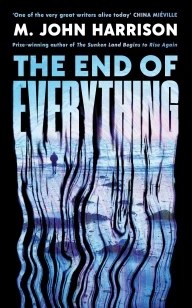
M. John Harrison. Serpent's Tail, hardback, June 18, 2026. ISBN 9781800812949. Edition information is checked against the publisher; the reproduced cover is the ISBN-matched Stumpel bookseller image.
Read for the relation between an immediate task and a world that resists explanation. Track what a character wants in a particular encounter before trying to decode the catastrophe. Keep a short list of concrete actions alongside your unanswered questions. This is a suggested reading lens, not a claim to have completed an exhaustive close reading.
2. The Sunken Land Begins to Rise Again — follow the unease home
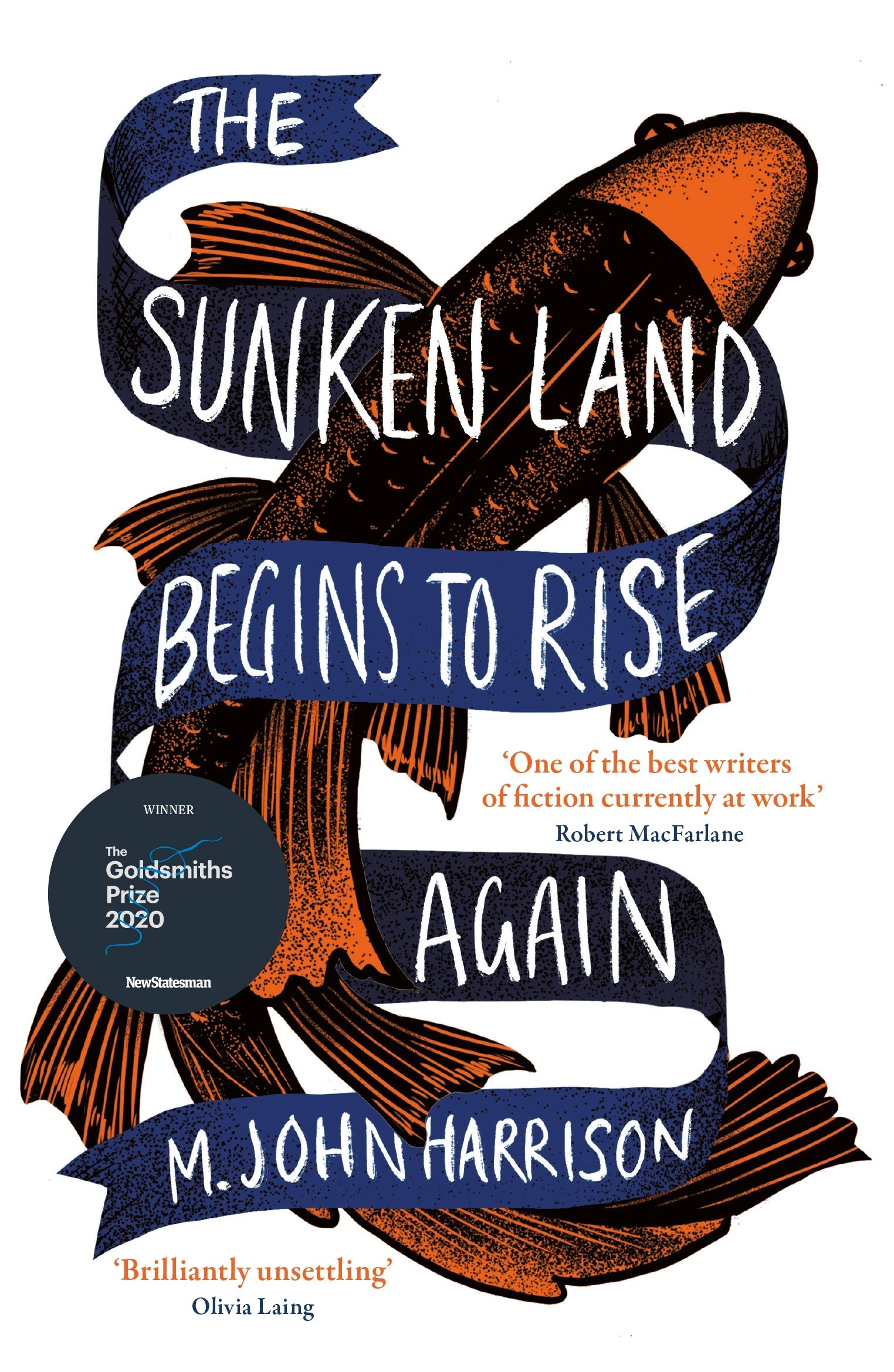
M. John Harrison. Gollancz, paperback, April 15, 2021. ISBN 9780575096363. The publisher supplies both this edition's details and its cover, and identifies the novel as the 2020 Goldsmiths Prize winner.
The publisher's account follows Shaw and Victoria through a relationship, precarious circumstances and disturbing changes around them. Read it next to explore how domestic and social detail can carry strangeness. Notice the point at which an ordinary description begins to unsettle you; consider what changes in your attention before anything is explained.
3. Wish I Was Here — enter the workshop sideways
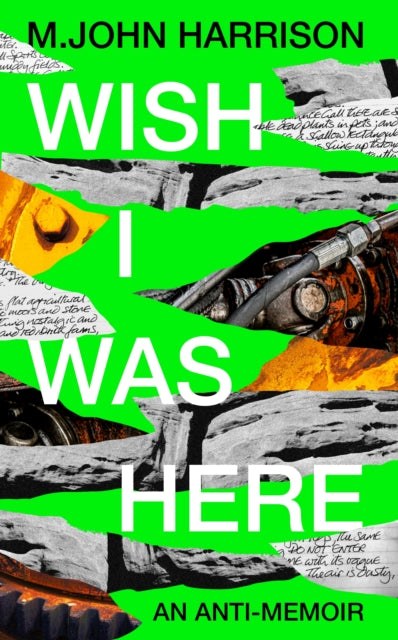
M. John Harrison. Serpent's Tail, hardback, May 25, 2023. ISBN 9781800812970. Edition details are from the publisher; the cover is the matching Shulph bookseller image.
The publisher presents this anti-memoir through decades of notebook keeping, childhood in the industrial Midlands, countercultural London and movement into upland landscapes. End here rather than begin here: after encountering the fiction, the fragments of a writing life become a conversation with the books, not a key that promises to unlock them all.
Keep the uncertainty; strengthen the attention
An award cannot promise any writer eventual recognition. What this one can offer is an invitation to read a substantial career beyond a familiar label. Harrison's example makes room for persistence, formal curiosity and the repeated work of noticing.
For your next scene, leave one large question open and make one small action precise. Let a person act inside what they cannot explain. The mystery can remain spacious while the writing becomes more exact.
Sources and editorial scope
- The Booker Prize 2026: official result: November 9 result, age record and judges' assessment.
- Booker Foundation: M. John Harrison: career, magazine work and earlier prizes.
- Harrison's Booker interview: originally August 18, 2026; writing habits and source of the novel's setting and concerns.
- Serpent's Tail: The End of Everything, Gollancz: The Sunken Land Begins to Rise Again, and Serpent's Tail: Wish I Was Here: edition details and publisher descriptions.
The event and official reporting date are November 9, 2026; this article is dated November 10. Craft exercises and reading lenses are DeepCrafter editorial suggestions. The cover is an original conceptual illustration, not documentary photography or an illustration from Harrison's books.