The Freedom to Be Wrong: Fyodor Dostoevsky and the Voices That Refuse to Obey
On Dostoevsky’s birthday, follow how prison, polyphony, embodied ideas and a life of voices made contradiction a form of literary freedom.
The Freedom to Be Wrong
Fyodor Dostoevsky and the Voices That Refuse to Obey
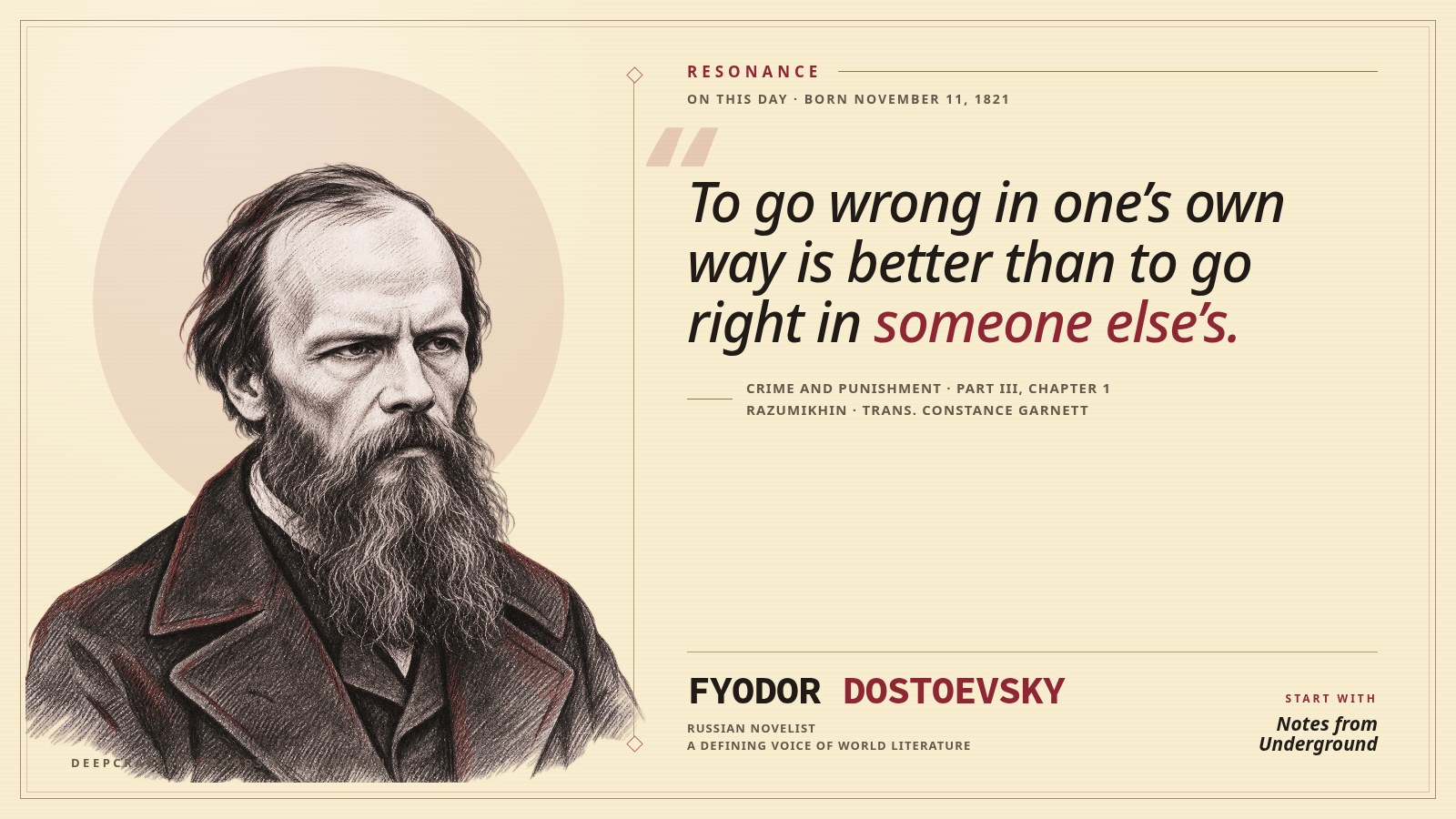
“To go wrong in one’s own way is better than to go right in someone else’s.”
The sentence is spoken by Razumikhin in Part III, Chapter I of Crime and Punishment. It is not Fyodor Dostoevsky stepping out from behind the novel to deliver a personal maxim. That distinction is exactly why the line belongs at the entrance to his work.
Born on October 30 by the old Russian calendar—November 11 in the modern calendar—Dostoevsky became one of literature’s great makers of voices that cannot be reduced to the author’s verdict. His people talk in manifestos, confessions, jokes, accusations, prayers and feverish self-defences. Their ideas matter, but their ideas never explain all of them.
Razumikhin’s line celebrates the risk of thinking in one’s own name. Dostoevsky’s novels turn that risk into form. They let a consciousness be brilliant, ridiculous, tender and dangerous before the reader has settled what it means.
A childhood beside suffering
The Boris Yeltsin Presidential Library records Dostoevsky’s birth in Moscow on November 11, 1821. His father was a doctor at the Mariinsky Hospital for the Poor, and the family lived on its grounds. Poverty, illness and social hierarchy were therefore not distant abstractions in his childhood landscape.
He was educated in Moscow and later at the military engineering school in St. Petersburg. Engineering offered a career, but literature had already taken possession of him. In 1844 he resigned from government service. Two years later, his first novel, Poor Folk, made him suddenly famous.
The book’s letters between Makar Devushkin and Varvara Dobroselova gave emotional and verbal life to people a social order treated as negligible. Even at the beginning, Dostoevsky’s central question was not merely what poverty does to a person. It was how a person speaks when every surrounding voice tells them what they are worth.
The scaffold and the years after it
In 1849 Dostoevsky was arrested for his involvement with the Petrashevsky Circle, where participants discussed forbidden political and social ideas. He spent eight months imprisoned in the Peter and Paul Fortress. A military court sentenced him to death.
The sentence was commuted only at the place of execution. The Presidential Library records the replacement: four years of penal servitude followed by military service as a private. Dostoevsky then spent four years in the Omsk prison camp.
It is tempting to turn this experience into one neat key for every later novel. His work resists such neatness. Prison sharpened his attention to humiliation, solidarity, cruelty, faith and the limits of intellectual schemes, but it did not produce a single doctrine. It placed him among people whose lives and convictions could not be arranged into one clean moral diagram.
When he returned to literary life, the voice had changed. The House of the Dead drew on the prison years. Notes from Underground introduced a narrator who attacks every system that claims to explain human behavior while remaining trapped inside his own spite, vanity and need for recognition. The great novels that followed would enlarge this conflict into whole social worlds.
The underground as a new kind of room
The Underground Man does not simply tell his story. He anticipates objections, imagines readers, contradicts himself and turns explanation into another form of combat. The monologue feels private, yet it is crowded with other people’s judgments.
This is one reason Notes from Underground became so important to modern fiction. Consciousness is no longer a clear interior chamber that a narrator calmly reports. It is an argument already in progress.
For writers, the lesson is precise: a first-person voice becomes alive when it contains pressure from voices outside itself. What does the speaker expect to be accused of? Whose language are they resisting? Which sentence is addressed to an absent judge?
Dostoevsky’s narrators do not merely reveal themselves. They fight over the terms on which they can be known.
A novel made of unmerged voices
Mikhail Bakhtin’s influential account of Dostoevsky uses the language of polyphony: a plurality of voices and consciousnesses that are not fully merged into one authoritative position. Later scholarship has complicated and contested that ideal, but the term still names something readers immediately feel.
Raskolnikov is not an example pinned beneath a thesis. Ivan Karamazov is not only “doubt,” Alyosha is not only “faith,” and Dmitri is not only “passion.” Each has an intellectual force and a bodily life. Their beliefs are inseparable from money, shame, family, desire, illness, timing and the words of other people.
That is why Dostoevsky’s ideological scenes remain dramatic. Characters do not take turns presenting positions for the reader’s convenience. They interrupt, wound, seduce, misunderstand and change the stakes of the room.
The argument is never only about the argument.
Crime and Punishment: an idea enters a body
Raskolnikov imagines that extraordinary people may cross moral boundaries in the service of a higher purpose. The novel does not answer him with an abstract counter-lecture. It lets the theory enter heat, hunger, murder, panic, disgust, pride and the attention of other people.
The result is not a tidy contest between reason and feeling. Raskolnikov’s mind is divided before the crime and remains divided after it. His idea gives him language for superiority; his body keeps producing evidence that he is not outside human relation.
Razumikhin’s celebration of one’s own mistakes offers a comic and humane counter-rhythm. He is not always right. He is alive in his errors, and his attachment to other people keeps thought from becoming a sealed room.
Dostoevsky’s craft lesson is severe: if an idea matters in a novel, give it consequences in the nervous system. Let it alter sleep, appetite, posture, money, intimacy and the next choice.
Families as philosophical machinery
In The Brothers Karamazov, the largest questions—freedom, responsibility, faith, rebellion and justice—are carried through a family that cannot stop injuring and needing itself.
This is one of Dostoevsky’s greatest structural achievements. Philosophy does not float above plot. It is attached to inheritance, rivalry, erotic jealousy, childhood memory and the murder of a father. The sons do not merely represent different answers. They are implicated in one another.
For writers, family is powerful not because it automatically creates emotion, but because it makes ideas personal before anyone can escape them. A character may reject a belief and still repeat the gesture of the person who taught it. They may love someone whose existence makes their own theory impossible.
The deepest argument is often the relationship that keeps returning.
Working under pressure, learning to dictate
Dostoevsky’s working life was marked by debt, deadlines, illness and serial publication. In 1866, while Crime and Punishment was appearing, he also owed a publisher another novel under a punishing contract.
He hired the young stenographer Anna Grigoryevna Snitkina and dictated The Gambler in less than a month. A Cambridge University Press account describes their daily process: dictation, shorthand, transcription and revision. Anna later became his wife and a crucial partner in the practical life that made his late work possible.
Dictation did more than accelerate production. It suited a prose built from speech, interruption and verbal pressure. Dostoevsky planned extensively, but the finished novels often feel as though a voice is discovering its danger while speaking.
The transferable lesson is not to romanticize crisis. It is to recognize the medium inside the method. Some passages need the eye; others need the breath. Reading dialogue aloud is not only a polish step. It tests whether the thought is actually alive as utterance.
Contradiction without simplification
Dostoevsky’s legacy is enormous and not uncomplicated. His journalism and political convictions contain positions many readers will resist. The novels themselves do not become valuable because the author was always generous or correct.
They endure because he could build dramatic structures large enough for conviction to meet contradiction. A character can say something magnificent and behave badly. Another can offer compassion for mixed motives. A scene can hold moral urgency without pretending that urgency makes people simple.
This is where Razumikhin’s sentence becomes more than a slogan about individualism. To be wrong in one’s own way is not the final virtue. It is the beginning of responsibility. A borrowed answer can protect a person from discovering what they actually believe. An owned mistake can be confronted, revised and answered for.
A three-book reading path
1. Begin with Notes from Underground and The Double
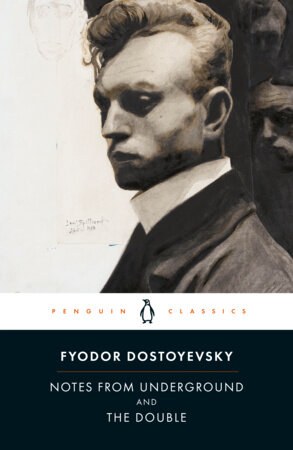
Selected edition: Penguin Classics, translated by Ronald Wilks, with an introduction by Robert Louis Jackson, ISBN 9780140455120.
Start here for the compressed engine of Dostoevsky’s later fiction. In Notes from Underground, self-knowledge becomes performance and argument. The Double adds a nightmare of identity under social pressure.
Notice: every moment when a speaker answers someone who is not physically present.
2. Continue with Crime and Punishment
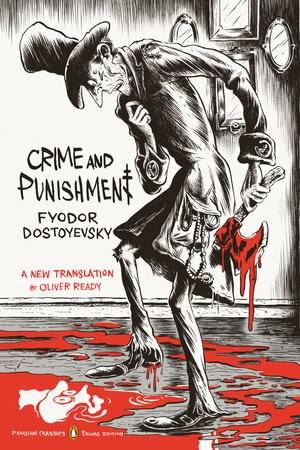
Selected edition: Penguin Classics Deluxe Edition, translated with introduction and notes by Oliver Ready, ISBN 9780143107637.
Read this next to see an idea become action, then bodily consequence. The novel is psychologically intense, but it is also crowded, comic and social. Raskolnikov’s isolation is constantly invaded by other lives.
Notice: who interrupts his theory, and what happens in the body before the mind admits anything.
3. End with The Brothers Karamazov
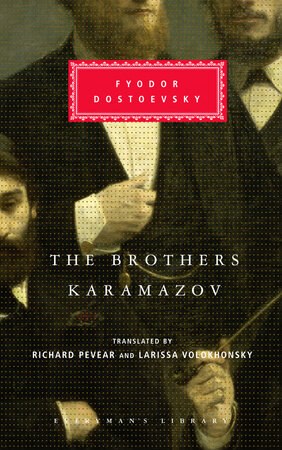
Selected edition: Everyman’s Library, translated by Richard Pevear and Larissa Volokhonsky, with an introduction by Malcolm Jones, ISBN 9780679410034.
End with the fullest expression of Dostoevsky’s polyphonic art: family drama, murder mystery, spiritual inquiry, courtroom narrative and competing forms of love inside one book.
Notice: how each brother’s ideas become inseparable from his responsibility toward the others.
What to carry into your own writing
Do not make every character equally correct. Give each one enough inward force to resist being reduced to your conclusion.
Put ideas into bodies and relationships. Let another person’s judgment live inside the voice. Build arguments from interruptions, needs and consequences, not alternating speeches. When a character contradicts themselves, ask whether the contradiction is an error to repair or the place where the person becomes real.
Dostoevsky’s characters are memorable because they are never merely free. They are answerable—to their own words, to other people and to the lives their ideas touch.
The freedom to be wrong is therefore not an escape from truth. It is the dangerous first step toward discovering a truth one can actually own.
Sources
- Boris Yeltsin Presidential Library: Fyodor Dostoevsky was born
- Project Gutenberg: Crime and Punishment, translated by Constance Garnett
- Cambridge University Press: “From the gambler within: Dostoyevsky’s The Gambler”
- Cambridge University Press: “Self and Other in Dostoevsky’s Aesthetic Activity”
- Penguin Classics: Notes from Underground and The Double
- Penguin Classics Deluxe: Crime and Punishment
- Everyman’s Library: The Brothers Karamazov
Image and edition notes
- Cover portrait: original charcoal-and-ink illustration generated for DeepCrafter; visibly illustrative, not an archival photograph.
- Notes from Underground and The Double cover: Penguin Random House / Penguin Classics.
- Crime and Punishment cover: Penguin Random House / Penguin Classics Deluxe Edition.
- The Brothers Karamazov cover: Penguin Random House / Everyman’s Library.