To See It Well, Move: Chinua Achebe and the Many-Sided Story
On Chinua Achebe’s birthday, follow a life of many-sided storytelling, editorial work and disciplined practice through three novels of colonial change.
To See It Well, Move
Chinua Achebe and the Many-Sided Story
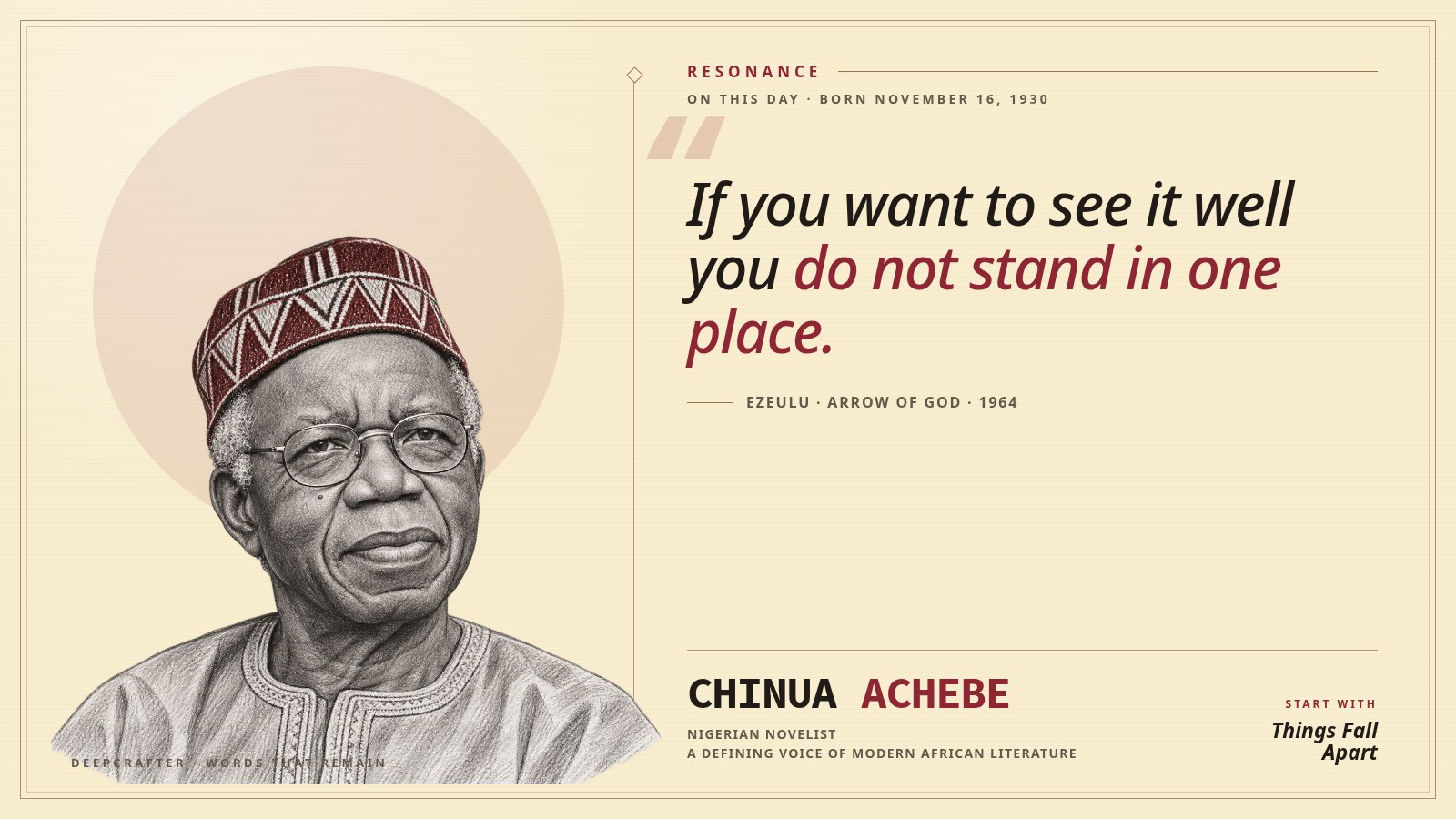
“If you want to see it well you do not stand in one place.”
The sentence belongs to Ezeulu, the priest at the center of Arrow of God. It also offers a way into Chinua Achebe’s fiction. His novels do not exchange one fixed account of Africa for another. They move among households, generations, rival authorities, proverbs, private motives and public histories until a world that had been flattened by colonial representation regains argument, humor and depth.
November 16 marks Achebe’s birth in 1930 in Ogidi, in southeastern Nigeria. The date is a reason to return to a writer who changed what the modern novel could make visible—and to a line that warns both readers and writers against the comfort of a single position.
Growing up between stories
Achebe grew up in an Igbo town in a Christian family. Missionary education and Igbo cultural life did not form two neat, sealed worlds around him. Their tensions, crossings and competing claims entered his imagination early.
At University College, Ibadan, he studied English, history and theology. Reading European depictions of Africa made him increasingly conscious of who had been granted the power to describe whom. His answer was not a lecture disguised as a novel. It was to build stories in which African characters occupied the full field of human motive: proud and frightened, comic and severe, generous and compromised.
After university he worked for the Nigerian Broadcasting Service. That work sharpened his ear for spoken language and brought him into contact with a changing country. Things Fall Apart appeared in 1958, two years before Nigerian independence. It would become the opening movement of a trilogy tracing nearly a century of encounter between Igbo society and British colonial power.
Restoring density to the world
Achebe’s achievement is sometimes summarized as “writing back” to colonial literature. The phrase is useful, but it can make his novels sound primarily reactive. Their deeper force comes from construction.
Umuofia in Things Fall Apart exists before the missionaries arrive as a society of work, ritual, law, kinship, art, argument and unequal power. Achebe does not idealize it. Okonkwo’s strength is inseparable from his fear of appearing weak; communal judgment can be measured in one scene and devastating in another. Colonial intervention enters a world already alive with contradiction.
That density changes the moral experience of the story. Readers are not asked to choose between an innocent paradise and a wholly modern future. They must watch several systems of value meet, misunderstand one another and redistribute power.
For writers, this is a structural lesson. A threatened world becomes more than scenery when its members disagree about it. Give a community several voices, several interests and several memories. Then an outside force does not merely attack a backdrop; it enters an argument already in motion.
English made to carry another music
Achebe chose to write his major fiction in English, but he refused to treat English as culturally neutral. His prose carries the pressure of Igbo speech, proverb, folktale and ceremonial address. The language is lucid without being plain in the sense of empty. A proverb can settle a dispute, conceal aggression, display status or invite the listener to complete the meaning.
Dialogue in these novels rarely functions as information alone. Who may speak first, who answers indirectly, who tells a story instead of making a declaration—these choices reveal a social world.
This is why imitation at the surface is dangerous. Achebe’s power does not come from scattering “traditional wisdom” through otherwise generic prose. The sayings work because the characters share, contest and sometimes misuse the conventions around them.
A writer can borrow the principle without borrowing the sound: let figurative language belong to relationships. Ask who taught a character this phrase, who recognizes it, who resents it and what saying it now permits the speaker to avoid.
The tragedy of standing in one place
Okonkwo, Obi Okonkwo and Ezeulu are very different men, but each mistakes a partial view for a complete one.
Okonkwo organizes his life against everything he associates with his father. That rigid opposition gives him drive, then narrows the range of responses he can imagine. Obi returns from England in No Longer at Ease convinced that education and principle will separate him from the corruption around him. Debt, obligation, love and bureaucracy expose how little a private ideal can control by itself. Ezeulu understands power keenly, yet his identification with sacred office makes it difficult to see when authority has begun to isolate him from the people it is meant to serve.
Achebe does not reduce their falls to a single flaw. Character, institution and historical pressure meet. The result is tragedy without inevitability: each man makes choices, but never from a position outside his world.
For fiction writers, that balance is crucial. A character should be responsible without being omnipotent. Build the pressures around the decision clearly enough that readers can see why the choice is made—and still imagine the road not taken.
The novelist as editor and institution-builder
Achebe’s influence extended beyond his own books. He worked as an editor and helped foster platforms for African writing, including the journal Okike. He was also closely associated with Heinemann’s African Writers Series, which brought work by African authors to readers across the continent and beyond.
This part of his life matters because literary history is not made by solitary masterpieces alone. It also depends on manuscripts being read, writers being introduced, books remaining available and new voices finding an audience.
Achebe’s career joined authorship to that larger labor. His example suggests a generous definition of a writing life: make the work, but also strengthen the conditions in which other work can be seen.
A regular practice without a mechanical quota
In his Paris Review interview, Achebe described writing by hand and working regularly without imposing a rigid daily word target. He distinguished the discipline of returning to the work from the visible quantity produced on any one day. A high-output day was not automatically the day of the best writing.
That distinction is useful in an age of dashboards and streaks. Counting can support a practice, but it cannot tell a writer whether a scene has found its necessary point of view. Some days enlarge a manuscript by adding words; others enlarge it by changing where the writer stands.
A practical version of Achebe’s method is simple: keep the appointment, but vary the evidence of progress. A page drafted, a scene reordered, a voice clarified or a false certainty removed may each be a legitimate day’s work.
Public history and moral argument
Achebe’s later novels and essays continued to examine the promises and failures of postcolonial Nigeria. A Man of the People turns political corruption into bitter comedy; Anthills of the Savannah distributes narration among several voices as power hardens around a military regime. His essays addressed representation, language and the responsibilities of the writer. His final major book, There Was a Country, returned to the Biafran War through personal history.
The 2007 Man Booker International Prize recognized his literary career as a whole. By then, the scale of his influence was clear: not because every later African writer sounded like Achebe, but because many could write from a world in which African fiction no longer needed permission to be central.
Three books, three positions from which to see
1. Begin with Things Fall Apart
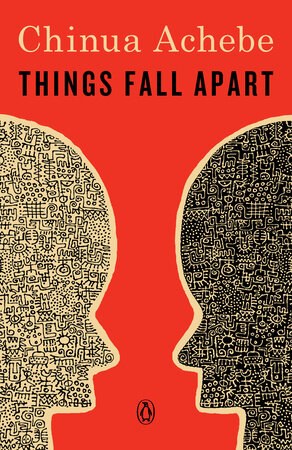
Selected edition: Penguin Books paperback, September 1, 1994, 224 pages, ISBN 9780385474542.
Begin with the novel that altered the map of world literature. Read first for Okonkwo, but do not let his force become the whole village. Notice the women’s stories, the elders’ judgments, Nwoye’s listening and the different meanings characters attach to the same event.
Notice: how the novel establishes a society through disagreement before colonial power begins to reorganize it.
2. Continue with Arrow of God
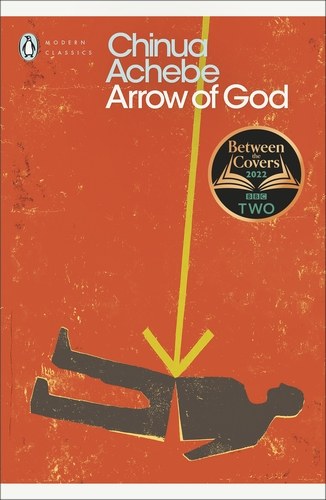
Selected edition: Penguin Modern Classics paperback, April 25, 2013, 240 pages, ISBN 9780141393988.
Continue with Achebe’s most intricate study of authority. Ezeulu stands between deity, village federation, family and colonial administration. Every institution believes it understands what he is for; Ezeulu has his own answer.
Notice: how a conflict changes when viewed from the priest’s compound, the villages and the colonial office.
3. End with No Longer at Ease
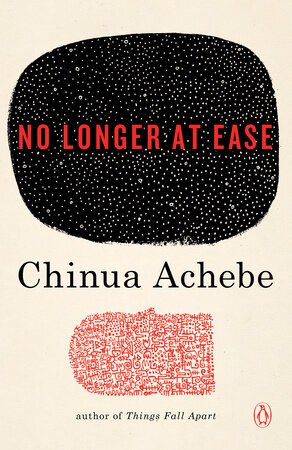
Selected edition: Penguin Books paperback, September 16, 1994, 208 pages, ISBN 9780385474559.
End with Obi Okonkwo in the final years of colonial rule. The novel begins with the fact of his corruption, then asks how education, salary, family expectation, romance and bureaucracy close around him.
Notice: how Achebe turns “corruption” from a label into a sequence of ordinary pressures and avoidable decisions.
Change position before you simplify
Achebe’s sentence from Arrow of God is not a command to become neutral. Moving does not erase judgment. It makes judgment answerable to more of the world.
For your next revision, choose the scene in which you feel most certain who is right. Rewrite one page from the position of the person whose reasoning the draft has treated as obvious, foolish or invisible. Keep the facts unchanged. Change only what can be noticed.
You may return to the original point of view. But if you have moved honestly, the scene should no longer be able to stand in exactly the same place.
Sources
- African Studies Centre Leiden: Chinua Achebe
- Brown University: Chinua Achebe—writer, critic, social historian
- The Booker Prizes: The Man Booker International Prize 2007
- The Paris Review: Chinua Achebe, The Art of Fiction No. 139
- Penguin Random House: Things Fall Apart
- Penguin: Arrow of God
- Penguin Random House: No Longer at Ease
Image and edition notes
- Website cover: the original illustrated Chinua Achebe Resonance card published by DeepCrafter; it is an illustration, not an archival photograph.
- Things Fall Apart cover: Penguin Books, ISBN 9780385474542; cover and edition metadata from Penguin Random House.
- Arrow of God cover: Penguin Modern Classics, ISBN 9780141393988; cover and edition metadata from Penguin.
- No Longer at Ease cover: Penguin Books, ISBN 9780385474559; cover and edition metadata from Penguin Random House.
- The opening is a brief sentence spoken by Ezeulu in Arrow of God (1964), verified against Achebe’s own quotation of the novel in “The African Writer and the English Language.”
Sources
- African Studies Centre Leiden: Chinua Achebe
- Brown University: Chinua Achebe—writer, critic, social historian
- The Booker Prizes: The Man Booker International Prize 2007
- The Paris Review: Chinua Achebe, The Art of Fiction No. 139
- Penguin Random House: Things Fall Apart
- Penguin: Arrow of God
- Penguin Random House: No Longer at Ease