The Summer That Refuses to Die: Albert Camus and the Work of Decency
On Albert Camus’s birthday, follow the writer of absurdity and revolt from Algerian light to the collective labor of The Plague.
The Summer That Refuses to Die: Albert Camus and the Work of Decency
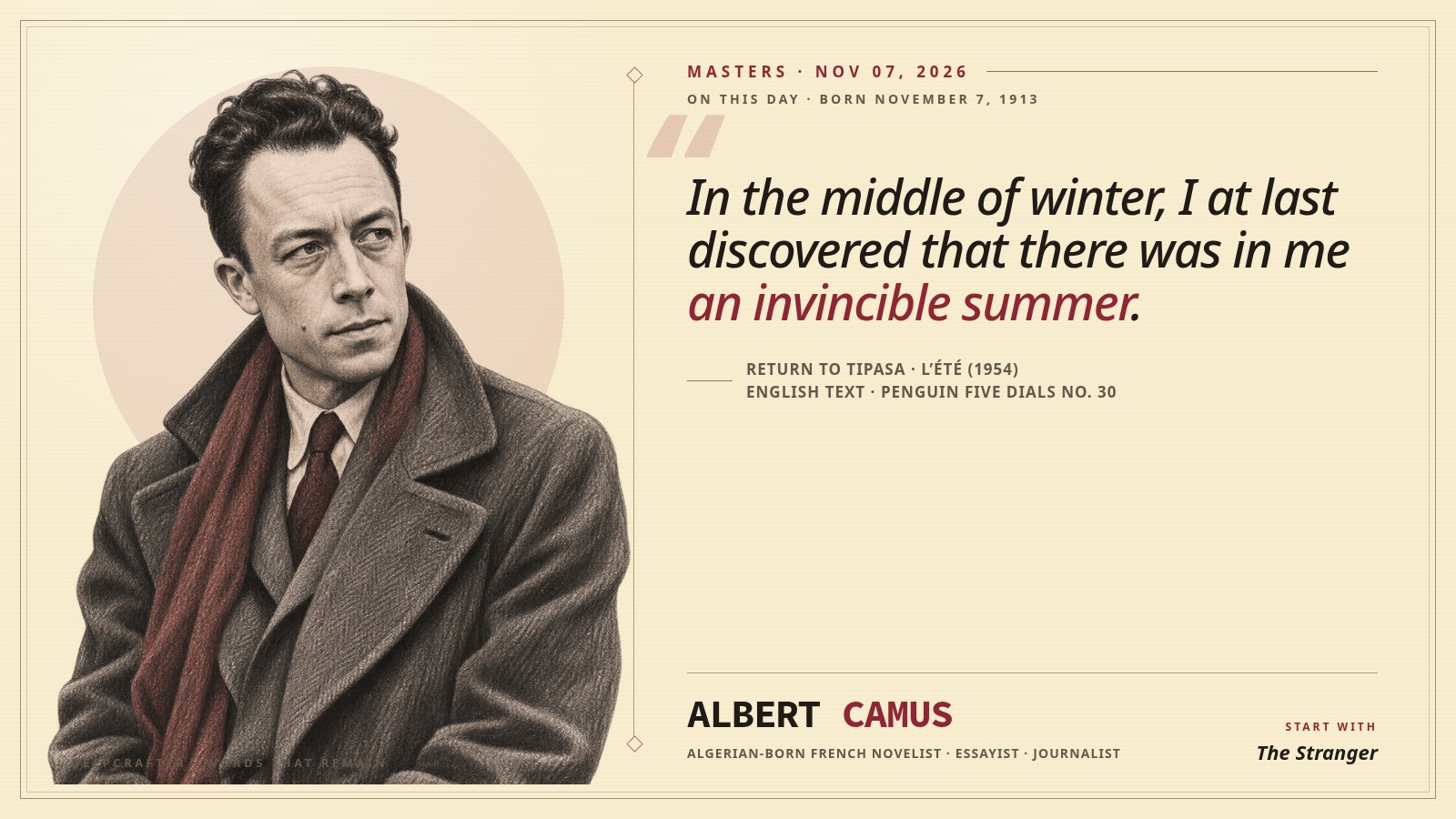
“In the middle of winter, I at last discovered that there was in me an invincible summer.”
Why we chose Albert Camus today
Albert Camus was born on November 7, 1913, in Mondovi, French Algeria. For his birthday, we chose a sentence from “Return to Tipasa,” an essay in L’Été—Summer—rather than one of the slogans most often detached from his novels.
The line is sometimes made to sound like uncomplicated optimism. In the essay, it is harder earned. Camus returns to the Mediterranean ruins of Tipasa after war, exile and public conflict. Winter has not vanished; history has not been repaired. The “invincible summer” is the capacity to remain answerable to beauty and life without denying suffering.
That double vision shaped Camus’s fiction and essays. He looked directly at absurdity, illness, political violence and death, yet refused to let lucidity become an excuse for contempt. Again and again, he asked what a person can do when certainty fails. His answer was rarely heroic. It was usually a form of measure: tell the truth, refuse murder, do the work in front of you, and stand beside others.
For writers, Camus offers more than clean sentences and sunlit landscapes. He shows how an idea becomes dramatic only when it enters a body, a room and a choice. He shows how restraint can intensify emotion. And he reminds us that moral seriousness need not abandon sensory pleasure.
A childhood between poverty and light
Camus’s father, Lucien, died from wounds sustained in the First World War when Albert was still an infant. His mother, Catherine, moved with her two sons into her mother’s apartment in the working-class Belcourt district of Algiers. She was partly deaf, spoke little and supported the family through domestic work. Money was scarce; the household was crowded and severe.
School opened another world. Camus’s primary-school teacher Louis Germain recognized his ability and helped him compete for a scholarship to the lycée. Decades later, after receiving the Nobel Prize in Literature in 1957, Camus wrote Germain a letter of gratitude. The gesture is central to the writer’s story: literary life did not begin as solitary self-invention, but as an encounter with someone who saw a future the child could not yet claim.
The Mediterranean supplied a second education. Swimming, football, heat, stone and sea entered Camus’s imagination as forms of knowledge. His attachment to physical life was not decorative. It gave his thought a counterweight. Philosophical abstraction would always be tested against weather, fatigue, desire and the mortal body.
At seventeen, tuberculosis interrupted his studies and ended his hope of playing competitive football. Recurring illness made fragility immediate. Camus learned early that the body can withdraw its promises without explanation—a fact that would later give the “absurd” its lived pressure.
Theater, journalism and the public sentence
Camus studied philosophy at the University of Algiers and became deeply involved in theater. He helped found Théâtre du Travail and later Théâtre de l’Équipe, adapting, directing and acting. Theater taught him economy: a thought must survive a voice, a gesture and the presence of other people. Even his most philosophical fiction retains something scenic. Rooms, entrances, silences and confrontations carry the argument.
Journalism sharpened a different instrument. At Alger Républicain, he reported on poverty and injustice, including the conditions of the Kabyle population. His newspaper work trained him to make circumstances legible without ornamental distance. It also placed him inside the compromises of public language—what can be said, who is addressed, and what happens when description becomes politically inconvenient.
During the German occupation of France, Camus joined the Resistance newspaper Combat, first clandestinely and then as its public editor. The editorials associated with that period insist that means matter, not only ends. Liberation would be corrupted if it merely reproduced the habits of lying and dehumanization it opposed.
This movement between page, stage and newsroom matters for understanding his prose. Camus was not a philosopher who occasionally invented examples. He was a working writer testing ideas in several public forms. The sentence had to think, but it also had to arrive.
The absurd enters a room
The Stranger and The Myth of Sisyphus, both published in 1942, are often treated as companion works. The essay asks how to live when the human demand for meaning meets a world that offers no final answer. The novel gives that collision a voice and a social setting.
Meursault, the narrator of The Stranger, speaks in stripped, declarative sentences. His mother has died; the weather is oppressive; ordinary expectations fail to organize his responses. The style does not explain him from above. It restricts the reader to a surface where sensation can be exact while motive remains unstable.
That restraint is the novel’s craft lesson. Camus does not announce alienation and then illustrate it. He creates a syntax in which connection has thinned. Heat, glare, sleep, cigarettes and physical discomfort occupy the space where convention expects grief or moral interpretation. Later, at Meursault’s trial, society constructs a coherent character from gestures whose meaning was never secure.
The Myth of Sisyphus names the philosophical pressure more openly. Camus rejects both suicide and a leap into consoling certainty. Sisyphus’s task has no final victory, yet consciousness changes the relation to the task. The point is not that suffering is secretly good. It is that lucidity can prevent meaninglessness from having the last word.
Camus resisted being contained by a single intellectual label. He is frequently grouped with existentialists, but he repeatedly declined that affiliation and distrusted systems that explained too much. His method was closer to sustained tension: remain awake inside contradiction without pretending it has disappeared.
From solitary revolt to common work
If The Stranger isolates a consciousness, The Plague multiplies perspectives. In the Algerian city of Oran, disease closes the gates and reorganizes daily life. Dr. Bernard Rieux and others confront fear, separation, profiteering, denial and exhaustion. They do not agree on metaphysics, but they can still decide how to act.
Rieux’s decency is practical. He treats patients, keeps records and continues when success is partial. Camus refuses the glamour of a single savior. The novel’s moral force comes from repeated, collective labor undertaken without a guarantee that suffering will stay defeated.
Written in the shadow of occupation and published in 1947, The Plague can be read as an allegory of fascism, but it exceeds any one historical key. Epidemic life exposes the stories people tell to exempt themselves from a shared condition. Some discover solidarity; others seek profit or private escape. The city becomes a test of whether compassion can be organized.
This is the turn from absurdity to revolt. For Camus, revolt begins when a person says that a limit has been crossed. But the protest also recognizes that the violated dignity is not private property. “I rebel” opens toward “we are.” The difficulty is preserving that shared dignity without converting revolt into permission to destroy anyone outside the cause.
Measure against the machinery of history
The Rebel, published in 1951, examines how legitimate resistance can harden into ideological murder. The book helped rupture Camus’s relationship with parts of the French left and with Jean-Paul Sartre. Camus rejected political reasoning that treated present lives as expendable material for a perfected future.
His insistence on limits was principled, but his public position on the Algerian War remains contested. Born into the European settler community and attached to both Algeria and France, he opposed terrorism against civilians and called for a civilian truce. He also failed to support Algerian independence and did not fully escape the colonial framework that structured the world of his youth.
Reading Camus responsibly means holding both truths: his writing offers a powerful ethics of limits and solidarity, and his own historical vision had limits. Admiration should not require simplification. A writer’s moral vocabulary becomes more useful when we test where it clarifies experience and where experience exceeds it.
For fiction writers, this is also a formal lesson. Do not let a character’s most eloquent principle settle the story. Put the principle under historical pressure. Ask whose suffering it can name and whose it leaves outside the frame.
How Camus made clarity
Camus’s prose can look effortless because its architecture is hidden. The sentences tend toward concrete nouns, controlled rhythms and images drawn from light, stone, wind, sea and bodily exertion. Abstraction appears, but it is repeatedly returned to the sensible world.
He worked through notebooks across decades, recording scenes, phrases, plans and philosophical questions. These notebooks reveal themes moving among forms: an image might become an essay, a dramatic situation or part of a novel. The apparent simplicity of the finished page came from selection and recurrence.
His background in theater encouraged dramatic testing. Instead of resolving a problem in exposition, he gave it opposing voices. His journalism reinforced factual pressure. His lyric essays preserved another register: gratitude for beauty, sharpened by knowledge of loss.
The resulting style joins three kinds of attention:
- Sensory exactness: the physical world is not a backdrop but a force.
- Moral restraint: the prose resists announcing virtue before action earns it.
- Structural contrast: light and death, solitude and solidarity, silence and speech remain active together.
Clarity, in Camus, does not mean that life is simple. It means that the sentence refuses to hide the difficulty.
Five craft lessons from Albert Camus
1. Give philosophy a temperature
If a scene carries an idea, identify its weather, light and bodily strain. Let thought happen somewhere.
2. Make restraint create pressure
Remove the sentence that tells the reader what to feel. Strengthen the image, action or silence that makes the feeling unavoidable.
3. Test principles through work
A character’s ethics become visible in repeated tasks: whom they help, what they record, and what they continue doing when recognition disappears.
4. Keep opposing truths in the same frame
Winter does not cancel summer; beauty does not erase injustice. A durable image can hold contradiction without turning vague.
5. Let solidarity remain specific
Avoid abstract declarations about humanity when a concrete obligation is available. Name the person, the risk and the next action.
A lucidity exercise for fiction writers
Choose a scene in which a character receives bad news.
- Draft the scene using only actions, objects and sensory details.
- Remove every emotion word.
- Add one physical condition—heat, glare, cold, fatigue—that changes how the character moves.
- Give the character one necessary task that cannot be postponed.
- Introduce another person whose need complicates private grief.
- End on an action rather than an explanation.
- On revision, add back only the interior sentences that reveal something the actions cannot carry.
The goal is not emotional numbness. It is to make feeling pass through the world before it becomes commentary.
Where to start reading
For the shock of lucid distance: The Stranger
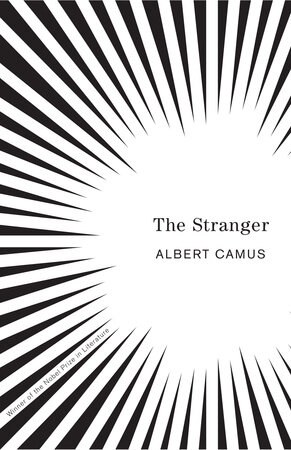
Edition: Vintage International paperback, 1989 · translated by Matthew Ward · 144 pages · ISBN 9780679720201.
Begin with the novel that made Camus’s stripped first-person style unforgettable. Read the first half for the relation between sensation and motive; read the trial for the way society turns fragments into a moral story.
For the philosophical foundation: The Myth of Sisyphus
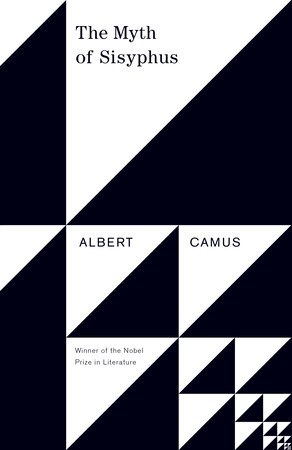
Edition: Vintage paperback, 2018 · 160 pages · ISBN 9780525564454.
Read this after The Stranger to see the absurd stated as a problem rather than embodied as a voice. Notice that Camus does not offer optimism as a cure. He asks what kind of freedom becomes possible after false consolation is refused.
For solidarity under pressure: The Plague
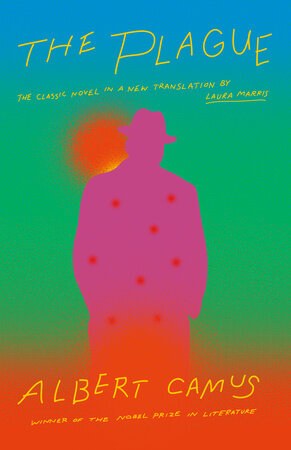
Edition: Vintage paperback, 2022 · translated by Laura Marris · 352 pages · ISBN 9780593082096.
Come here for the movement from solitary consciousness to collective responsibility. Track how the novel distributes attention among doctors, officials, lovers, journalists, profiteers and volunteers—and how repeated work becomes its moral form.
Why read Camus now?
Public language often asks us to choose between two evasions: deny catastrophe, or treat catastrophe as proof that nothing matters. Camus accepts neither. He makes lucidity the beginning of obligation.
That is why the “invincible summer” remains more than a reassuring quotation. It does not promise immunity. It names a source of attention that winter cannot entirely command—the capacity to recognize beauty, refuse humiliation and return to common work.
For writers, Camus’s lasting challenge is formal as well as ethical. Can a sentence be clear without becoming thin? Can a character act without the story declaring them pure? Can beauty intensify responsibility instead of distracting from it?
His best work keeps those questions open while giving us something solid to do: look accurately, speak without alibis, and begin again beside other people.
Sources and edition notes
- Nobel Prize: Albert Camus — facts and biography
- Penguin Five Dials No. 30: “Return to Tipasa”
- Penguin Random House: The Stranger
- Penguin Random House: The Myth of Sisyphus
- Penguin Random House: The Plague
The opening quotation appears in “Return to Tipasa,” in the English text published by Penguin’s Five Dials. The website cover is DeepCrafter’s original illustrated Resonance card, not an archival photograph. The three book-cover images identify the specific editions discussed.